

Why Your EV Charger Needs Power Protection (And No, a Surge Protector Isn't Enough)
You just dropped serious money on an electric vehicle. Maybe you even invested in a Level 2 home charger to make your morning commute a little less stressful. You're feeling pretty good about the whole setup, until someone mentions power protection.
"No problem," you think. "I'll just grab a surge protector from the hardware store."
Here's the thing: that approach might work for your laptop or TV, but your EV charger? It needs a lot more than a basic surge protector to stay safe and functional. Let's break down exactly why, and what you actually need to protect your investment.
The Real Threats Facing Your EV Charger
When most people think about electrical hazards, they picture a dramatic lightning strike frying their electronics. And yes, that's definitely a concern. But your EV charger faces a whole lineup of threats that a standard surge protector simply wasn't designed to handle.
Power Surges and Grid Instability
Power surges aren't just caused by lightning. They can come from utility grid switching, nearby industrial equipment cycling on and off, or even issues within your own home's electrical system. These voltage spikes can damage the sensitive electronics inside your charger, and potentially your vehicle's battery management system.
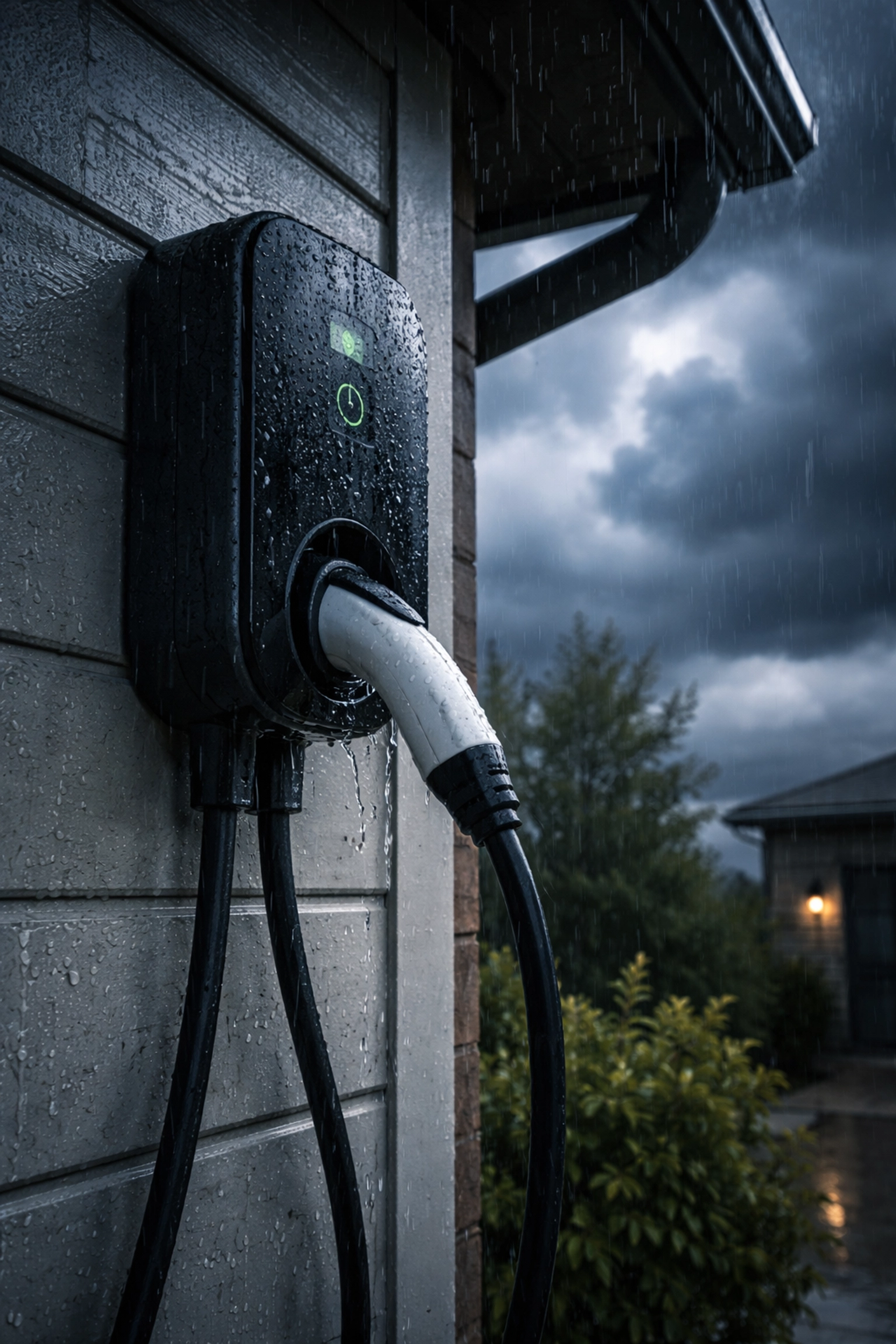
Weather-Related Damage
Rain, snow, extreme heat, and humidity don't just make your charger look weathered. They can corrode internal components over time, leading to electrical faults that standard surge protection won't catch or prevent.
Electrical Overloads and Short Circuits
EV chargers draw significant power, we're talking 7.2 kW for a typical Level 2 charger, and DC fast chargers can exceed 50 kW. That kind of power demand creates real risks for overloads and short circuits, especially in older homes or facilities with aging electrical infrastructure.
Ground Faults and DC Faults
These are the sneaky ones. Ground faults occur when electricity takes an unintended path to ground, potentially through a person. DC faults are specific to the charging process itself and can cause serious safety hazards if not detected and interrupted quickly.
A surge protector addresses exactly one of these threats. See the problem?
What a Surge Protector Actually Does (And Doesn't Do)
Let's be fair to surge protectors, they're not useless. A quality surge protection device (SPD) diverts excess voltage away from your charger, protecting it from those sudden spikes we mentioned. That's genuinely important protection.
But here's what a surge protector won't do:
- Detect electrical imbalances that could cause shock or fire
- Protect against overloads and short circuits
- Identify ground faults before someone gets hurt
- Handle DC-specific fault conditions during charging
- Compensate for poor power quality over time
Think of it this way: a surge protector is like wearing a seatbelt without having airbags, anti-lock brakes, or a crumple zone. It's one layer of protection in what should be a comprehensive safety system.
The Complete Power Protection Strategy for EV Chargers
So what does proper protection actually look like? Here's the lineup of devices that work together to keep your charger, and everyone around it, safe.
Residual Current Device (RCD)
An RCD continuously monitors the electrical current flowing through your circuit. If it detects an imbalance (meaning some electricity is "leaking" somewhere it shouldn't), it cuts power almost instantly. This is your primary defense against electrical shock and fire hazards.
Most countries legally require RCD protection for EV charging installations. The specific type you need depends on whether your charger has built-in DC fault protection, something a qualified electrician can help you determine.
Miniature Circuit Breaker (MCB)
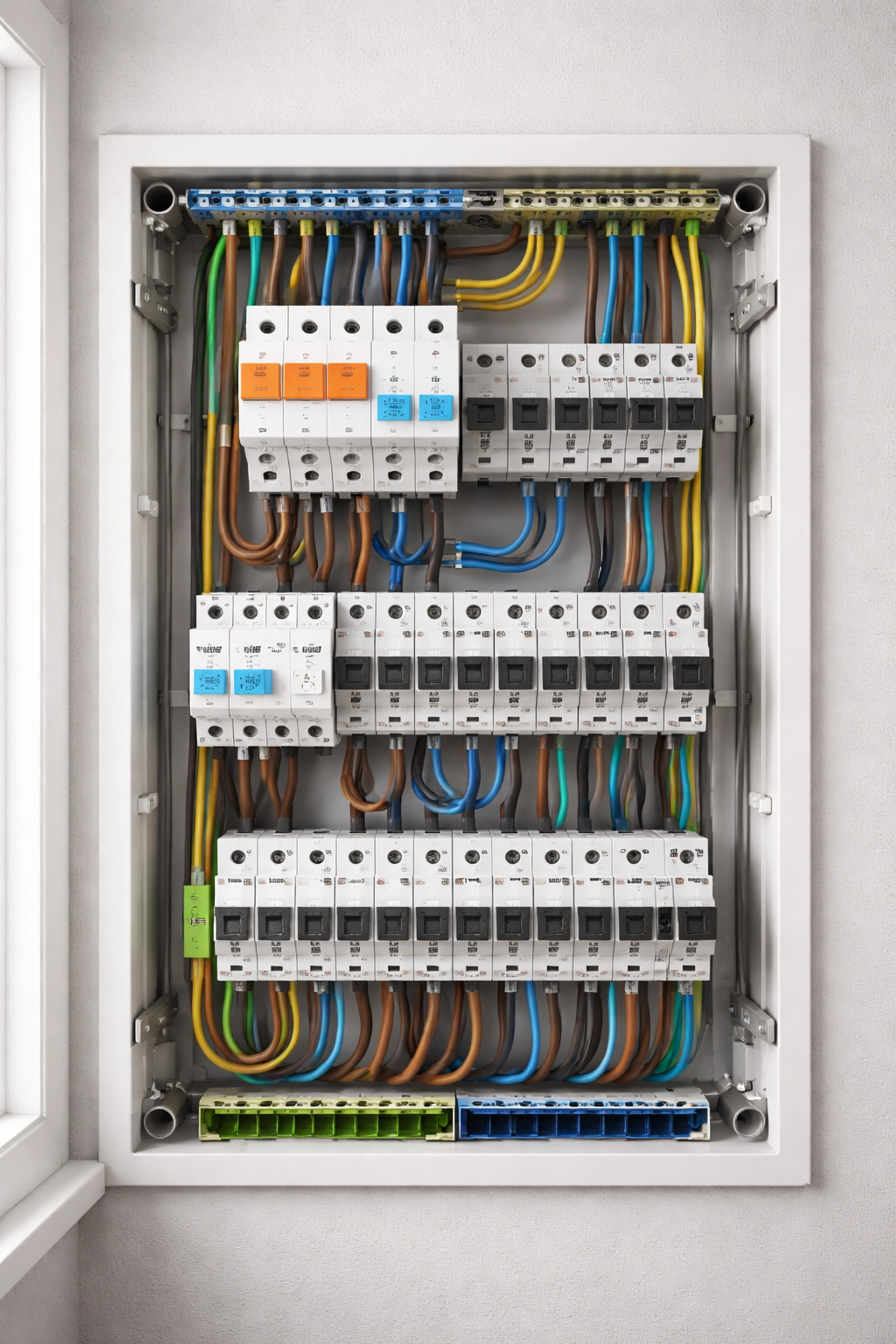
Circuit breakers protect against overloads and short circuits by interrupting the circuit when current exceeds safe levels. For EV charging, the sizing matters:
| Charger Power | Recommended Breaker |
|---|---|
| 7.2 kW | 32 A |
| 11 kW | 16 A (three-phase) |
| 22 kW | 32 A (three-phase) |
Your existing home circuit breaker panel might need an upgrade to handle the additional load safely.
Ground Fault Circuit Interrupter (GFCI)
Building codes now require GFCI breakers on EV charging circuits in most jurisdictions. These devices detect ground faults and shut off power before a shock hazard develops. While similar to RCDs, GFCIs are specifically designed to protect people from electrical shock.
DC Fault Protection
Many modern EV chargers include built-in DC fault protection that automatically disconnects during a DC fault event. If your charger doesn't have this feature, you'll need an external Type B RCD, which is significantly more expensive than a standard Type A.
Surge Protection Device (SPD)
Yes, you still need surge protection! It just can't be your only line of defense. A properly rated SPD installed at your electrical panel protects the entire circuit feeding your charger.
The Hidden Costs of Inadequate Protection
Let's talk numbers for a moment. A quality Level 2 EV charger costs anywhere from $400 to $2,000. Installation typically runs another $500 to $2,000 depending on your electrical setup. Your EV itself? That's a $30,000 to $100,000+ investment.
Now consider what inadequate protection could cost you:
- Charger replacement: $400–$2,000
- Vehicle battery damage: $5,000–$20,000+
- Electrical fire damage: Potentially catastrophic
- Liability issues: If someone gets shocked due to improper installation
The comprehensive protection equipment we've discussed? It typically adds $200–$500 to your installation cost. That's pretty solid insurance for equipment worth tens of thousands of dollars.
Professional Installation: Non-Negotiable
Here's where we get serious for a moment. EV charger installation isn't a DIY project: even if you're handy with electrical work.
A licensed electrician will:
- Assess your existing electrical panel capacity
- Determine the correct wire gauge and breaker sizing
- Install all required protection devices per local codes
- Test the entire system for proper operation
- Provide documentation for warranty and insurance purposes
Many EV charger warranties are voided by improper installation. And your homeowner's insurance might not cover damage from an unpermitted electrical installation. The few hundred dollars you'd save isn't worth the risk.
What About Commercial and Fleet Charging?
If you're managing EV charging for a business, fleet, or multi-unit property, the stakes get even higher. You're dealing with:
- Multiple chargers sharing electrical infrastructure
- Higher power demands and more complex load management
- Greater liability exposure
- Stricter code compliance requirements
- Uptime expectations from users or employees
Commercial installations often benefit from centralized power protection strategies, including battery backup systems that can provide ride-through power during brief outages and protect against the full spectrum of power quality issues.
Key Takeaways
Let's wrap this up with what you need to remember:
- Surge protectors address only one type of electrical threat: your EV charger faces many more
- Complete protection requires multiple devices: RCD, circuit breaker, GFCI, DC fault protection, and surge protection
- Professional installation is essential for safety, code compliance, and warranty coverage
- The cost of proper protection is minimal compared to the equipment you're protecting
- Commercial installations need comprehensive power protection strategies to manage higher stakes
Ready to Protect Your Investment?
Whether you're installing your first home EV charger or building out a commercial charging infrastructure, getting power protection right from the start saves headaches (and money) down the road.
Have questions about the right protection strategy for your specific situation? Reach out to our team: we've been helping customers navigate power protection challenges for years, and we're happy to point you in the right direction.
What's your EV charging setup like? Running into any power-related issues? Drop a comment below: we'd love to hear about your experience.
Related Topics You Might Find Useful:
- Battery backup solutions for home and commercial applications
- Understanding power quality and its impact on sensitive electronics
- Solar integration with EV charging systems