
Why Modern UPS Systems Are Suddenly Smaller and More Efficient (And What GaN Technology Means for Your Electric Bill)
If you've priced out UPS systems lately, you might have noticed something surprising: they're not the bulky, space-hogging behemoths they used to be. Modern uninterruptible power supply systems are shrinking fast while somehow delivering more power and running more efficiently than their predecessors.
For data center operators and IT procurement teams, this isn't just a neat tech curiosity: it's a legitimate game-changer that affects everything from floor space costs to monthly utility bills. Let's break down what's actually driving these improvements and what it means for your bottom line.
The Size Revolution: 25% Smaller and Still Packing More Punch
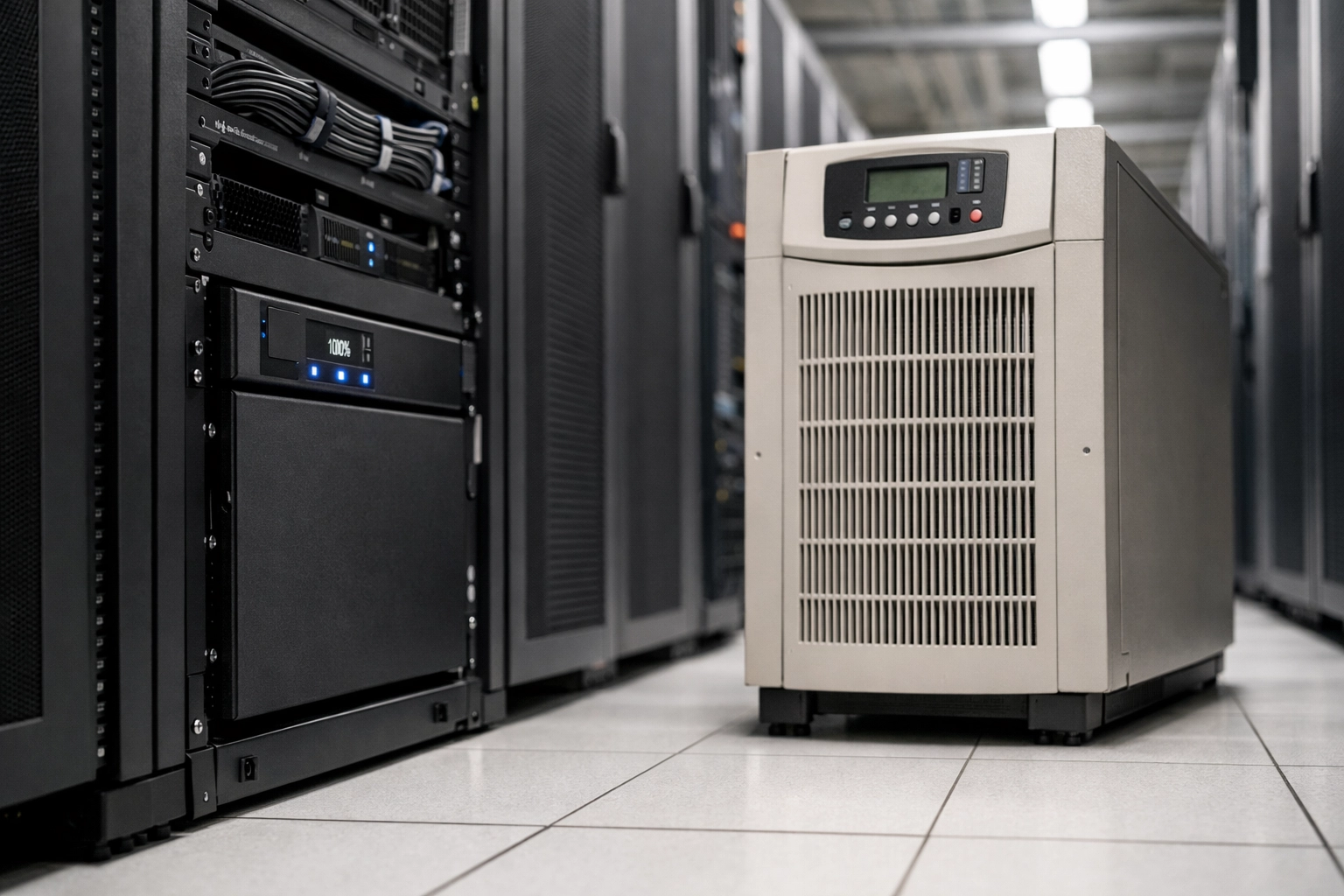
Here's the headline number: modern UPS systems are 25% or more smaller than legacy units while providing greater power density. That's not a typo. You're getting more protection in a significantly smaller footprint.
This matters more than you might think. In data centers where every square foot carries a price tag (and it's not cheap), reducing your UPS footprint by a quarter opens up space for revenue-generating equipment. We're talking servers, storage, networking gear: the stuff that actually drives your business forward.
The shift becomes even more dramatic when you look at total cost of ownership. Smaller systems mean:
- Reduced real estate costs in colocation facilities where you're billed per rack unit or square foot
- Easier deployment in space-constrained environments like edge computing sites
- Lower shipping and installation costs because you're moving less weight
- Greater flexibility for modular expansion as your power needs grow
What's Actually Behind the Shrink
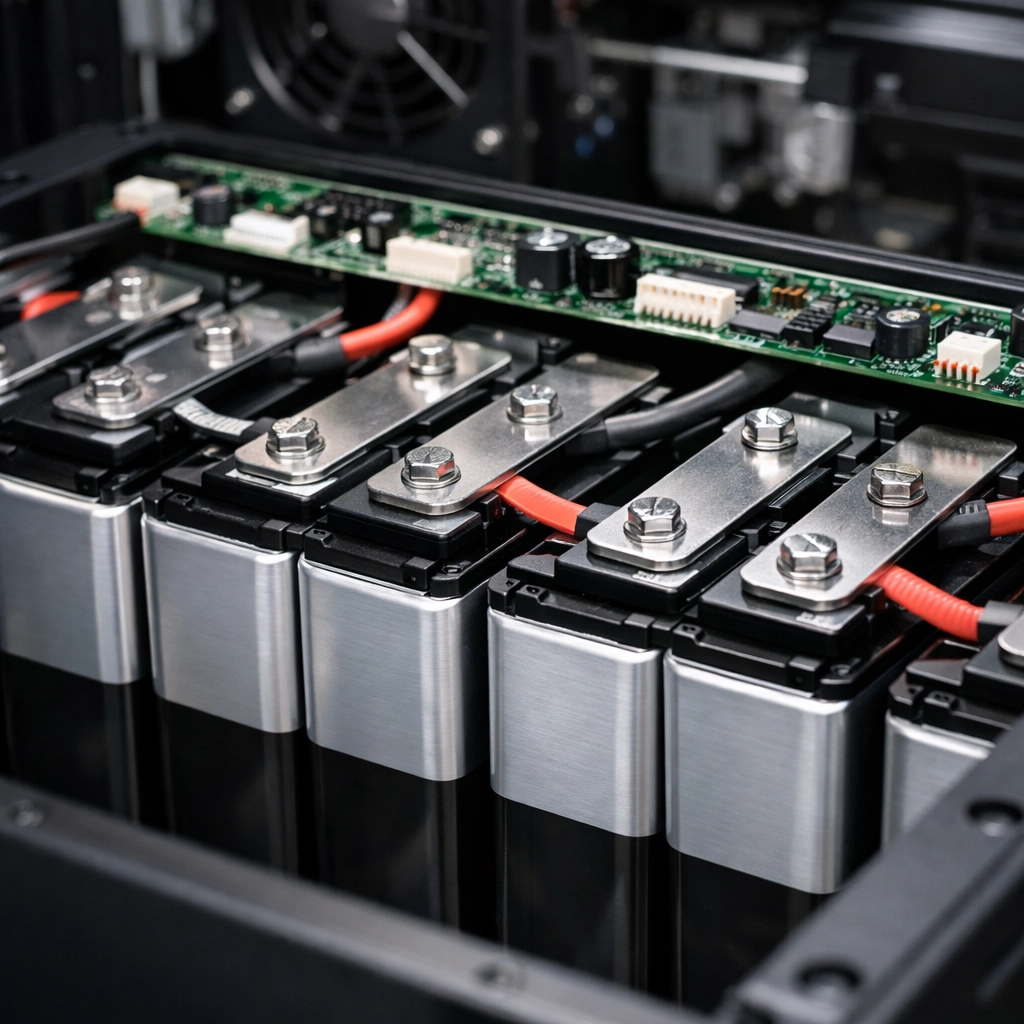
So what's making this possible? The single biggest factor is lithium-ion battery technology.
Traditional UPS systems relied on VRLA (Valve-Regulated Lead-Acid) batteries: the same basic chemistry your car uses, just scaled up. They worked fine, but they were heavy, bulky, and took up serious space. Lithium-ion batteries flip that equation entirely.
The numbers tell the story:
- 40% greater energy storage efficiency compared to lead-acid solutions
- 20% reduction in system footprint just from the battery swap alone
- Two to three times longer lifespan than lead-acid batteries, meaning fewer replacements and less operational disruption
But battery chemistry is just one piece. Modern UPS architecture has evolved too. Modular designs are becoming the standard, letting you add or remove power modules based on actual requirements rather than over-provisioning "just in case." This approach eliminates waste, reduces initial capital expenditure, and gives you scalability that matches real-world growth patterns.
The Efficiency Story: Where Your Savings Actually Come From
Smaller size gets the headlines, but efficiency is where you see real money coming back to your budget. And the gains here are substantial.
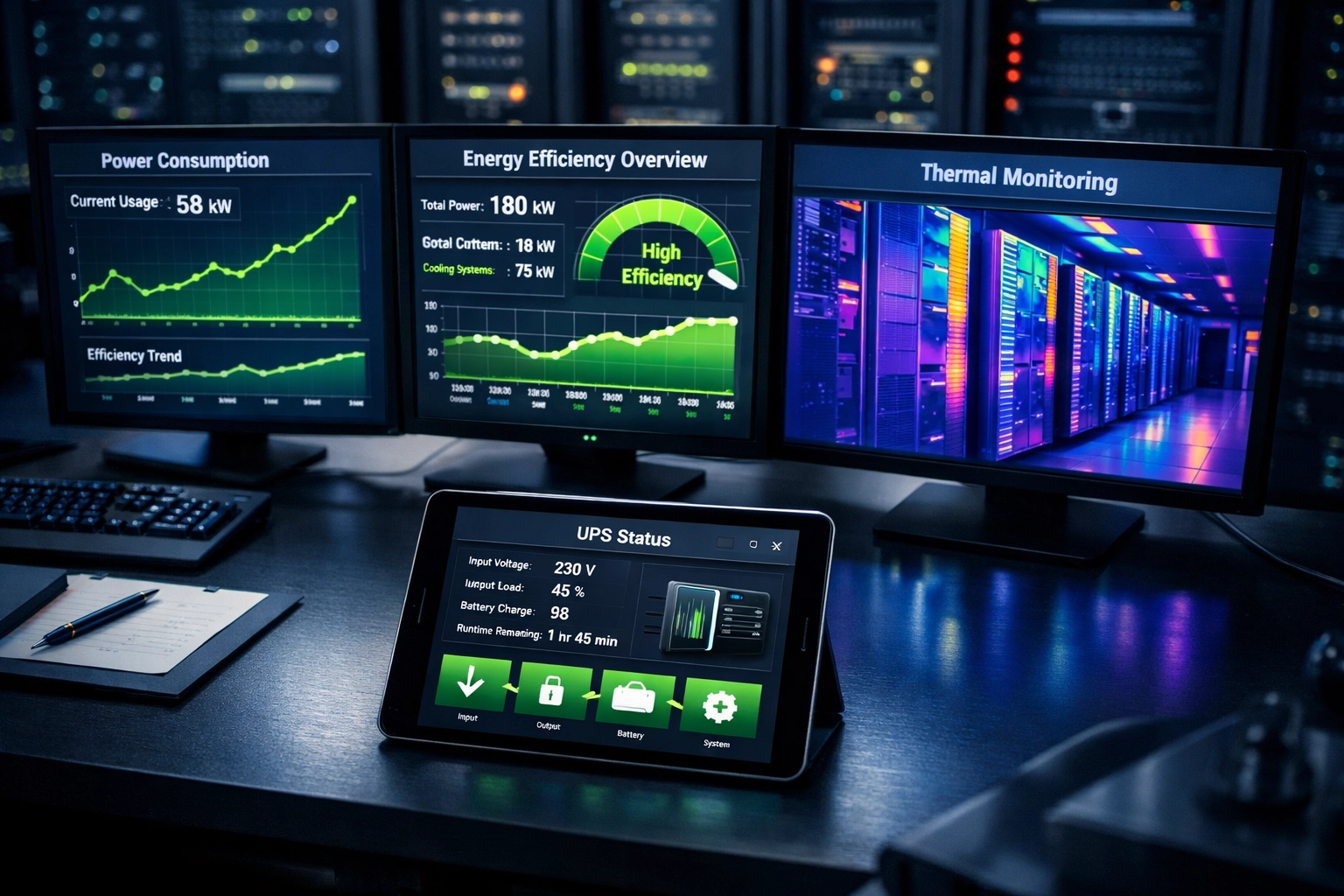
Legacy UPS systems typically ran at about 94% efficiency in double-conversion mode. Not terrible, but that missing 6% translated to heat, wasted energy, and higher utility bills. Modern systems? We're seeing up to 99% efficiency from top-tier units using advanced topologies.
Let's put some dollars on that. Based on average North American electrical rates, upgrading from a legacy system to a modern high-efficiency UPS saves approximately $5,000 annually per unit. For a facility running multiple UPS systems, that compounds quickly.
Here's a simple comparison:
| UPS Type | Efficiency | Annual Energy Loss (per 100kW load) | Approximate Annual Cost |
|---|---|---|---|
| Legacy VRLA-based | ~94% | 52,560 kWh | $7,900 |
| Modern Lithium-ion | ~99% | 8,760 kWh | $1,300 |
| Annual Savings | ~$6,600 |
Based on $0.15/kWh average commercial rate
The efficiency improvements come from several angles:
Advanced power conversion topologies reduce heat loss during the AC-to-DC-to-AC conversion process. Less heat generation means less energy waste and: critically: lower cooling requirements.
Energy management modes like ECOnversion technology and Energy Saver Systems deliver high efficiency without compromising the protection you need. These systems intelligently switch between operating modes based on power quality, maximizing efficiency during normal conditions while instantly providing full protection when needed.
Reduced cooling requirements deserve special attention. High-efficiency UPS systems generate less waste heat, which means your HVAC system doesn't work as hard. In data centers where cooling can account for 40% of total energy consumption, this creates a multiplier effect on savings.
The GaN Technology Question
You've probably heard buzz about GaN (Gallium Nitride) technology transforming power electronics. It's a legitimate advancement: GaN semiconductors can switch faster and more efficiently than traditional silicon components, potentially enabling even smaller and more efficient power conversion.
Here's the honest assessment: GaN is making its way into consumer electronics and some power supplies, but it's not yet the primary driver of improvements in commercial UPS systems. The major gains we're seeing right now come from lithium-ion batteries, improved topologies, and smarter system design.
That said, GaN and similar wide-bandgap semiconductors represent the next frontier. As the technology matures and costs come down, we'll likely see another leap in UPS efficiency and power density over the next few years. But for procurement decisions you're making today, focus on the proven technologies delivering measurable results now: lithium-ion batteries, modular architecture, and high-efficiency topologies.
What This Means for Your Operation
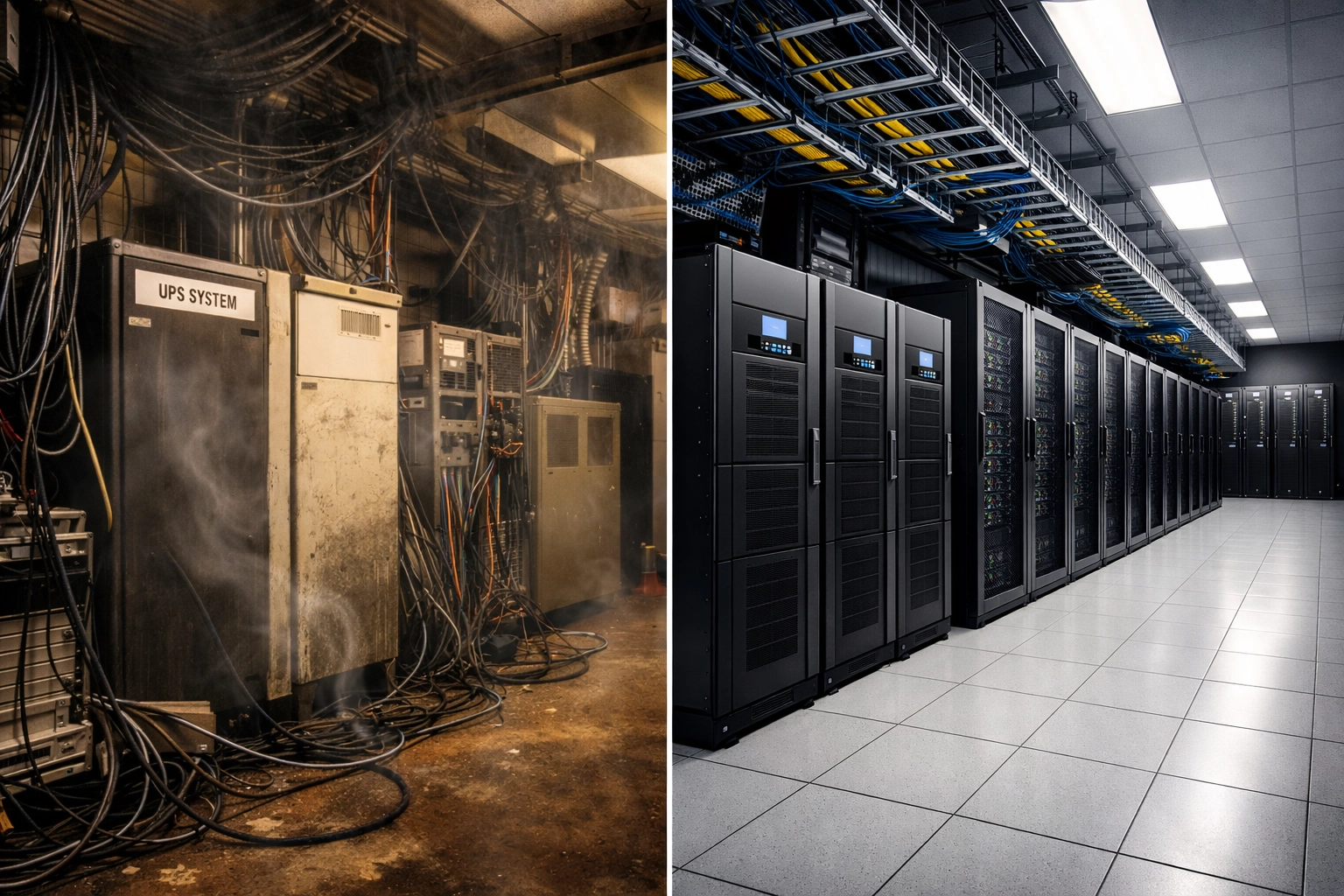
If you're running legacy UPS infrastructure, these advancements create a compelling case for modernization. But the decision shouldn't be purely about chasing the latest technology. Consider your specific situation:
You're likely a good candidate for upgrading if:
- Your UPS systems are 7-10 years old or approaching end-of-life
- You're expanding capacity and space is at a premium
- Monthly utility costs are a significant concern
- You're planning a data center refresh or new deployment
- Battery replacement cycles are becoming disruptive
The ROI math works when:
- Energy savings can offset capital expenditure within 3-5 years
- Space reclamation enables revenue-generating deployments
- Reduced cooling requirements compound with UPS efficiency gains
- Extended battery life reduces operational overhead
Practical Next Steps
If you're evaluating new UPS systems or considering upgrades, here's what to prioritize:
-
Calculate your actual efficiency savings based on your specific electrical rates and load profiles. Generic numbers are useful, but real ROI comes from your actual situation.
-
Factor in total cost of ownership, including space, cooling, maintenance, and battery replacements over the system's lifespan: not just upfront hardware costs.
-
Consider modular scalability even if you don't need it immediately. Growth happens, and modular systems let you scale economically.
-
Evaluate lithium-ion carefully against your requirements. The benefits are real, but so is the higher initial investment. Make sure the payback timeline makes sense for your operation.
-
Work with experienced partners who understand power protection in your specific industry. A value-added reseller who knows data center operations brings expertise beyond just product specs.
The Bottom Line
Modern UPS technology has hit a sweet spot where size, efficiency, and reliability all improve simultaneously. For data center operators and IT teams, that's rare: usually, you're trading off one advantage for another.
The shift to lithium-ion batteries and advanced architectures isn't just incremental improvement. It's a fundamental change in what's possible with backup power protection. Smaller footprints, lower operating costs, and better performance create real business value, whether you're running a hyperscale data center or managing edge computing deployments.
If you're ready to explore what modern UPS systems could do for your operation, reach out to our team. We work with data center builders and operators every day to design power protection solutions that actually match real-world requirements: and budgets.
The power protection landscape is changing fast. Make sure your infrastructure isn't getting left behind.