
Why Everyone Is Talking About AI's Power Crisis (And What It Means for Your Business Backup)
If you've been following tech news lately, you've probably seen headlines about AI's massive appetite for electricity. But here's what most articles miss: this isn't just a problem for tech giants building massive data centers. The AI power crisis is creating ripple effects that will fundamentally change how every business needs to think about backup power and grid reliability.
The numbers are staggering, and they're accelerating faster than anyone predicted. What started as a niche concern for hyperscale operators has become a crisis that's reshaping entire power grids: and creating both challenges and opportunities for businesses planning their power protection strategies.
The Staggering Scale of AI's Power Appetite
Let's start with the basics: AI data centers are power-hungry beasts. Current data centers already consume about 4% of total U.S. electricity, but AI is sending that demand into hyperdrive. By 2030, AI data center consumption is projected to reach 12% of total U.S. power: essentially adding another entire country's worth of electrical demand to our grid.
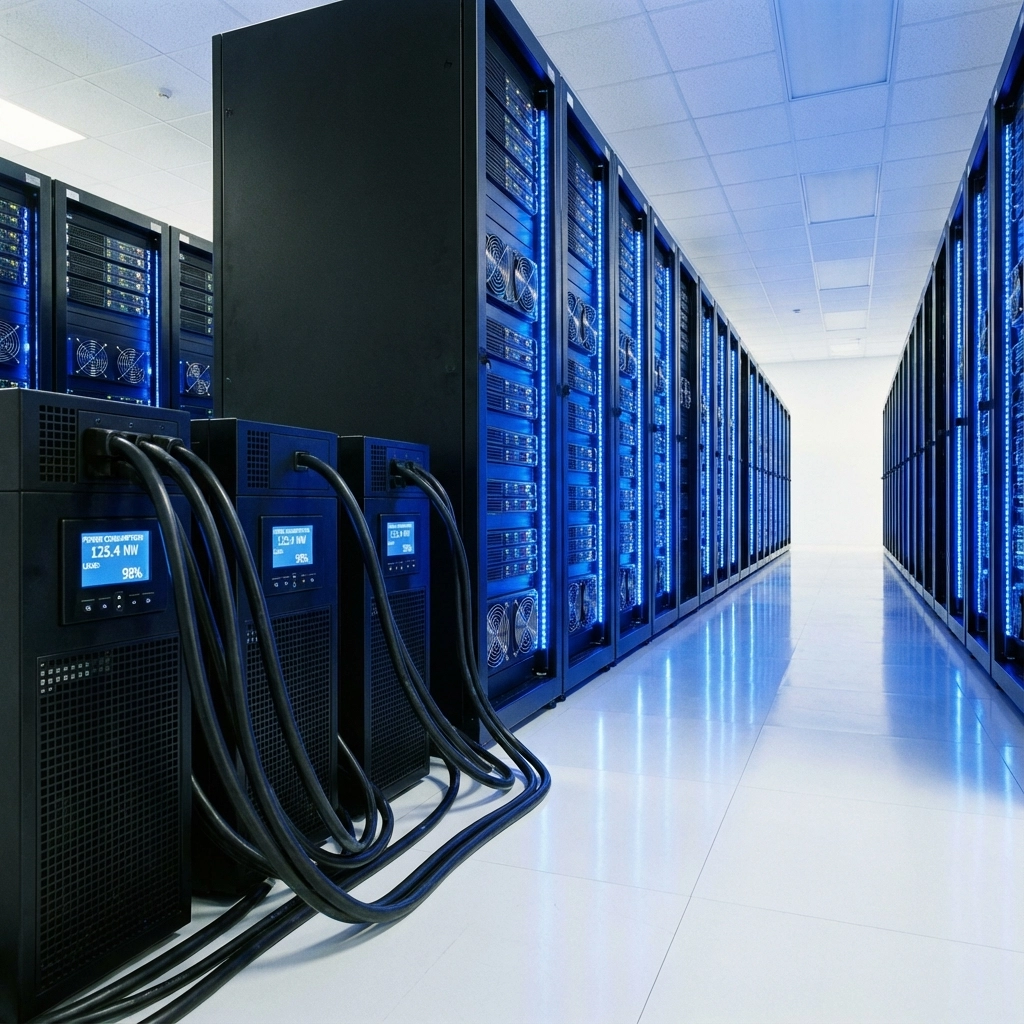
But here's where it gets really wild: Deloitte estimates that U.S. power demand from AI data centers could grow more than thirtyfold by 2035, jumping from just 4 gigawatts in 2024 to 123 gigawatts. To put that in perspective, that's enough to power about 90 million homes.
The challenge isn't just the sheer volume: it's the nature of this demand. AI data centers require rock-solid, 24/7 power that never fluctuates. They create massive, concentrated clusters of power demand that our aging grid infrastructure simply wasn't designed to handle. Some regions are already seeing harmonic distortions, load relief warnings, and even generation shutdowns as the grid struggles to keep up.
Why Our Power Grid Is Hitting a Wall
The infrastructure bottleneck is real and it's severe. In Virginia, which hosts about 70% of the world's internet traffic, new data centers can wait up to seven years just to connect to the grid. Seven years! In an industry where being first to market often determines winners and losers, that's an eternity.
Meanwhile, wholesale electricity prices in data center regions have surged 267% over the past five years. That's not a typo: prices have nearly tripled in areas where AI infrastructure is concentrated. These costs don't just stay with the big tech companies; they get passed down to every business and consumer in those regions through higher electricity bills.
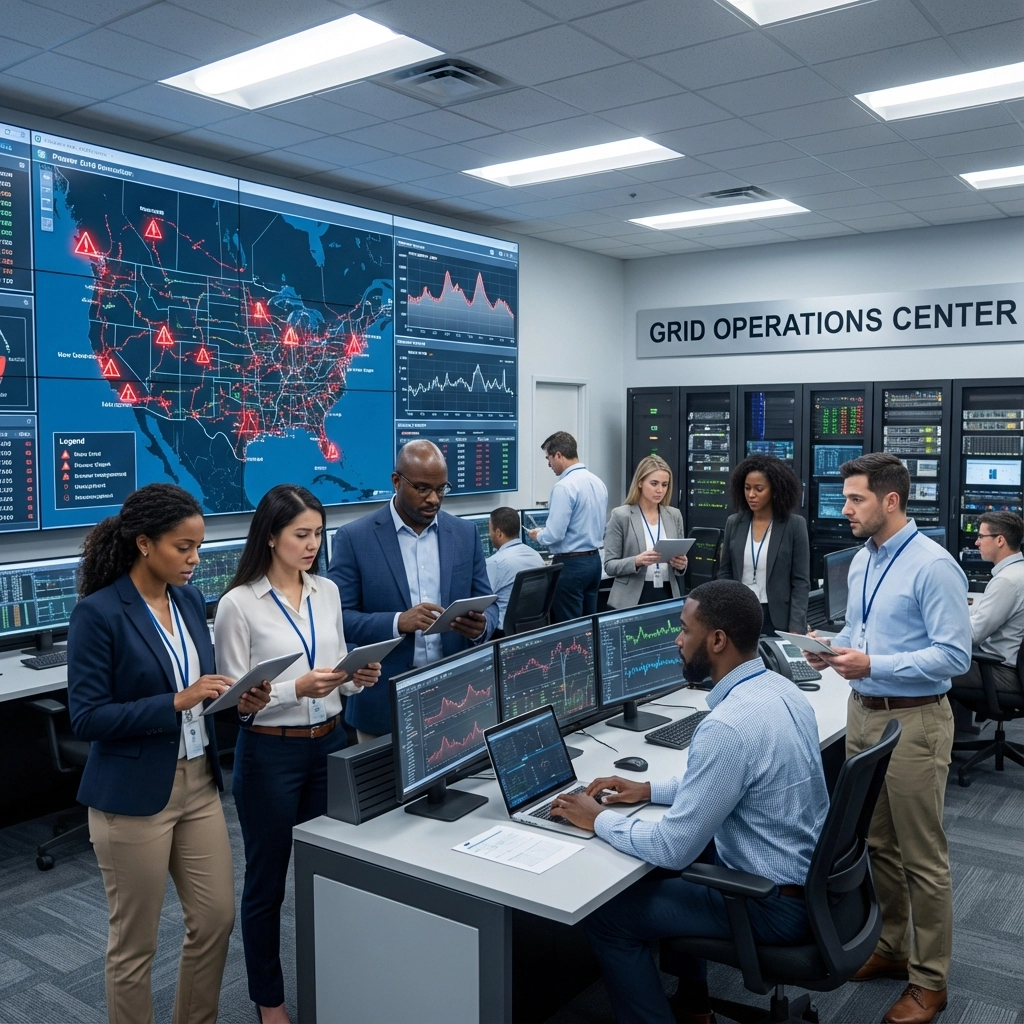
Here's the kicker: about 79% of power company executives surveyed say AI will continue driving power demand growth through 2035. At the same time, our power grid is already showing its age. The average power plant in the U.S. is over 40 years old, and much of our transmission infrastructure dates back even further.
What This Means for Your Business Backup Strategy
So how does this AI power crisis affect your business? More than you might think. Here are the direct impacts every business should understand:
Grid Reliability Is Becoming Less Predictable
When power grids are stressed by massive, concentrated loads, the risk of blackouts and failures increases dramatically. Your business can no longer assume the grid will be there when you need it. This makes robust backup systems and redundancy not just smart business: it's becoming essential for operational continuity.
Think about it: if a nearby AI data center suddenly ramps up operations during a heat wave when everyone's running air conditioning, something's got to give. You don't want it to be your business operations.
Energy Costs Are Rising Across the Board
Energy prices have risen at more than twice the rate of inflation since 2020, and the AI boom is accelerating this trend. This affects both your ongoing operational costs and your capital planning for backup equipment. If you're budgeting for new backup power infrastructure, plan for higher costs: both for the equipment and for the electricity to run it.

Infrastructure Lead Times Are Extending
If you're planning facility expansions or new installations that require grid interconnection, expect longer lead times and potentially competing priorities. Utilities are swamped with AI data center connection requests, which can push smaller commercial projects down the priority list.
Smart Strategies for Adapting to the New Reality
The good news? Forward-thinking businesses can turn these challenges into competitive advantages. Here's how:
Embrace Demand Flexibility
One emerging trend is "flexible" data centers that can shift their power consumption during peak demand periods. The same principle applies to your business backup systems. Infrastructure that can intelligently manage when and how it draws power becomes increasingly valuable.
Consider backup systems with smart load management capabilities that can:
- Defer non-critical operations during grid stress periods
- Optimize charging cycles for battery systems during off-peak hours
- Automatically shed non-essential loads during emergencies
Plan for True Independence
With grid reliability becoming less predictable, businesses are rethinking their relationship with the utility grid entirely. This doesn't mean going completely off-grid, but it does mean planning backup systems that can sustain operations for extended periods without grid support.
Modern lithium-ion battery systems and hybrid solutions are making longer-duration backup power more practical and cost-effective than ever before. Instead of planning for brief outages, consider what it would take to keep critical operations running for hours or even days.
Consider Microgrid Solutions
Microgrids are becoming more practical for medium and large businesses. These systems can operate independently from the main grid when necessary, while still providing the flexibility to buy and sell power when it's advantageous.
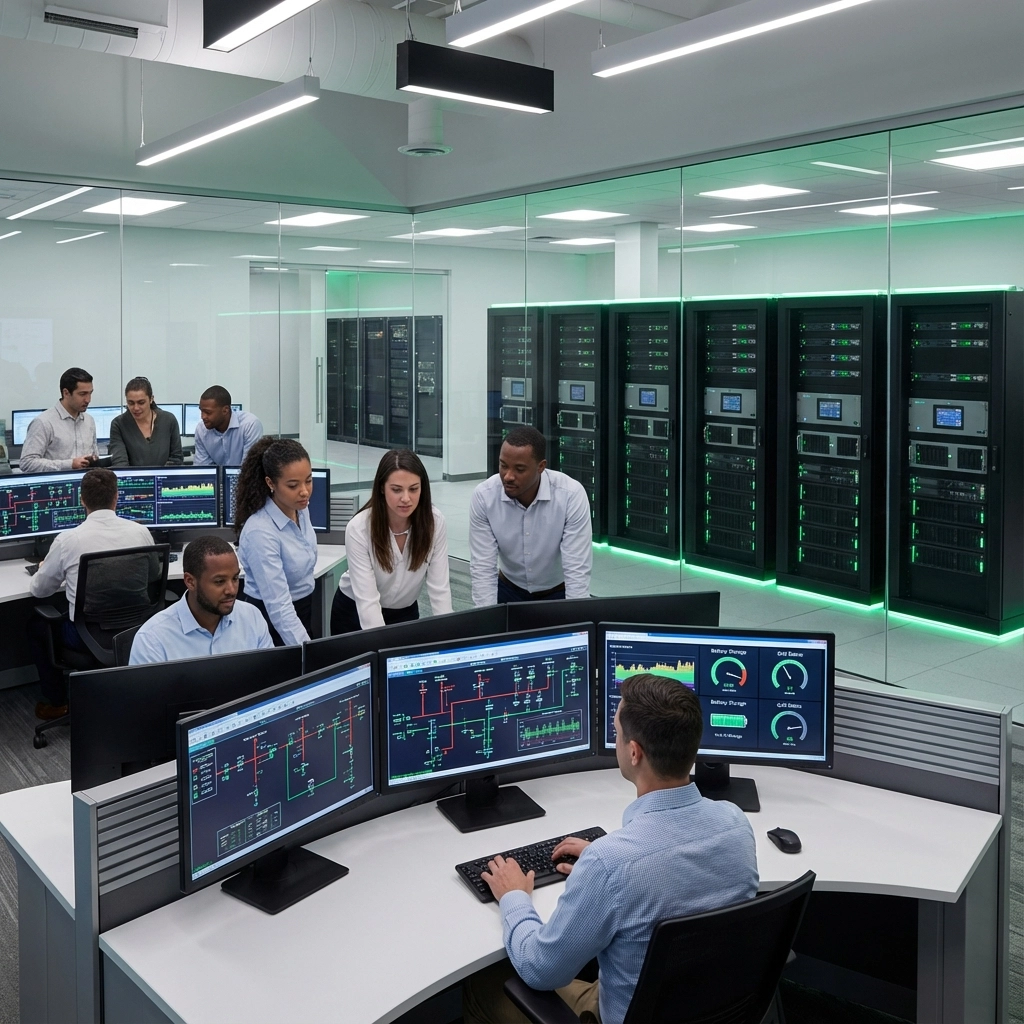
For businesses in regions experiencing AI data center growth, microgrids can provide both reliability and potential revenue opportunities through demand response programs.
Future-Proof Your Equipment Choices
When selecting new backup power equipment, consider not just today's needs but tomorrow's grid reality. Look for systems that can:
- Integrate with smart grid technologies
- Participate in demand response programs
- Scale up easily as your needs grow
- Provide detailed monitoring and analytics
The Silver Lining: New Opportunities
While the AI power crisis creates challenges, it's also opening up new opportunities. Businesses with flexible power systems can participate in demand response programs, potentially earning revenue by helping stabilize the grid during peak periods.
The push for grid modernization is also accelerating deployment of more resilient, intelligent power infrastructure. Early adopters of smart backup systems may find themselves better positioned to take advantage of these improvements.
Key Takeaways for Your Business
The AI power crisis isn't just a headline: it's a fundamental shift that's reshaping how businesses need to think about power protection. Here's what you need to know:
- Grid reliability is decreasing in many regions, making robust backup systems essential
- Energy costs are rising faster than inflation, affecting both operational and capital budgets
- Infrastructure lead times are extending, so plan upgrades and expansions accordingly
- Flexible, intelligent backup systems offer both protection and potential revenue opportunities
- True energy independence is becoming a legitimate business strategy, not just an environmental goal
The businesses that adapt fastest to this new reality will have a significant competitive advantage. Those that stick with yesterday's assumptions about grid reliability and energy costs may find themselves caught off guard.
If you're ready to future-proof your power protection strategy for the AI-driven economy, it's time to start planning now. The grid of tomorrow is being built today: make sure your business is ready for it.
Want to discuss how these changes might affect your specific power protection needs? Our team at Ace Real Time Solutions has been helping businesses navigate evolving power challenges for years. We'd be happy to help you develop a strategy that turns the AI power crisis from a threat into an opportunity.