

UPS Battery Room Ventilation: The Hidden Fire Code That Could Shut Down Your Facility
The State of the Union
Facility managers are under pressure to deliver more uptime from increasingly dense and complex infrastructure. Data centers, healthcare facilities, government sites, and enterprise network rooms are adding UPS capacity, extending runtime, and deploying larger battery arrays. Yet one critical question is often missed during expansion: can the battery room safely manage the gases, heat, and failure conditions created by the new system?
A ventilation issue may not cause an outage immediately. It can be more disruptive than that. An Authority Having Jurisdiction (AHJ) may delay commissioning, require corrective work, restrict access, or identify a code deficiency during inspection. In a mission-critical facility, an incomplete battery room can prevent the entire UPS installation from being placed into service.
Battery room ventilation is therefore not just an HVAC detail. It is part of the fire protection, electrical safety, and operational continuity strategy.
Why Now: The Status Quo Is Failing
Many older facilities were designed around smaller UPS systems, lower battery capacity, and predictable IT loads. Today, a room that once supported a few cabinets may now contain multiple UPS frames and extended battery cabinets. Changes in runtime requirements, charging profiles, and battery chemistry can invalidate the assumptions behind the original ventilation design.
The risk is especially important with flooded lead-acid and valve-regulated lead-acid (VRLA) batteries. During normal charging: and particularly during boost or equalize charging: these batteries can produce hydrogen. Hydrogen is lighter than air and can accumulate at the ceiling. At approximately 4% concentration in air, it becomes flammable, so the room must be designed to keep concentrations well below that threshold.
Thermal Management is another concern. High room temperatures shorten battery life and increase the risk of degradation or thermal runaway. Inadequate airflow, blocked exhaust paths, tightly packed racks, and failed fans can create local hot spots that are not visible from the UPS display.
The status quo also fails when monitoring is limited to the UPS front panel. A UPS may report battery voltage while providing no useful visibility into room temperature, hydrogen concentration, exhaust fan status, or airflow failure. That gap increases response Latency: the time between a developing condition and a corrective action.
What the Codes Generally Require
The exact requirements depend on the adopted edition of the International Fire Code (IFC), NFPA standards, local mechanical and electrical codes, and the interpretation of the AHJ. Facility managers should verify the requirements for the specific jurisdiction rather than rely on a generic checklist.
For many stationary battery installations using lead-acid or VRLA technology, the commonly referenced design paths include:
- Performance-based hydrogen control: Engineer the room so the maximum hydrogen concentration does not exceed 1.0% of the total room volume, including worst-case boost charging.
- Prescriptive continuous ventilation: Provide continuous mechanical ventilation of at least 1 cubic foot per minute per square foot (1 cfm/ft²) of room floor area. Some jurisdictions also apply a minimum total exhaust rate, such as 150 cfm, even for smaller rooms.
These criteria are discussed in battery-room guidance from Vertiv and in industry summaries such as Consulting-Specifying Engineer’s battery requirements overview. NFPA’s Article 320 guidance also emphasizes the electrical, chemical, and fire hazards associated with stationary batteries.
The practical design intent is straightforward: supply air should enter without creating dead zones, and exhaust should capture hydrogen near the ceiling. A low wall return or a general-purpose room exhaust fan may not provide adequate coverage. Airflow must move across the areas where hydrogen can collect.
A hydrogen detector can provide another layer of protection. Depending on the applicable code and design, detection may alarm, increase fan speed, notify the building management system, or initiate other programmed responses at approximately 1% hydrogen, commonly treated as 25% of the lower flammable limit. Sensors must be located correctly, tested, calibrated, and replaced according to the manufacturer’s instructions.
Battery Chemistry Changes the Design
Battery chemistry is a design input: not a product afterthought.
Flooded lead-acid batteries
Flooded batteries can generate hydrogen and expose workers to liquid electrolyte. They typically require ventilation, spill control or neutralization provisions, appropriate signage, and controlled access. The room may also require eye-wash equipment, protective equipment, and documented procedures for battery maintenance.
VRLA batteries
VRLA batteries reduce routine electrolyte exposure, but they are not risk-free. They can still vent hydrogen during charging, and overheating, overcharging, poor spacing, or a failed charger can contribute to thermal runaway. The term “sealed” should never be interpreted as “does not require ventilation.”
Lithium-ion batteries
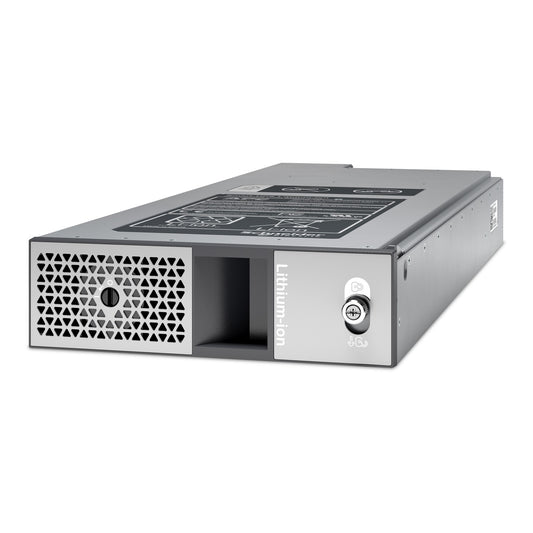
Lithium-ion UPS battery systems do not normally produce hydrogen during routine charging. However, they introduce different considerations, including thermal runaway, off-gas detection, fire-rated separation, and system-specific ventilation. Requirements may involve NFPA 855 and the locally adopted fire code.
Lithium-ion systems may reduce the need for hydrogen-specific ventilation, but they do not eliminate the need for engineered fire protection and environmental monitoring. The battery manufacturer’s installation instructions, safety data, and listing requirements must be part of the design package.
The UPS Battery Room Ventilation Roadmap
Facility managers can take these five steps today.
1. Inventory the battery system
Document the battery chemistry, manufacturer, model, number of cells or modules, total amp-hour capacity, nominal DC voltage, maximum charging current, and charging modes. Record whether batteries are installed in open racks, cabinets, or a dedicated room.
Do not assume that a battery replacement is equivalent to the original equipment. A new battery cabinet may have different thermal characteristics, charging requirements, or fire-code implications.
2. Compare the room to the current design basis
Obtain the original mechanical drawings, airflow calculations, equipment schedules, and commissioning records. Confirm the actual exhaust airflow rather than relying on fan nameplate capacity. Filters, dampers, duct restrictions, belt wear, and pressure losses can reduce delivered airflow.
For a prescriptive design, calculate the 1 cfm/ft² requirement and check whether the local AHJ applies a minimum exhaust volume. For a performance-based design, verify the hydrogen calculation under worst-case charging conditions.
3. Inspect airflow paths and sensor placement
Check that exhaust inlets are located near the ceiling and that supply air reaches the lower portion of the room without short-circuiting directly to the exhaust. Look for obstructions above battery cabinets, blocked grilles, cable trays that interrupt airflow, and temperature stratification.
Hydrogen sensors should be positioned where gas is likely to accumulate: not simply where installation is convenient. Confirm that detection is connected to audible or visual alarms, building management systems, or remote monitoring platforms as required.
4. Test the interlocks
A compliant system must respond when something goes wrong. Test the relationships between the hydrogen detector, exhaust fans, alarms, UPS controls, and facility monitoring system.
Simulate fan failure, detector alarm, loss of normal power, and loss of communications. Confirm that notifications reach the people responsible for responding, including after-hours personnel. Remote monitoring can reduce response Latency by turning a local alarm into an actionable event.
5. Coordinate with the AHJ and qualified professionals
Before modifying ventilation, battery racks, or UPS capacity, involve the mechanical engineer, electrical engineer, fire protection professional, battery manufacturer, and local AHJ. Requirements vary by location and by the adopted code edition.
Also address worker safety. Battery systems above 50 volts present electrical shock and arc-flash hazards, and battery maintenance should be covered by a documented electrical safety program. Access should be restricted to authorized, trained personnel. NFPA 70E risk-assessment principles should be applied before work begins.
Ventilation Is Part of Resilience
A Tier III or Tier IV data center cannot achieve meaningful Redundancy if its battery room is a single point of failure. Two UPS modules do not compensate for one undersized exhaust fan, one unmonitored hydrogen detector, or one room that overheats during a utility event.
The ventilation system should be included in the facility’s preventive maintenance and emergency planning programs. Recommended checks may include:
- Fan operation and delivered airflow
- Alarm and interlock functionality
- Hydrogen detector calibration
- Room temperature and humidity
- Battery terminal condition and torque
- Battery impedance or conductance trends
- Charger settings and equalize mode controls
- Clearances around racks and cabinets
- Emergency lighting, signage, and controlled access
For larger sites, integrate these data points into a DCIM or building management platform. Trends can reveal declining battery health, increasing room temperature, or repeated ventilation alarms before they become an outage or safety event.

High-efficiency online UPS systems may achieve efficiency in the 96%–97% range, depending on model, load, and operating mode. That efficiency reduces heat released into the electrical room, but it does not remove battery-room ventilation requirements. UPS efficiency, battery ventilation, cooling, and monitoring solve different parts of the resilience problem.
The modern standard is Real-Time Solutions: power protection designed around live operating conditions, remote visibility, maintainability, and safe response: not simply equipment installed according to an old floor plan.
Build a Safer Power Protection Strategy
Battery room ventilation is easy to overlook because it is often hidden behind walls, above ceilings, or inside equipment cabinets. That makes it exactly the kind of infrastructure that deserves a documented inspection before the next UPS expansion, battery replacement, or facility audit.
Ace Real Time Solutions designs and installs power protection systems for businesses and critical facilities across the United States. Our services include UPS systems, batteries, monitoring, voltage regulation, professional installation, and ongoing support. Review our power protection services, explore battery and extended-runtime options, or review APC products and services.
Visit acerts.com to download a technical specification sheet or request a power audit and solution design. A properly engineered battery room protects more than equipment. It protects uptime, personnel, compliance, and the continuity of the business.
Frequently Asked Questions
What is the purpose of UPS battery room ventilation?
UPS battery room ventilation removes hydrogen and excess heat generated by certain battery systems. For lead-acid and VRLA batteries, the goal is to prevent hydrogen from accumulating to a hazardous concentration while maintaining acceptable operating temperatures.
How does a UPS battery room meet hydrogen ventilation requirements?
A facility generally uses either a performance-based design that limits hydrogen to 1% of the room volume under worst-case charging or continuous mechanical ventilation at approximately 1 cfm/ft² of floor area, subject to the locally adopted code and AHJ requirements. Ceiling-level exhaust, appropriate make-up air, hydrogen detection, alarms, and tested interlocks are also important design elements.
How does battery chemistry change fire protection requirements?
Lead-acid and VRLA batteries require attention to hydrogen generation, ventilation, electrolyte exposure, and thermal runaway. Lithium-ion systems typically do not generate routine hydrogen, but they require controls for thermal runaway, off-gas detection, fire protection, and temperature management. The battery manufacturer and local code determine the final design.