
UL 9540A vs. Fire Testing: Which Safety Standard Matters?
The data center industry is currently navigating a high-stakes transition. As the demand for AI-driven compute power skyrockets, facilities are pushing rack densities to unprecedented levels: often exceeding 50kW to 100kW per rack. To support this massive load, there is a systemic shift away from traditional Valve Regulated Lead Acid (VRLA) batteries toward high-density Lithium-ion (Li-ion) solutions. While Li-ion offers superior lifecycle value and a smaller footprint, it has introduced a complex layer of regulatory scrutiny regarding fire safety and thermal stability that many facility managers are still struggling to decode.
Today, the challenge isn't just about maintaining uptime; it's about navigating a tightening web of municipal fire codes and insurance requirements. Authority Having Jurisdictions (AHJs) are no longer satisfied with a simple "UL-listed" sticker. They are demanding granular data on how energy storage systems behave under catastrophic failure. This has placed two standards at the center of the conversation: UL 9540 and UL 9540A. Understanding the distinction between a product certification and a testing methodology is now the difference between a streamlined deployment and a multi-month project delay.
Why Now: The Failure of the Status Quo in Thermal Management
For decades, fire safety in the power room was relatively straightforward. If a VRLA battery failed, it usually leaked or dried out. If it caught fire, standard sprinkler systems or clean agent suppression could handle it. However, the energy density of modern battery chemistry means that Thermal Management is no longer a passive concern: it is a critical operational priority. The status quo of relying on legacy building codes is failing because those codes were not designed for the specific risks of thermal runaway, where a single cell failure can trigger a self-sustaining chemical fire that spreads to adjacent modules.
When thermal runaway occurs, the primary goal of any modern infrastructure is containment. This is where the industry’s focus on Redundancy shifts from purely electrical uptime to physical safety redundancy. If your UPS system cannot prove that it can isolate a fire to a single rack or module, you risk not just the loss of your hardware, but the structural integrity of the entire facility. This is why the "fire testing" conversation has evolved. It’s no longer about whether a material is "fire-resistant"; it’s about having a data-backed roadmap of exactly how much energy, gas, and heat will be released during a failure. Without this data, site approvals are grinding to a halt, leaving critical IT loads vulnerable to power instability.
UL 9540 vs. UL 9540A: Defining the Standards
To build a reliable power protection strategy, you must distinguish between the "label" and the "test."
UL 9540: The System Certification
UL 9540 is the Standard for Energy Storage Systems and Equipment. Think of this as the overarching umbrella. It is a safety certification that evaluates the entire system as a single unit. This includes the batteries, the inverter-chargers, the control software, and the physical enclosure. When a product is "UL 9540 Listed," it means the entire assembly has been vetted to work together safely under normal and abnormal electrical conditions.
UL 9540A: The Test Method
UL 9540A is not a certification you "get." It is a test method used to evaluate how a fire propagates during thermal runaway. It provides a standardized way for manufacturers to prove their systems meet the requirements of the International Fire Code (IFC) and NFPA 855. Instead of a pass/fail grade, UL 9540A generates a massive report of data. This data tells fire marshals and engineers exactly how far apart the IT racks need to be and whether the built-in fire suppression is adequate.
The Four Levels of UL 9540A Testing
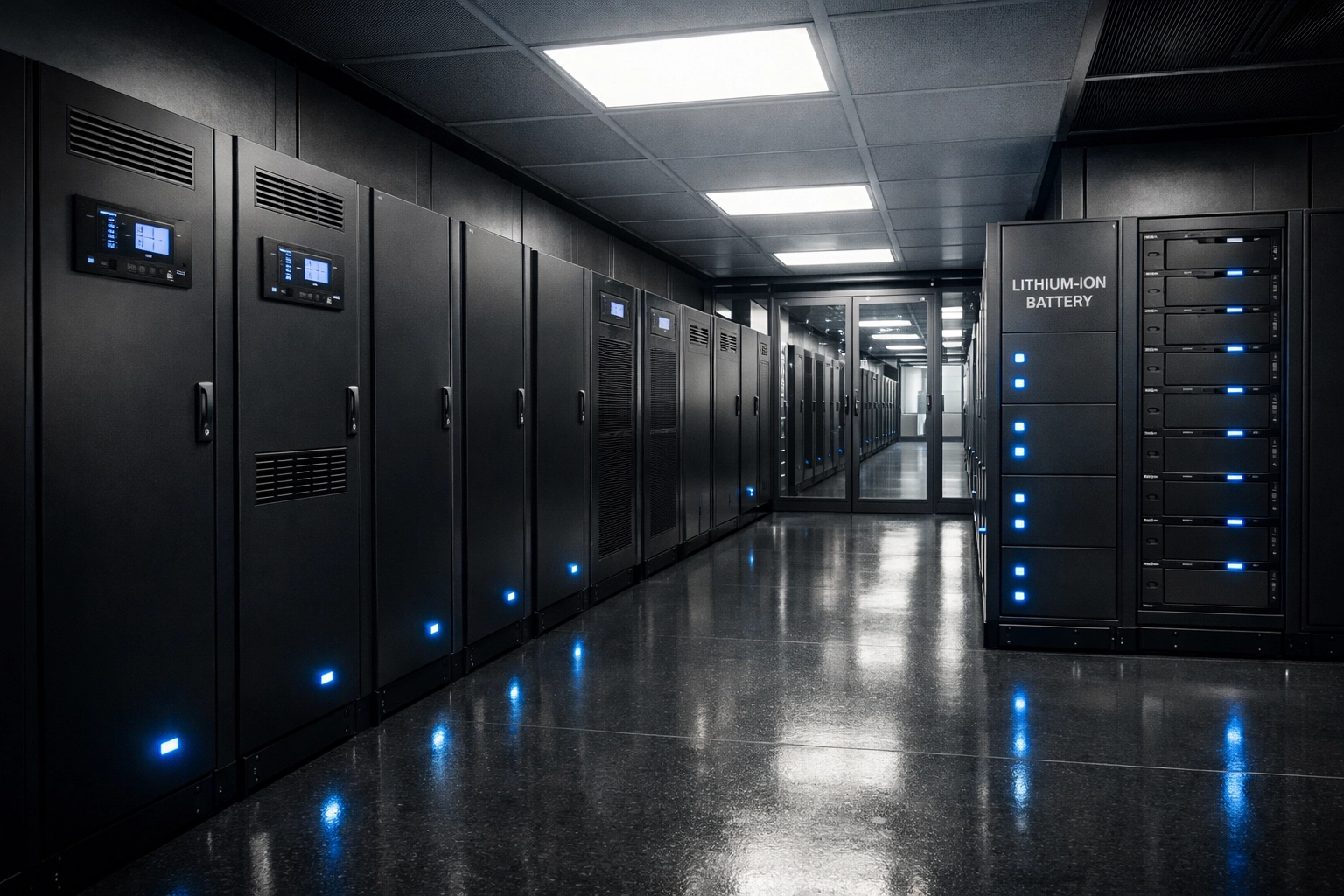
When you review a technical spec sheet from a major manufacturer like Vertiv, APC by Schneider Electric, or CyberPower, you might see references to different "levels" of testing. These levels simulate a failure starting at the smallest component and scaling up to the full room.
- Cell Level Testing: Engineers force a single battery cell into thermal runaway. They measure if it catches fire and what gases are released.
- Module Level Testing: They test if a fire in one cell spreads to others in the same module. This is where "Real-Time Solutions" in hardware design: like thermal barriers: show their worth.
- Unit Level Testing: This evaluates if the fire spreads from one battery cabinet to the next. This data is vital for determining the "separation distance" required by your local fire marshal.
- Installation Level Testing: This is a large-scale test that looks at how the system interacts with the room's fire suppression and overhead sprinklers.
For a Facility Manager, the Unit Level data is often the most important. It dictates whether you can push your UPS cabinets against a wall or if you need a 3-foot clearance on all sides, which directly impacts your data center’s square footage efficiency and MW per rack capacity.
The Fire Safety Roadmap: 5 Steps to Compliance
Navigating these standards doesn't have to be a bottleneck. If you are planning a power upgrade or a new build, follow this roadmap to ensure your facility meets both safety and insurance requirements.
- Audit Your Local Fire Code: Not every city follows the same version of the IFC or NFPA 855. Before buying hardware, confirm which standard your local AHJ is enforcing.
- Request the UL 9540A Test Summary: Don't just take a vendor's word that they are "compliant." Ask for the actual test summary. This document provides the specific separation distances and heat release rates that your engineers need for site design.
- Verify System-Wide Certification: Ensure your chosen UPS system and battery cabinets are UL 9540 certified as a pair. Mixing and matching different battery brands with different inverters can void the certification and lead to insurance denials.
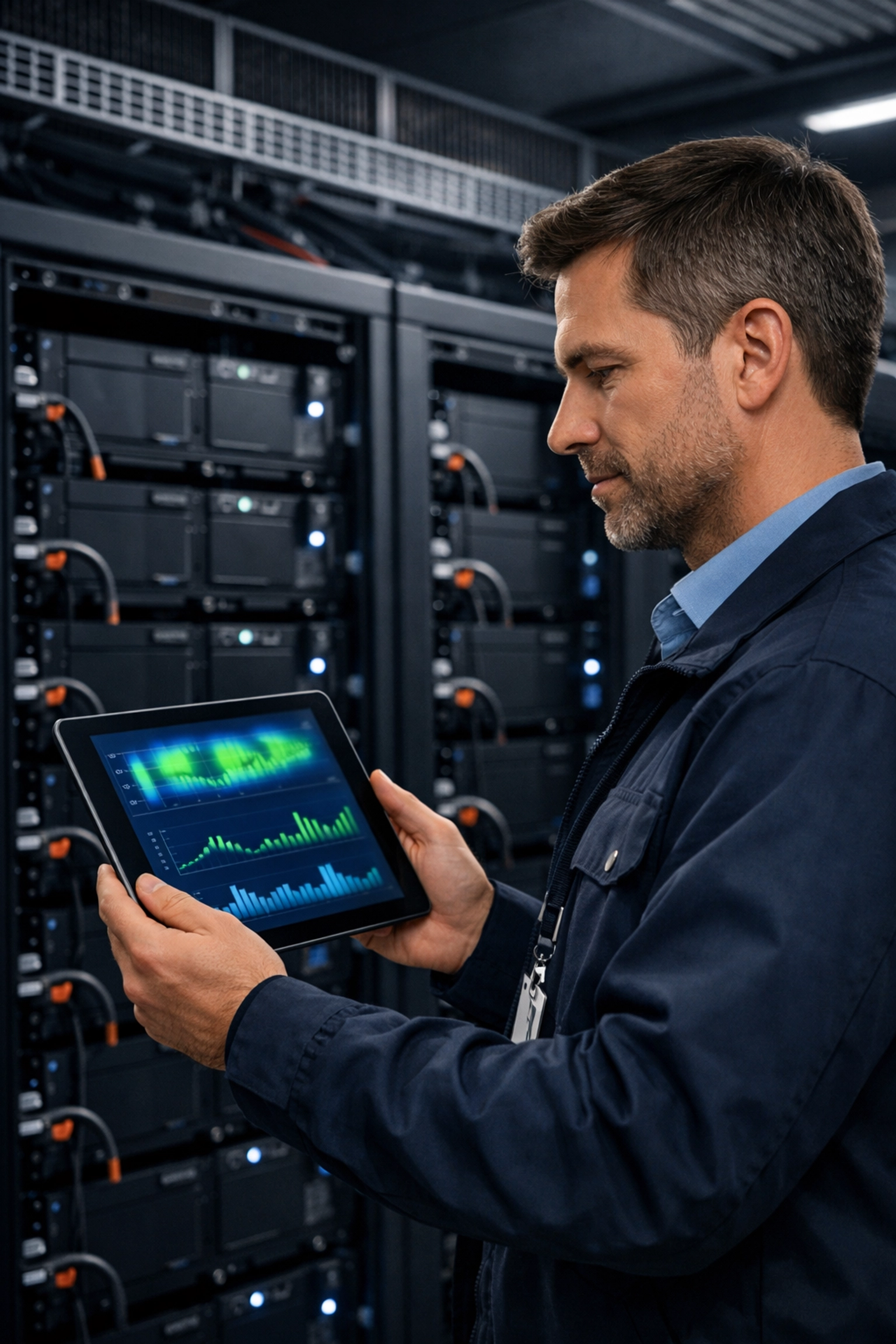
- Incorporate Remote Monitoring: Real-time visibility is the best fire prevention. Use remote monitoring and control tools to track temperature trends at the cell level. If a module shows a 5-degree spike over baseline, you can intervene before it becomes a thermal event.
- Design for Accessibility: Ensure your layout allows for the "Installation Level" requirements found in the 9540A report. This often means ensuring fire crews have clear access to the battery room and that gas exhaust paths are not obstructed.
Technical Depth: Impact on Data Center Tiering
In a Tier III or Tier IV data center, Latency in power response is unacceptable, but so is a lack of safety Redundancy. Modern UPS systems from brands like Minuteman Power Technologies or APC are now achieving efficiency ratings of 97% to 99% in high-efficiency modes. However, these efficiency gains must be balanced against the safety profile of the battery chemistry used.
For instance, Lithium Iron Phosphate (LiFePO4) is widely regarded as a safer alternative to Nickel Manganese Cobalt (NMC) because it has a much higher thermal runaway temperature. When you combine LiFePO4 chemistry with a system that has undergone rigorous UL 9540A testing, you are creating a "Real-Time Solution" that protects both the data and the physical assets. High-authority facilities are now requiring these specific safety specs to be integrated into their BIM (Building Information Modeling) workflows to ensure that the 1.5 MW of power they are deploying doesn't turn into a liability.
Beyond the UPS: A Holistic View
While the UPS is the heart of power protection, fire safety extends to the entire infrastructure. This includes:
- Cable Management: Ensuring high-voltage DC cables are properly routed and not contributing to fire spread.
- Cooling and Air Flow: Proper Thermal Management involves more than just the batteries; it’s about ensuring the HVAC system can handle the heat load and don't circulate smoke throughout the facility.
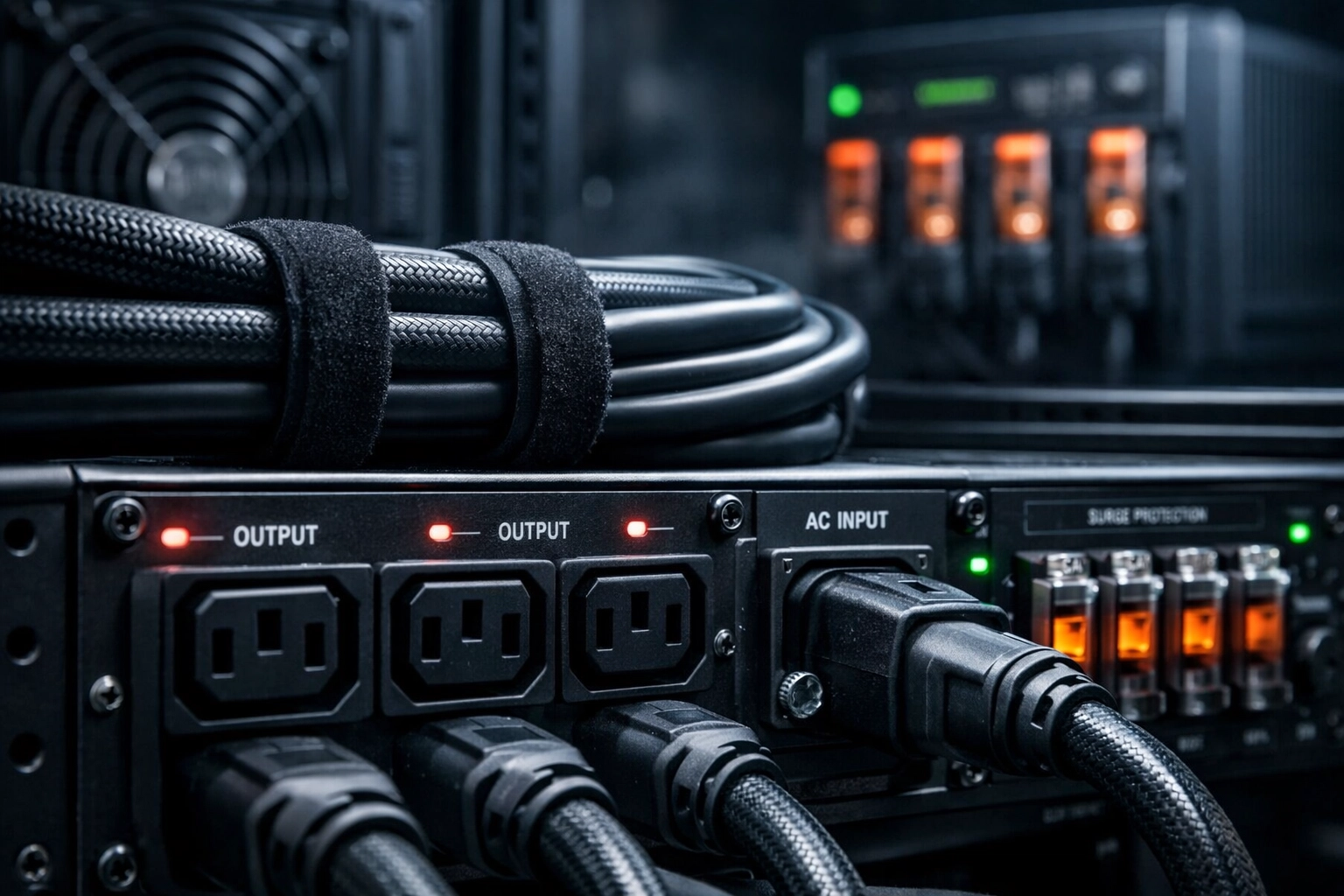
- Surge Protection: Devices like EMP Shield protect the sensitive electronics that manage battery safety systems from external electrical threats.
FAQ: Understanding UL 9540A and Fire Safety
What is the difference between a UL listing and a UL 9540A report? A UL listing (like UL 1973 or UL 9540) is a certification that a product meets specific safety standards. A UL 9540A report is a detailed data set from a specific fire test. You use the data in the 9540A report to prove to fire marshals that your installation is safe, even if it doesn't meet the "prescriptive" spacing requirements in the fire code.
How does UL 9540A affect my insurance premiums? Insurers are becoming increasingly wary of large-scale Lithium-ion installations. Providing a complete UL 9540A test summary demonstrates that you have performed due diligence in fire propagation analysis. This transparency can lead to lower premiums and easier coverage approvals compared to "unknown" or uncertified battery setups.
Do all UPS batteries need UL 9540A testing? Technically, the standard (NFPA 855) requires it for most indoor battery energy storage systems over a certain kWh threshold. While some smaller desktop UPS units may fall under different categories, any enterprise-level power protection system being installed in a data center or commercial building will almost certainly need to provide this data to clear the permitting process.
Expert Guidance for Your Power Infrastructure
Navigating the nuances of UL standards and fire safety codes is not something you should do alone. At Ace Real Time Solutions, we specialize in bridging the gap between high-performance hardware and strict regulatory compliance. Whether you are looking at Vertiv for a large-scale data center or Minuteman Power Technologies for an edge facility, we ensure your solution is built on a foundation of reliability and safety.
Don't wait for a fire marshal to halt your project. Visit acerts.com today to download technical spec sheets or request a comprehensive power audit and solution design. Let us help you deploy a power protection strategy that is both high-performing and fully compliant with modern safety standards.