

The Truth About Surge Protection: Myths vs. Facts
Let's be honest – surge protectors are one of those things most people don't think about until something goes wrong. You plug your expensive electronics into what looks like a fancy power strip and assume you're covered, right? Well, not exactly. There's a lot of misinformation floating around about surge protection, and believing the wrong things could leave your valuable equipment vulnerable.
Today, we're setting the record straight on some of the biggest myths about surge protection. Whether you're protecting a home office setup or managing IT equipment for your business, understanding these facts could save you thousands of dollars in damaged equipment.
Myth #1: Surge Protectors Are Only Needed During Thunderstorms
The Reality: This is probably the most dangerous myth out there. While lightning strikes certainly grab headlines, they're actually responsible for only a small fraction of power surges that damage electronics.
Here's what might surprise you: 60-80% of power surges actually originate inside your home or business. Every time your air conditioner kicks on, your refrigerator cycles, or that old printer in the corner starts up, it can create a voltage spike. These internal surges happen dozens of times per day, slowly wearing down your electronics even if they don't cause immediate failure.
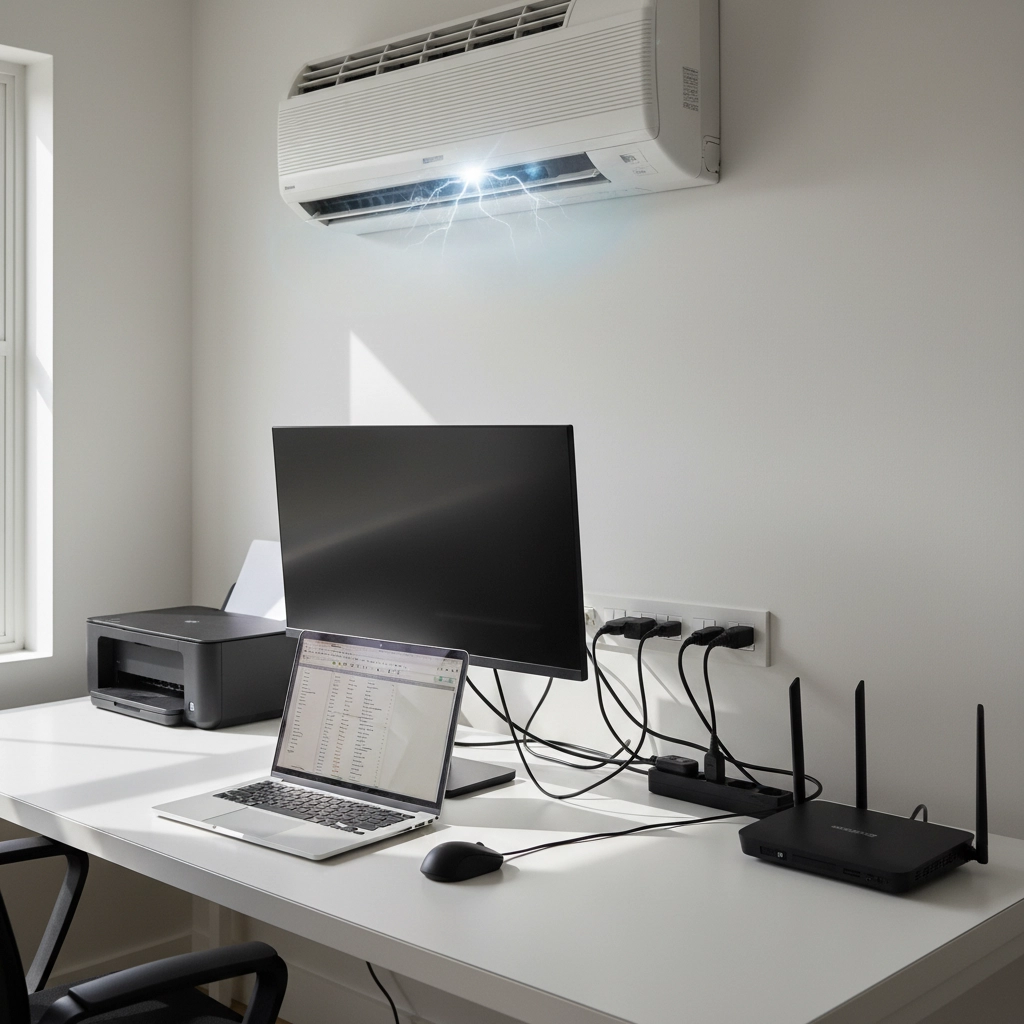
The remaining surges come from external sources – utility grid switching, nearby lightning strikes, and power line issues. This means your electronics are under constant threat, not just during storm season.
Myth #2: Power Strips and Surge Protectors Are the Same Thing
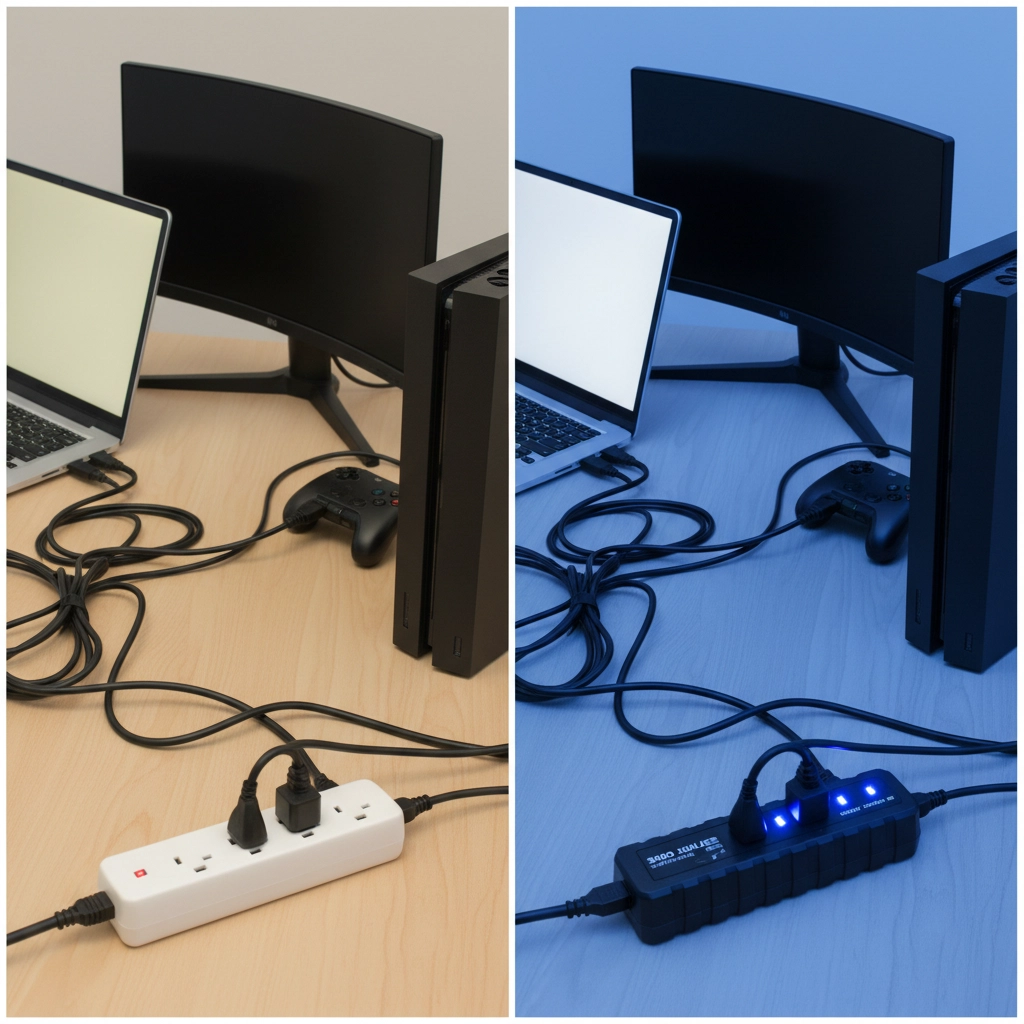
The Reality: This confusion costs people big time. A basic power strip is essentially an extension cord with multiple outlets – it provides no surge protection whatsoever. You could have six outlets' worth of expensive equipment plugged into what looks like protection, but you're actually getting zero defense against voltage spikes.
Real surge protectors contain metal oxide varistors (MOVs) that detect voltage spikes and divert excess energy away from your connected devices. When shopping, look specifically for the words "surge protection" on the packaging and check for a joule rating – that's your indicator of actual protection capability.
Quality surge protectors from brands like APC by Schneider Electric will clearly display their protection specifications and often include LED indicators showing that protection is active.
Myth #3: Surge Protectors Can Handle Direct Lightning Strikes
The Reality: Let's get one thing straight – no consumer-grade surge protector can withstand a direct lightning strike. Lightning packs billions of joules of energy, which is orders of magnitude beyond what any home or office surge protector is designed to handle.
However, surge protectors excel at protecting against the much more common scenario: the electrical disturbances that occur when lightning strikes nearby power lines or transformers. These "secondary" surges are still powerful enough to fry electronics but are within the range that quality surge protection can handle.
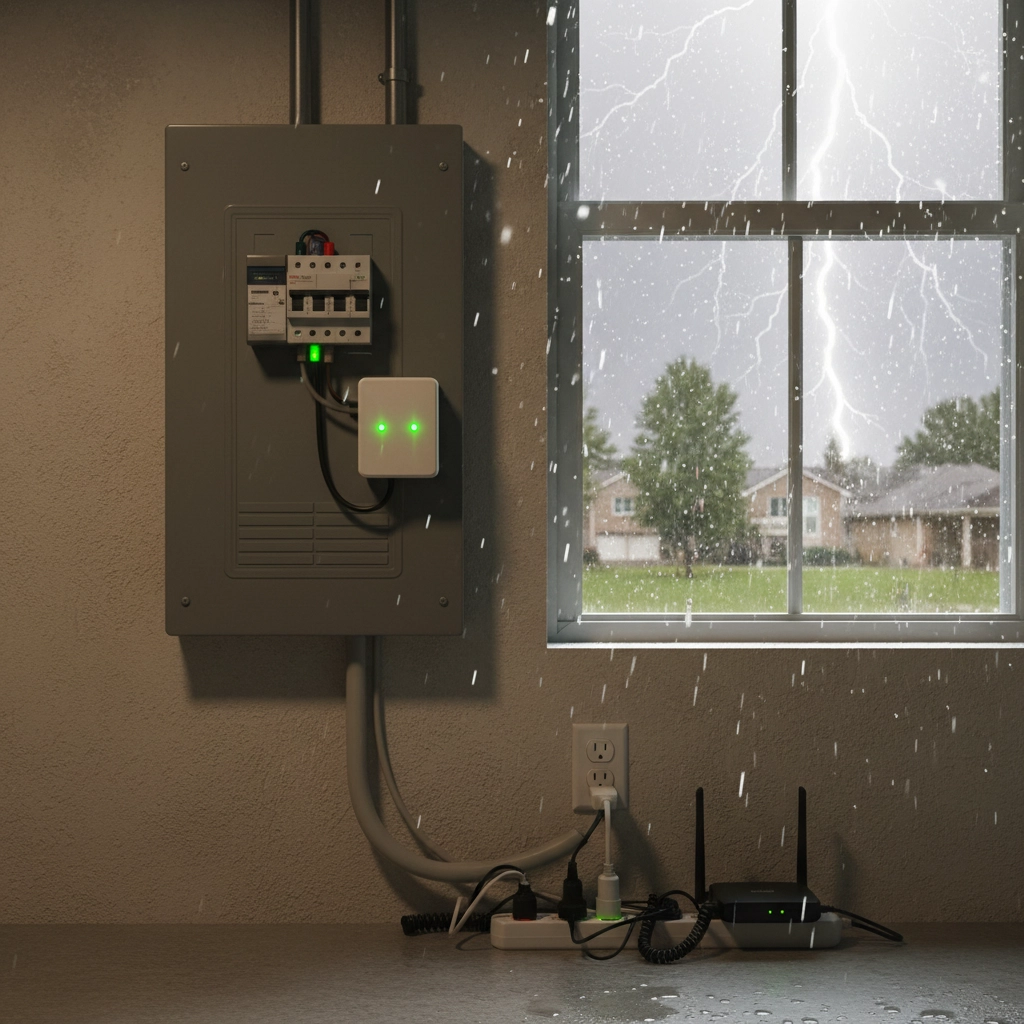
If you're in a lightning-prone area, your best bet is a layered approach combining whole-house surge protection at your electrical panel with individual surge protectors for sensitive equipment.
Myth #4: Once You Buy a Surge Protector, You're Set for Life
The Reality: This myth probably causes more equipment damage than any other misconception. Surge protectors don't last forever – they gradually wear out as they absorb voltage spikes.
Think of surge protection like a shield that takes damage every time it blocks an attack. Each surge consumes some of the protector's capacity, measured in joules. Once a surge protector has absorbed its maximum rated energy, it may continue functioning as a power strip, but the protection is essentially gone.
Most manufacturers recommend replacing surge protectors every 2-3 years, or immediately after any major electrical event in your area. Quality units include warning lights or audible alarms that alert you when protection has been compromised.
Myth #5: Whole-House Surge Protection Is All You Need
The Reality: Whole-house surge protectors installed at your electrical panel are fantastic for stopping large external surges, but they can't protect against those internal surges we mentioned earlier – which make up the majority of damaging events.
The most effective approach uses both levels of protection:
- Whole-house protection at the electrical panel to handle big external surges
- Point-of-use protection at individual outlets for sensitive electronics
This layered strategy catches surges that might slip through the first line of defense and provides redundancy for your most critical equipment.
Myth #6: More Expensive Always Means Better Protection
The Reality: While you shouldn't go with the cheapest option available, price alone doesn't determine protection quality. Some expensive models include features like USB charging ports, Wi-Fi connectivity, or premium aesthetics that don't necessarily improve surge protection capability.
What really matters is the joule rating, clamping voltage, and response time. A mid-range surge protector with good specifications often provides better protection than a premium model loaded with bells and whistles but skimping on core protection components.
Focus on these key specs:
- Joule rating: Higher numbers mean more protection capacity
- Clamping voltage: Lower numbers mean better protection (320V or less is ideal)
- Response time: Faster is better (nanoseconds, not microseconds)
Myth #7: Surge Protectors Eliminate All Electrical Safety Concerns
The Reality: Surge protection is just one piece of electrical safety. Poor wiring, inadequate grounding, and overloaded circuits can all create problems that surge protectors can't solve – and may actually make worse.
Before relying on surge protection, ensure your electrical system is properly maintained. Have a qualified electrician check your grounding, update aging wiring, and verify that your electrical panel can handle your current load. Surge protectors work best as part of a well-maintained electrical system.
The Smart Approach to Surge Protection
Now that we've cleared up these common misconceptions, here's how to actually protect your equipment effectively:
For Home Offices:
- Install a whole-house surge protector at your electrical panel
- Use quality point-of-use protectors for computers, networking equipment, and other sensitive electronics
- Replace surge protectors every 2-3 years or after major electrical events
For Small Businesses:
- Implement layered protection with both whole-house and individual unit protection
- Consider uninterruptible power supply (UPS) systems for critical equipment that need both surge protection and battery backup
- Establish a replacement schedule for aging protection equipment

For Everyone:
- Never daisy-chain surge protectors
- Avoid plugging high-power appliances into surge protectors
- Keep surge protectors in well-ventilated areas
- Test protection indicators regularly
Don't Leave Your Equipment Vulnerable
Understanding the truth about surge protection isn't just about avoiding equipment damage – it's about protecting your productivity, your data, and your investment in technology. Whether you're running a home-based business or managing a small office, the cost of quality surge protection is minimal compared to replacing damaged equipment and recovering lost data.
At Ace Real Time Solutions, we've seen too many businesses learn these lessons the hard way. The good news is that with the right knowledge and equipment, surge damage is completely preventable.
Ready to properly protect your valuable electronics? Contact our team for personalized recommendations on surge protection solutions that fit your specific needs and budget. We'll help you design a protection strategy that actually works – no myths, just reliable protection for what matters most to your business.