

The Silent Battery Killer: How Extreme Heat Waves Are Draining Your UPS
You've invested thousands in your UPS infrastructure. You've done the load calculations, picked the right topology, and scheduled your maintenance windows. But there's an invisible threat that could be silently destroying your backup power right now, and it's not a cyberattack or a manufacturing defect.
It's heat.
With extreme heat waves becoming more frequent and intense across the country, your UPS batteries are taking a beating you might not even notice until it's too late. Here's the kicker: battery lifespan can be cut in half for every 10°C (18°F) increase above optimal operating temperatures. That's not a typo. Half your expected battery life, gone, just because the temperature crept up.
Let's break down exactly how this happens and what you can do about it before you're left scrambling during the next outage.
The Science Behind Heat-Related Battery Degradation
Understanding why heat is so destructive to UPS batteries requires a quick look at what's happening inside those cells.
Accelerated Chemical Reactions
Batteries work through controlled chemical reactions. When temperatures rise, those reactions speed up, but not in a good way. The increased reaction rate causes:
- Corrosion of electrode materials that permanently reduces capacity
- Electrolyte breakdown that can't be reversed
- Faster self-discharge rates, meaning your batteries lose charge even when sitting idle
Think of it like leaving a car in the Arizona sun every day. Sure, it'll still run for a while, but the wear and tear accumulates much faster than if you parked it in a garage.
Reduced Capacity and Runtime
Here's where it gets really frustrating. High temperatures don't just shorten the overall lifespan of your batteries: they also reduce their effective capacity right now. That means during an actual power event, your UPS might deliver significantly less backup time than you planned for.
If you sized your system for 15 minutes of runtime at full load, extreme heat could knock that down to 10 minutes or less. In a data center environment where downtime costs average $7,900 per minute according to Gartner, that's not just an inconvenience: it's a financial disaster waiting to happen.
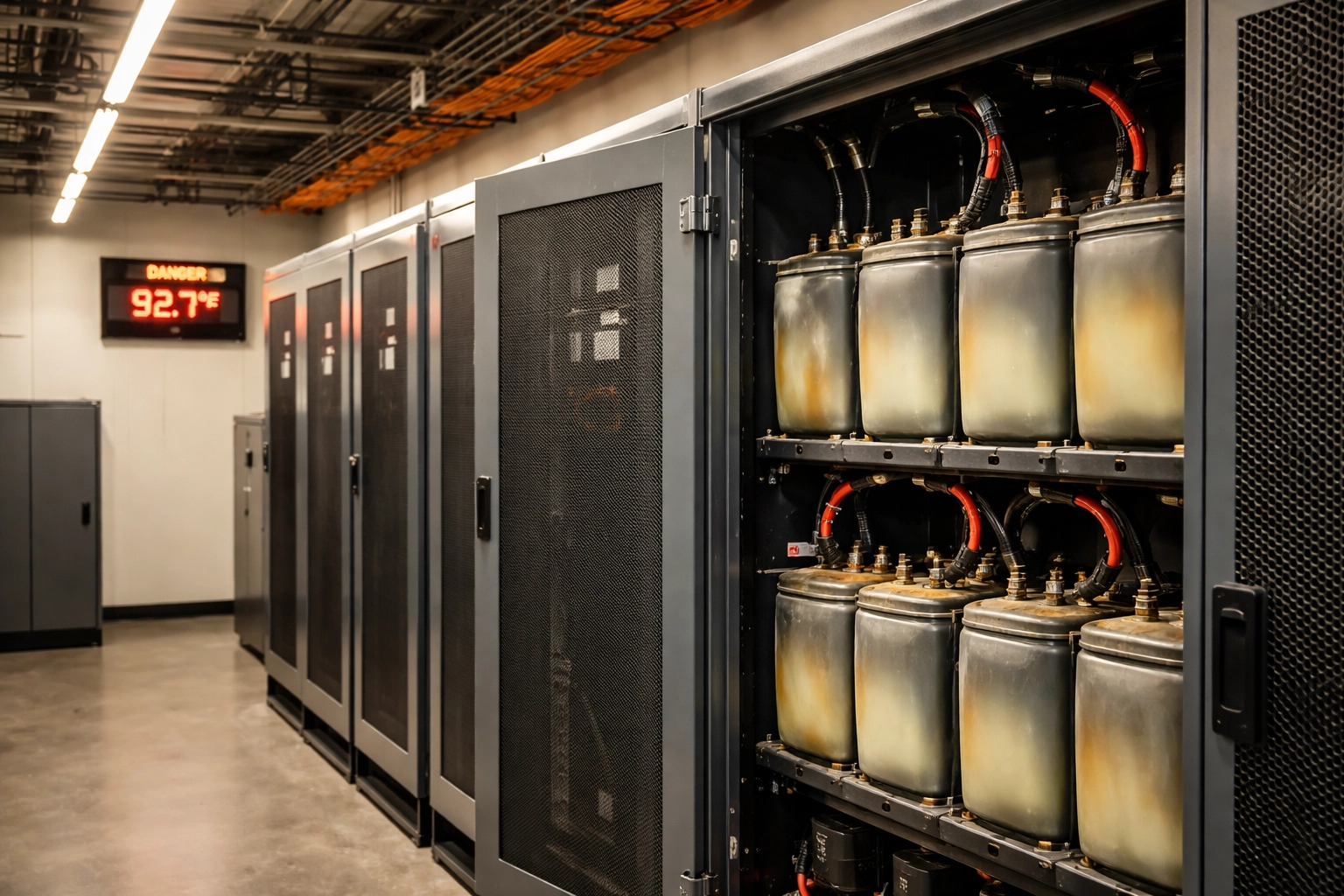
The Thermal Runaway Nightmare
This is the worst-case scenario, and it's more common than you'd think. Thermal runaway occurs when a battery cell gets so hot that it starts generating heat faster than it can dissipate. This creates a dangerous feedback loop:
- Temperature rises
- Internal resistance increases
- More heat is generated
- Temperature rises further
- Repeat until catastrophic failure
Once thermal runaway starts, it can spread to neighboring cells, potentially causing fires, explosions, or complete system destruction. Both lithium-ion and lead-acid batteries are susceptible, especially when they're already aged or have existing defects.
Warning Signs Your UPS Batteries Are Overheating
The good news? Heat damage doesn't happen overnight, and there are usually warning signs if you know what to look for.
Physical Indicators
- Swelling or bulging battery cases – This is a major red flag that gases are building up inside
- Unusual odors – A sulfur or rotten egg smell often indicates lead-acid battery problems
- Discoloration or leaking – Any visible damage means replacement is overdue
Performance Red Flags
| Warning Sign | What It Means |
|---|---|
| Shorter runtime than expected | Reduced effective capacity |
| Frequent battery warnings | System detecting degraded cells |
| Higher than normal float voltage | Compensation for weakened batteries |
| Increased charging time | Internal resistance has risen |
Environmental Clues
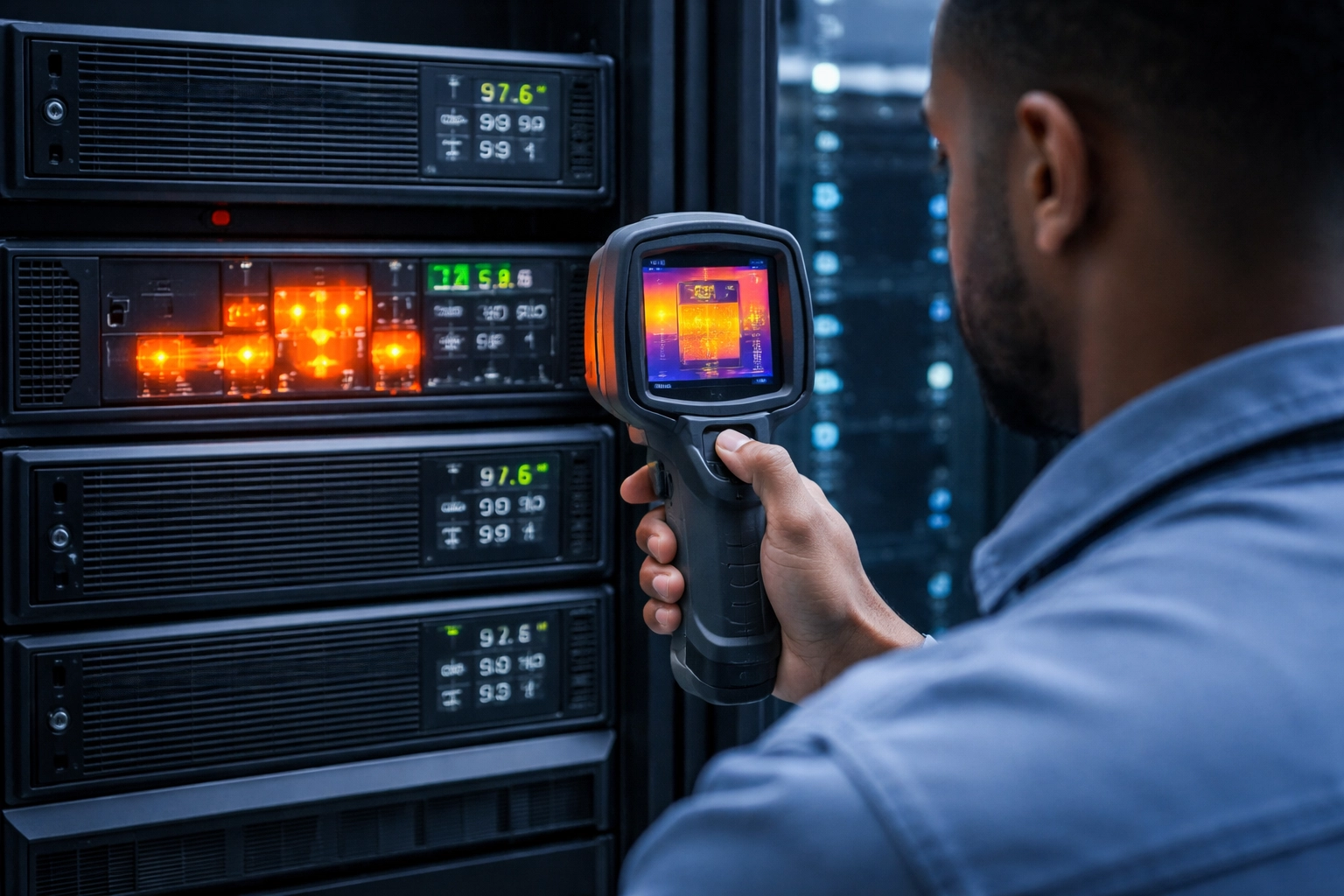
If your server room or data center regularly exceeds 25°C (77°F), your batteries are operating outside their optimal range. Even brief temperature spikes during heat waves can cause cumulative damage that adds up over time.
The Real Cost of Ignoring Heat Damage
Let's talk numbers, because this is where the business case becomes crystal clear.
Case Study: A Regional Tech Company's Wake-Up Call
A mid-sized tech company running a 500kW data center experienced an unexpected UPS failure during a summer heat wave. Their batteries were only three years into a projected five-year lifespan, but the facility's cooling system had been struggling to keep up with ambient temperatures.
The result?
- 4 hours of partial downtime while emergency generators were brought online
- $180,000 in direct costs including emergency battery replacement and overtime labor
- Estimated $400,000 in indirect costs from SLA penalties and customer churn
The root cause? Average battery compartment temperatures had been running 8-10°C above recommended levels for two consecutive summers. Nobody noticed because the UPS was still "working": until it wasn't.
The Hidden Costs Add Up
Beyond the dramatic failure scenarios, heat damage creates ongoing expenses:
- More frequent battery replacements – Instead of 5-year cycles, you're replacing every 2-3 years
- Increased maintenance costs – More inspections, more testing, more labor hours
- Higher energy bills – Degraded batteries require more charging cycles
- Reduced resale value – When it's time to upgrade, damaged equipment is worth less
Practical Solutions to Protect Your Investment
Now for the part you actually came here for: how to fight back against heat damage.
Optimize Your Environment
The ideal operating temperature for UPS batteries is between 20°C and 25°C (68°F–77°F). Here's how to get there:
- Dedicated cooling for battery rooms – Don't rely on general HVAC to handle battery compartments
- Hot aisle/cold aisle containment – Proper airflow management keeps temperatures consistent
- Temperature monitoring with alerts – Real-time sensors that notify you before problems escalate
- Regular HVAC maintenance – A failing AC unit during a heat wave is a recipe for disaster
Choose the Right Battery Technology
Not all batteries handle heat equally. Consider these options for high-temperature environments:
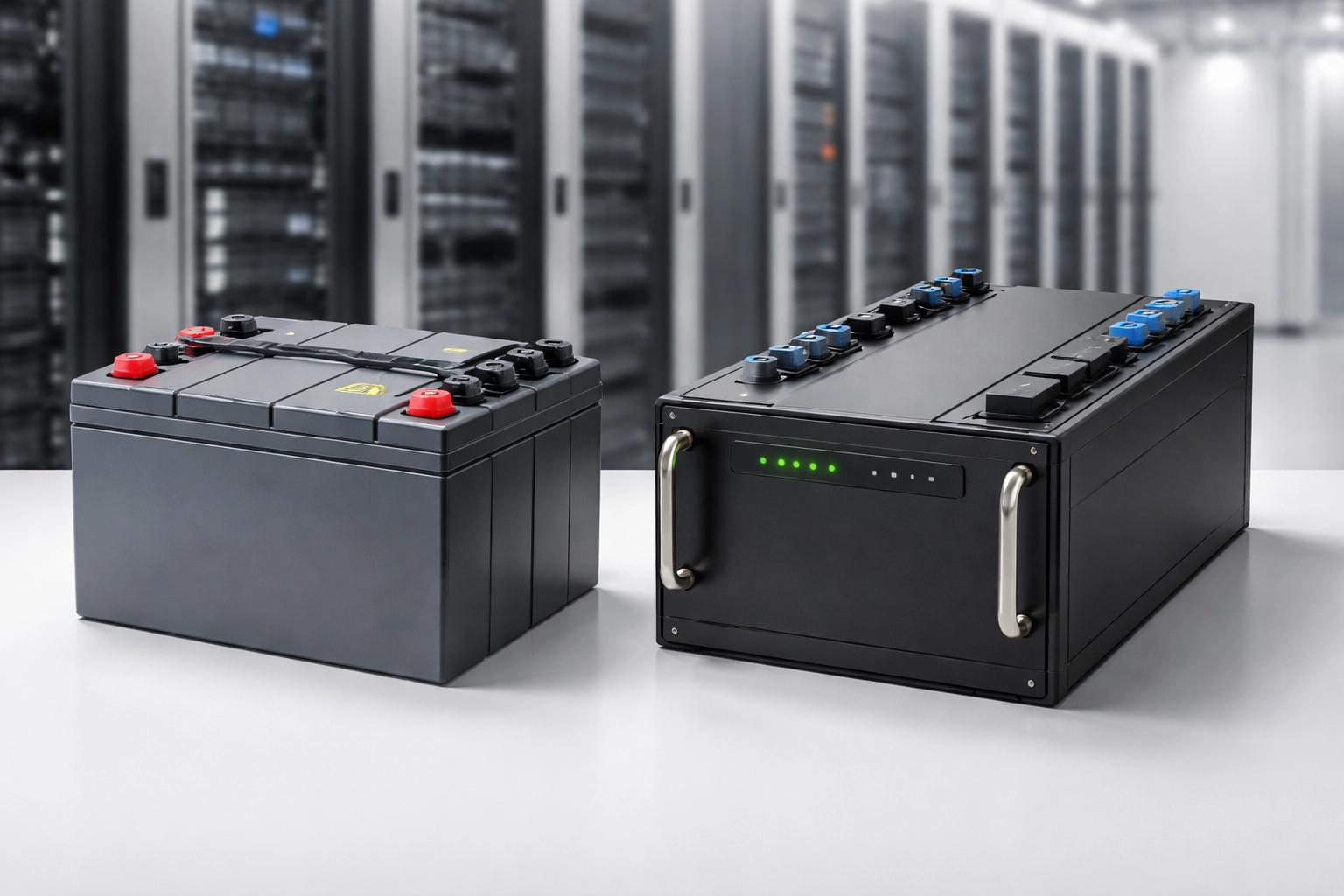
- Lithium-ion batteries – Generally more heat-tolerant than lead-acid, with better energy density
- High-temperature rated VRLA batteries – Designed specifically for challenging thermal conditions
- Modular battery systems – Allow you to replace individual modules rather than entire strings
Check out our battery collection for options designed to handle demanding environments.
Implement Proactive Maintenance
Waiting for batteries to fail is the most expensive approach. Instead:
- Conduct quarterly thermal imaging scans to identify hot spots before they become problems
- Perform regular capacity testing to catch degradation early
- Document and track temperature trends over time
- Replace batteries proactively based on actual condition, not just age
Consider Redundancy and Backup Plans
Even with perfect maintenance, heat waves can overwhelm your systems. Smart operators plan for this:
- N+1 or 2N redundancy for critical loads
- Generator backup with automatic transfer switches
- Load shedding protocols to extend runtime during emergencies
- Emergency vendor relationships for rapid battery replacement
Key Takeaways
Heat is the silent killer of UPS batteries, and with climate patterns pushing temperatures higher every year, this problem isn't going away. Here's what to remember:
- Every 10°C above optimal cuts battery life in half
- Thermal runaway is a real risk that can cause catastrophic failures
- Warning signs exist if you're monitoring for them
- Proactive environmental control and maintenance are your best defenses
- The cost of prevention is always less than the cost of failure
Ready to Heat-Proof Your Power Protection?
Don't wait for the next heat wave to find out if your UPS batteries can handle the stress. Our team at Ace Real Time Solutions specializes in helping data centers and tech companies build resilient power protection systems that perform when it matters most.
Contact our team for a free assessment of your current setup, or explore our services to learn how we can help you stay ahead of the curve.
Have questions about protecting your UPS from extreme temperatures? Drop them in the comments below( we'd love to help.)