

The Legacy Gear Survival Guide: Modern Protection for Vintage Machines
The industrial and scientific landscape is currently caught in a precarious pincer movement. On one side, we have the "if it ain't broke, don't fix it" reality of legacy infrastructure, multi-million dollar CNC machines, specialized laboratory mass spectrometers, and legacy telecommunications racks that have performed reliably for decades. On the other side, we have a modern electrical grid that is increasingly volatile, characterized by high-frequency switching noise, rapid voltage fluctuations, and the "dirty" power profiles generated by neighboring renewable energy sources and high-density AI data centers.
For facility managers and CTOs, this creates a significant risk profile. Legacy equipment was designed for a grid that no longer exists, a grid that was more predictable and less crowded. Today’s digital grid operates with a level of "noise" that can bridge the aging insulation of a 20-year-old transformer or confuse the sensitive logic boards of a legacy controller. When these vintage assets fail, the "latency" in finding replacement parts or specialized technicians can result in weeks of unplanned downtime, costing tens of thousands of dollars per hour.
Why Now? The Failure of the Status Quo
The status quo for protecting legacy gear: often a mix of basic surge strips and aging ferroresonant transformers: is failing because it lacks the precision required for modern power anomalies. Traditional protection was designed to stop "the big hit" (lightning or major surges), but it is often blind to the micro-interruptions and harmonic distortions that define 2026’s power landscape.
In a modern facility, Thermal Management and Redundancy are no longer just buzzwords for the data center; they are requirements for the factory floor and the lab. Legacy power supplies in vintage machines are notoriously inefficient, often converting a large portion of incoming energy into heat. When the incoming power is inconsistent, these power supplies work harder, increasing the thermal load on internal components that are already decades into their expected lifespan. Without Real-Time Solutions to monitor these fluctuations, you aren't just risking a shutdown; you are accelerating the physical degradation of your most valuable assets.
Furthermore, the rise of "Smart" grids means that utility companies are constantly switching sources to balance loads. These transitions create "transient voltages" that a modern CyberPower UPS would handle with ease, but which can bypass the simpler filters of a 1990s-era machine tool.
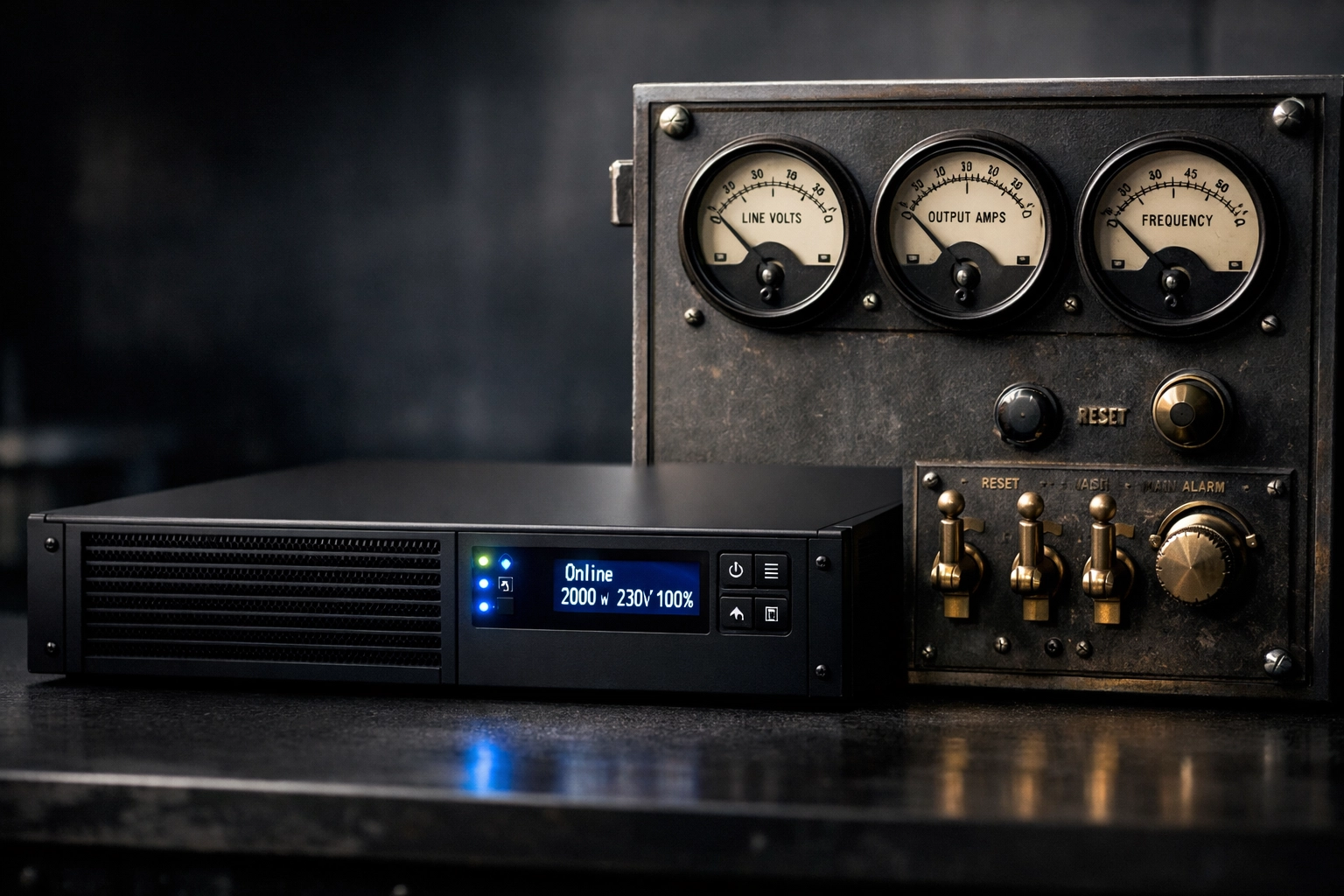
The Legacy Gear Survival Roadmap
Protecting vintage machines in a modern environment requires a strategic pivot from "passive" protection to "active" power conditioning. If you are managing a facility where the hardware predates the iPhone, follow this roadmap to ensure operational continuity.
1. Conduct a Total Harmonic Distortion (THD) Audit
Legacy machines often have low tolerance for THD. Modern electronic loads (like LED lighting and variable frequency drives) inject "noise" back into your internal electrical system. Use a power quality analyzer to measure the THD at the point of use for your vintage gear. If the THD exceeds 5%, your legacy components are likely running hotter and less efficiently than intended.
2. Implement Online Double-Conversion Topology
For mission-critical vintage gear, "Standby" or "Line-Interactive" UPS systems are often insufficient. You need an Online Double-Conversion UPS from brands like APC by Schneider Electric or Vertiv. These systems take incoming AC power, convert it to DC, and then reconstruct a perfect, isolated AC sine wave. This creates an "air gap" between the chaotic grid and your sensitive vintage electronics, providing 0ms transfer time and eliminating "latency" in power delivery during a sag.
3. Prioritize Galvanic Isolation
Many legacy machines use "Common Mode" noise rejection techniques that are outdated. By installing an isolation transformer or a UPS with an internal isolation transformer, you physically decouple the machine from the building's grounding system. This prevents ground loops and protects the delicate logic boards in your vintage gear from stray currents that can cause "ghost" errors or hardware frying.
4. Deploy Remote Monitoring and Predictive Analytics
Just because a machine is old doesn't mean its protection should be "dumb." Modern power protection solutions allow for remote monitoring via SNMP cards. By integrating these into your network, you can receive real-time alerts on battery health, load percentages, and environmental factors like humidity and temperature. This allows for a "Real-Time Solution" to problems before they result in a hard crash of the legacy system.
5. Review Thermal Management for Enclosures
Vintage machines were often built with heavy metal casings that act as heat sinks. However, when you add modern power protection hardware nearby, the ambient temperature can rise. Ensure that your IT racks and machine enclosures have adequate airflow. Consider dedicated cooling solutions if the equipment is housed in a non-climate-controlled industrial environment.
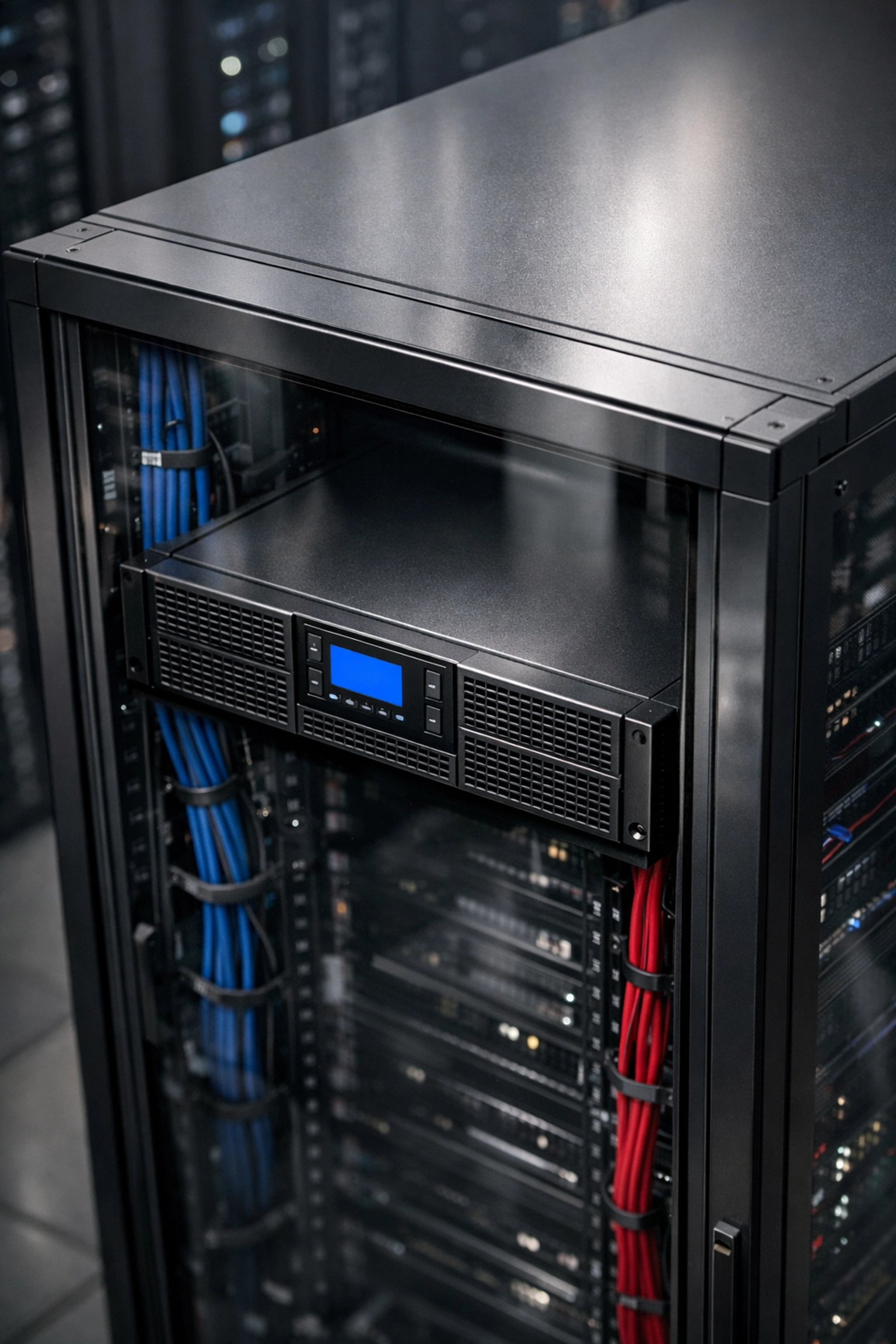
Technical Depth: Specs That Matter for Legacy Protection
When selecting hardware to protect your "vintage fleet," don't just look at the KVA rating. You need to dive into the technical specs to ensure compatibility with older power factor profiles.
- UPS Efficiency Ratings: Look for units with at least 95% efficiency in double-conversion mode. High efficiency reduces the heat output of the protection gear itself, which is vital in tight industrial footprints.
- Pure Sine Wave Output: Never use "simulated" or "modified" sine waves for legacy motors or lab equipment. These older components rely on the smooth transition of a pure sine wave to avoid overheating.
- Crest Factor Handling: Legacy power supplies often have high "inrush" current requirements. Ensure your UPS has a high crest factor (typically 3:1) to handle the initial "gulp" of power when a vintage machine kicks on.
- Battery Chemistry: While Dakota Lithium and other LiFePO4 options offer incredible longevity and lower weight, ensure your UPS charging system is specifically rated for lithium if you are upgrading from lead-acid. Lithium batteries offer faster recharge times and better performance in varying temperatures, which is ideal for "real-time" resilience.
The Business Case for Over-Protection
From a Tier III or Tier IV data center perspective, redundancy is a given. However, in the lab or on the factory floor, "over-protecting" legacy gear is often seen as an unnecessary expense. This is a fallacy.
The cost of a high-end Vertiv power conditioning system is a fraction of the cost of a single day of lost production. Furthermore, by cleaning the power, you extend the Mean Time Between Failures (MTBF) of the legacy gear itself. You aren't just preventing a crash; you are slowing the aging process of the hardware. In an era where supply chains for specialized vintage components are fragile, "Reliable" power is the best insurance policy you can buy.
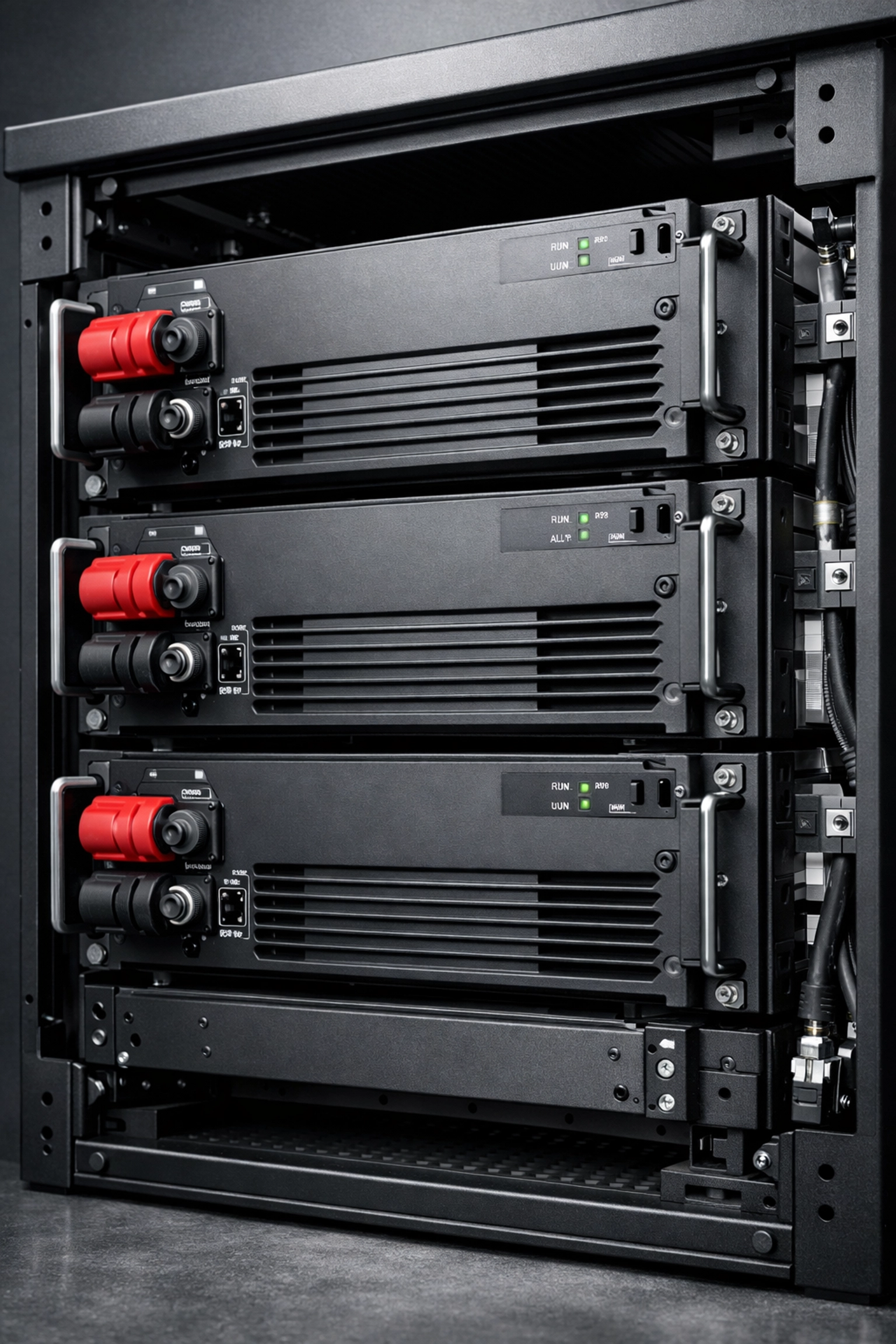
Moving Toward a Hybrid Infrastructure
The future of industry isn't just about replacing the old with the new; it's about the successful integration of legacy "muscle" with modern "brains." At Ace Real Time Solutions, we specialize in bridging this gap. Whether you are running a 30-year-old particle accelerator or a fleet of legacy textile looms, the power protection layer is what keeps your operation viable in a digital-first world.
By treating power as a strategic asset rather than a utility, you move from a reactive posture to a proactive one. This is the hallmark of Real-Time Solutions: identifying the threat (grid instability) and neutralizing it before it touches your sensitive hardware.
Ready to Shield Your Legacy?
Don't wait for a "silent" power surge to take down your most critical vintage assets. The grid isn't getting any cleaner, and your legacy gear isn't getting any younger.
Take action today:
- Download our Technical Spec Sheet to compare the best UPS topologies for industrial and lab use.
- Request a Professional Power Audit: Our team will analyze your THD, grounding, and load profiles to design a custom protection suite.
- Solutions Design: Let us help you select the right APC, CyberPower, or Minuteman hardware to create a fortress around your legacy investments.
Visit acerts.com now to secure your uptime.
FAQ: Protecting Legacy Systems
What is the biggest danger to legacy equipment from the modern grid?
The primary danger is "dirty power": specifically high-frequency noise and harmonic distortion. Legacy power supplies were designed for a clean 60Hz sine wave. Modern grid noise can cause these older components to overheat, misinterpret data, or suffer "insulation breakdown" in transformers.
How does an Online Double-Conversion UPS help vintage machines more than a standard surge protector?
A surge protector only stops high-voltage spikes. An Online Double-Conversion UPS completely regenerates the power. It converts AC to DC and back to AC, meaning your vintage machine never actually "touches" the grid. This provides a consistent, perfect sine wave regardless of what is happening with the utility power.
Can I use Lithium batteries with my older UPS systems?
Only if the UPS is specifically rated or retrofitted for lithium-ion charging profiles. Using lithium batteries in a system designed for Lead-Acid (SLA) can lead to improper charging or safety risks. However, many modern UPS systems from brands like Dakota Lithium are designed to be "drop-in" replacements with the correct integrated management systems.