

The Holiday Power Surge: Keeping Your Home Theater and Gaming Rig Safe from Those Winter Storm Spikes
The holiday season represents the ultimate stress test for the American power grid. As temperatures plummet across the Northeast and Midwest, residential heating demands skyrocket, often pushing aging local infrastructure to its breaking point. Simultaneously, we are entering the peak "indoor season," where high-end home theaters and power-hungry gaming rigs are running at maximum capacity. This convergence of high demand and volatile winter weather, characterized by ice storms, heavy snow, and high winds, creates a perfect storm for transient voltage surges and catastrophic power failures that can brick thousands of dollars in silicon in a millisecond.
For the modern professional, the "home" environment has evolved into a sophisticated annex of the enterprise data center. We aren't just talking about a TV and a toaster anymore; we are talking about 8K OLED displays, NAS arrays, PlayStation 5 consoles, and high-performance workstations that require the same level of power conditioning and Redundancy as a Tier III facility. When a winter storm causes a transformer to blow or a line to snap, the resulting surge isn't just a nuisance, it’s a direct threat to the sensitive components that drive our digital lives. At Ace Real Time Solutions, we view residential power protection not as a luxury, but as a critical infrastructure requirement.
Why Now: The Vulnerability of Modern Silicon
The status quo of relying on a $15 power strip from a big-box retailer is no longer a viable strategy for protecting modern electronics. As microprocessors have shrunk to the 5nm and 3nm scale, their tolerance for voltage fluctuations has decreased exponentially. A "standard" power surge that an old CRT television might have shrugged off in the 90s can now cause catastrophic gate failure in a modern GPU or a high-end AV receiver. This is the "Why Now" of power protection: the hardware has become more sensitive while the grid has become less reliable.
In the world of high-end gaming and streaming, Latency and uptime are the metrics of success. A sudden dip in voltage, often called a "brownout", can cause a gaming PC to reboot, potentially corrupting data on an NVMe drive or resulting in a "soft brick" of a console during a firmware update. Furthermore, winter storms often bring rapid-fire "on-off-on" cycles as utility companies attempt to reroute power. Without professional-grade power protection, your equipment is subjected to repeated thermal shock and inrush current spikes that significantly shorten its lifespan.
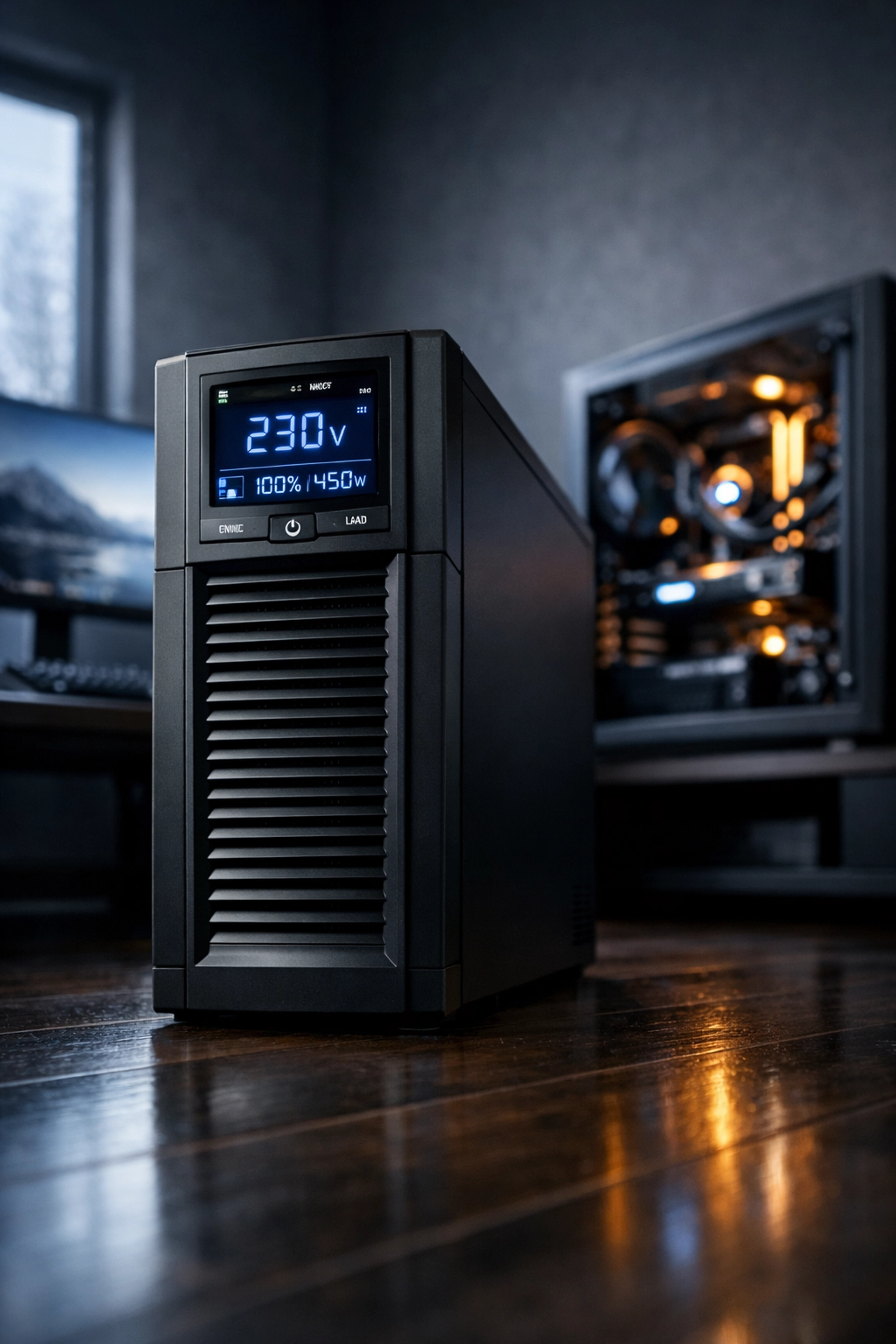
Technical Depth: Understanding the Metrics of Protection
To truly protect a home theater or gaming rig, you have to look past the marketing fluff and focus on the technical specifications that actually matter. When evaluating uninterruptible power supply (UPS) units or high-end surge protectors, three metrics stand above the rest: Joule ratings, Clamping Voltage, and Line Conditioning.
Joule Ratings: This is a measure of how much energy the device can absorb before it fails. For a basic lamp, 500 Joules might suffice. For a home theater featuring an OLED TV, an Atmos-enabled receiver, and multiple consoles, you should be looking for a minimum of 3,000 to 4,000 Joules. Professional-grade units from CyberPower and APC by Schneider Electric often provide this level of headroom, ensuring that even a significant nearby lightning strike or transformer explosion doesn't reach your gear.
Clamping Voltage: This is the voltage level that triggers the surge protector to start diverting excess energy to the ground wire. In the US, the UL 1449 standard rates these at 330V, 400V, and 500V. For sensitive home electronics, you want the lowest possible clamping voltage, ideally 330V. If your protector doesn't "clamp" until 500V, your $2,000 gaming rig has already absorbed a massive hit before the protection even kicks in.
Line Conditioning (Automatic Voltage Regulation): This is where a UPS separates itself from a standard surge strip. Winter storms often cause "dirty power", fluctuations where the voltage drops to 100V or spikes to 135V without actually failing. Line-interactive UPS systems use Automatic Voltage Regulation (AVR) to "clean" this power, boosting or bucking the voltage back to a steady 120V without ever switching to battery power. This prevents the hardware from experiencing the "thermal management" stress associated with irregular power input.
The Winter Power Protection Roadmap
If you want to ensure your holiday entertainment remains uninterrupted, you need a proactive strategy. Here is the roadmap we recommend for facility managers and tech-savvy homeowners alike to secure their residential "Real-Time Solutions."
- Conduct a Load Audit: Before buying hardware, calculate the total wattage of your setup. A high-end gaming PC under load can pull 600W-800W, while a 77-inch OLED and a 7.2.4 channel receiver can pull another 500W. Ensure your UPS is rated for at least 20% more than your peak load to account for inrush current.
- Segment Your Equipment: Not everything needs battery backup. Put your TV, consoles, and PC on the battery-backed outlets of your UPS. Use high-quality surge-only outlets for non-critical items like lamps or phone chargers. This preserves battery runtime for the gear that actually needs a controlled shutdown.
- Deploy Line-Interactive UPS Systems: For home theaters, a standby UPS isn't enough. You need a line-interactive unit from a brand like Minuteman Power Technologies or Vertiv. These units offer better protection against the sags and swells common during winter storms.
- Implement Remote Monitoring: Many modern UPS systems allow for USB or Network monitoring. Set your PC to automatically hibernate when the UPS reaches 10% battery. This prevents data loss if a storm knocks out the power while you're away from the room.
- Verify Grounding: A surge protector is useless if it has nowhere to send the excess energy. Use a simple outlet tester to ensure your wall outlets are properly grounded. In older homes, this is the #1 cause of "protection failure."
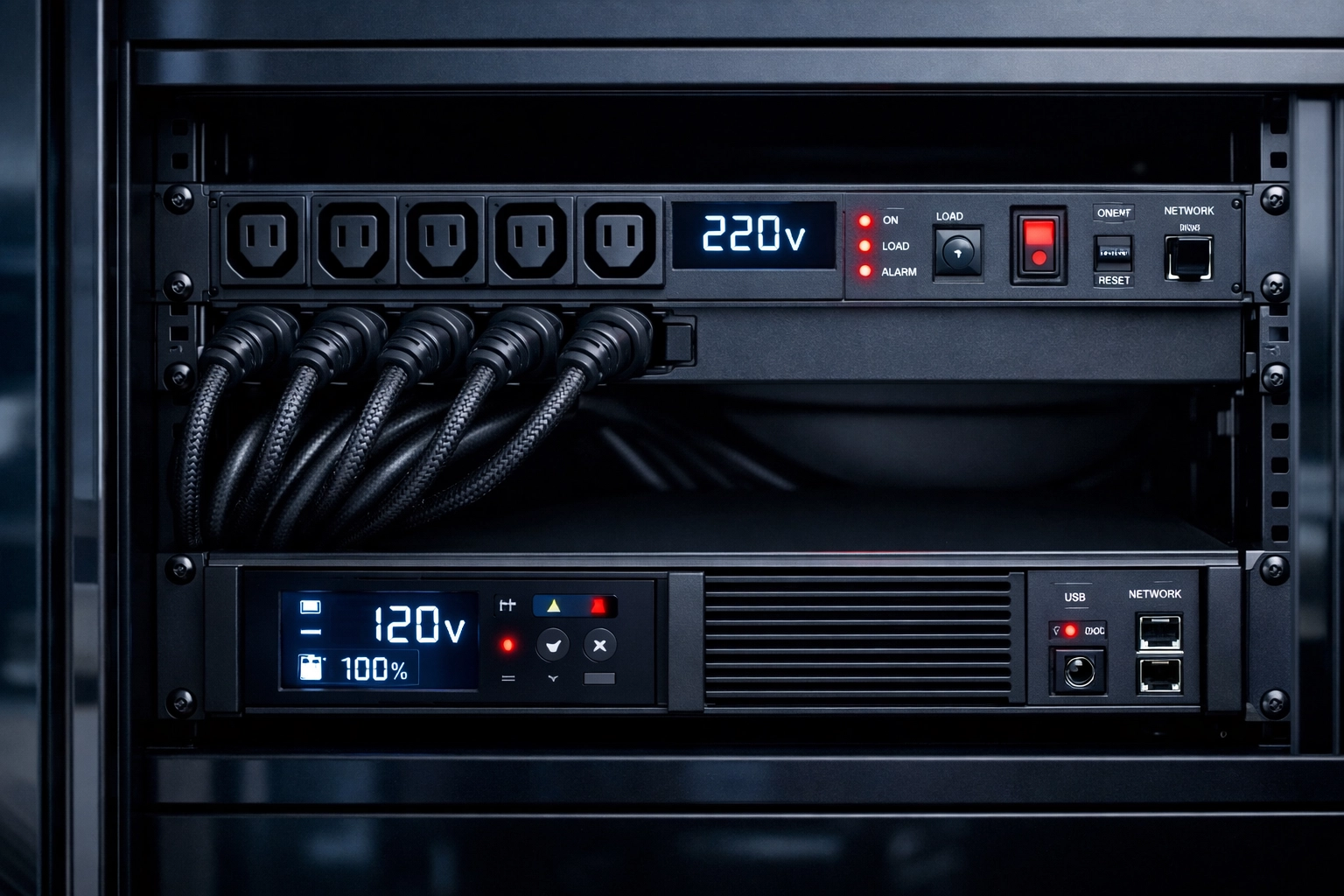
Beyond the Living Room: The Whole-Home Approach
While the gaming rig and theater are the most visible victims of power surges, the modern home has other "silent" vulnerabilities. Your network infrastructure, the routers, modems, and mesh nodes, are often the first things to fry during a winter spike. Protecting these with small, dedicated UPS units ensures that even if the lights go out, your Wi-Fi stays up, allowing you to monitor storm updates or keep your security cameras running.
For those in areas prone to frequent, long-term winter outages, integrating portable power stations like those from Bluetti or Renogy into your emergency plan can provide the necessary bridge between a power failure and the restoration of services. These units can be kept topped off and used to power critical AV equipment or even small appliances when the grid goes dark for hours.
At Ace Real Time Solutions, we advocate for a layered defense. This starts at the service entrance with a whole-house surge protector and ends at the "point of use" with professional-grade UPS systems and batteries. This layered approach ensures that "Real-Time" isn't just a marketing slogan, but a standard of reliability that keeps your home theater and gaming rig safe regardless of what the weather does outside.
Frequently Asked Questions
What is the difference between a surge protector and a UPS for gaming? A surge protector only blocks or diverts excess voltage. A UPS (Uninterruptible Power Supply) does the same but also provides battery backup and, in many cases, voltage regulation. For gaming, a UPS is superior because it prevents the PC or console from crashing during a brief power flick or brownout, which are common during winter storms.
How many Joules do I need for a high-end home theater? For expensive equipment like OLED TVs and high-fidelity audio systems, you should aim for a surge protector or UPS with a rating of at least 3,000 Joules. This provides a significant buffer against the massive spikes associated with utility grid switching and storm-related line faults.
Can a power surge damage my gear even if it's turned off? Yes. As long as the device is plugged into the wall, a sufficiently large surge can jump the physical switch inside the device and destroy the power supply or motherboard. This is why professional-grade protection at the outlet level is mandatory for high-value electronics.
Secure Your Setup Today
Don't wait for the first major ice storm of the season to realize your power protection is inadequate. A single "dirty" power event can cost you more in hardware replacement and data loss than a decade's worth of professional UPS equipment.
Visit acerts.com today to download a technical spec sheet for our latest line of UPS solutions, or contact our team to request a professional power audit for your home or business infrastructure. Ensure your "Real-Time" experience stays live, no matter the weather.