

The "Hidden" Power Hogs: Why Your Non-IT Equipment Needs Protection Too
When most people think about power protection, servers and network equipment immediately come to mind. And yeah, that makes sense: those are the obvious critical systems. But here's what catches a lot of facility managers and IT procurement teams off guard: your non-IT equipment can account for 50-60% of your total power consumption, and when it goes down due to power issues, the consequences can be just as devastating.
We're talking about HVAC controls, security systems, access control, fire suppression, building management systems: the stuff that keeps your facility running but rarely gets the same attention as your server racks. And that's a problem.
The Real Power Footprint: Beyond the Server Room
Let's break down what's actually consuming power in a modern facility. According to recent industry data, IT equipment accounts for only 40-50% of total electricity consumption in data centers and critical facilities. The rest? That's your infrastructure.
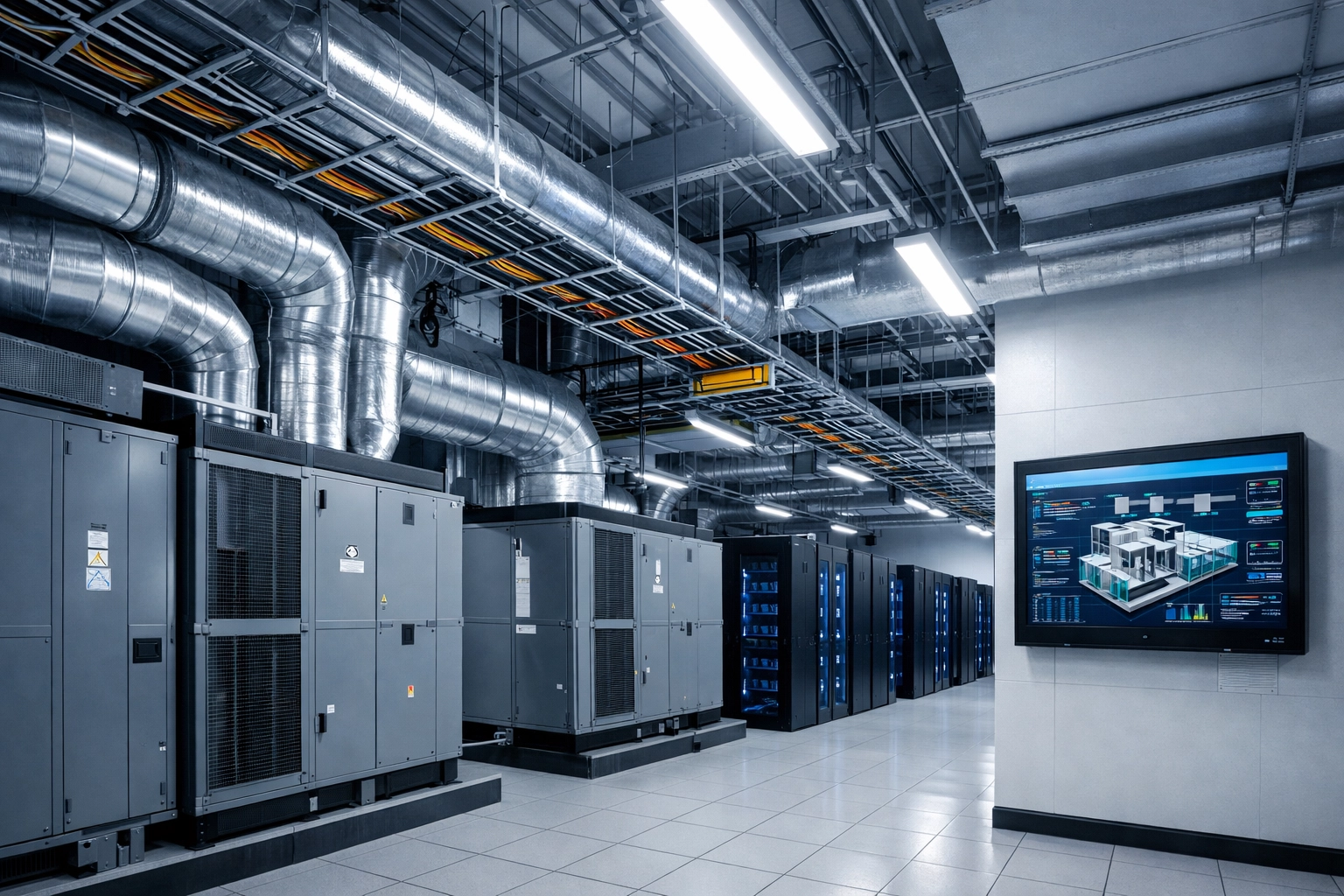
Power distribution and backup systems alone eat up 10-15% of your total electricity. But that's just the beginning. Your cooling systems, lighting controls, physical security infrastructure, and environmental monitoring: all of these systems are running 24/7, and all of them are vulnerable to the same power quality issues that threaten your IT equipment.
Here's the kicker: when these systems fail due to power problems, you don't just lose convenience. You lose:
- Climate control – leading to potential equipment overheating or data center hot spots
- Physical security – making your facility vulnerable to unauthorized access
- Fire suppression capability – creating life-safety risks and insurance nightmares
- Building automation – causing cascading failures across multiple systems
- Compliance documentation – losing the monitoring data that proves you're meeting regulatory requirements
The Systems You're Probably Overlooking
HVAC and Environmental Controls
Your HVAC system isn't just about employee comfort: it's mission-critical infrastructure. In a data center environment, even a brief interruption to cooling can trigger thermal runaway conditions that damage equipment worth hundreds of thousands of dollars.
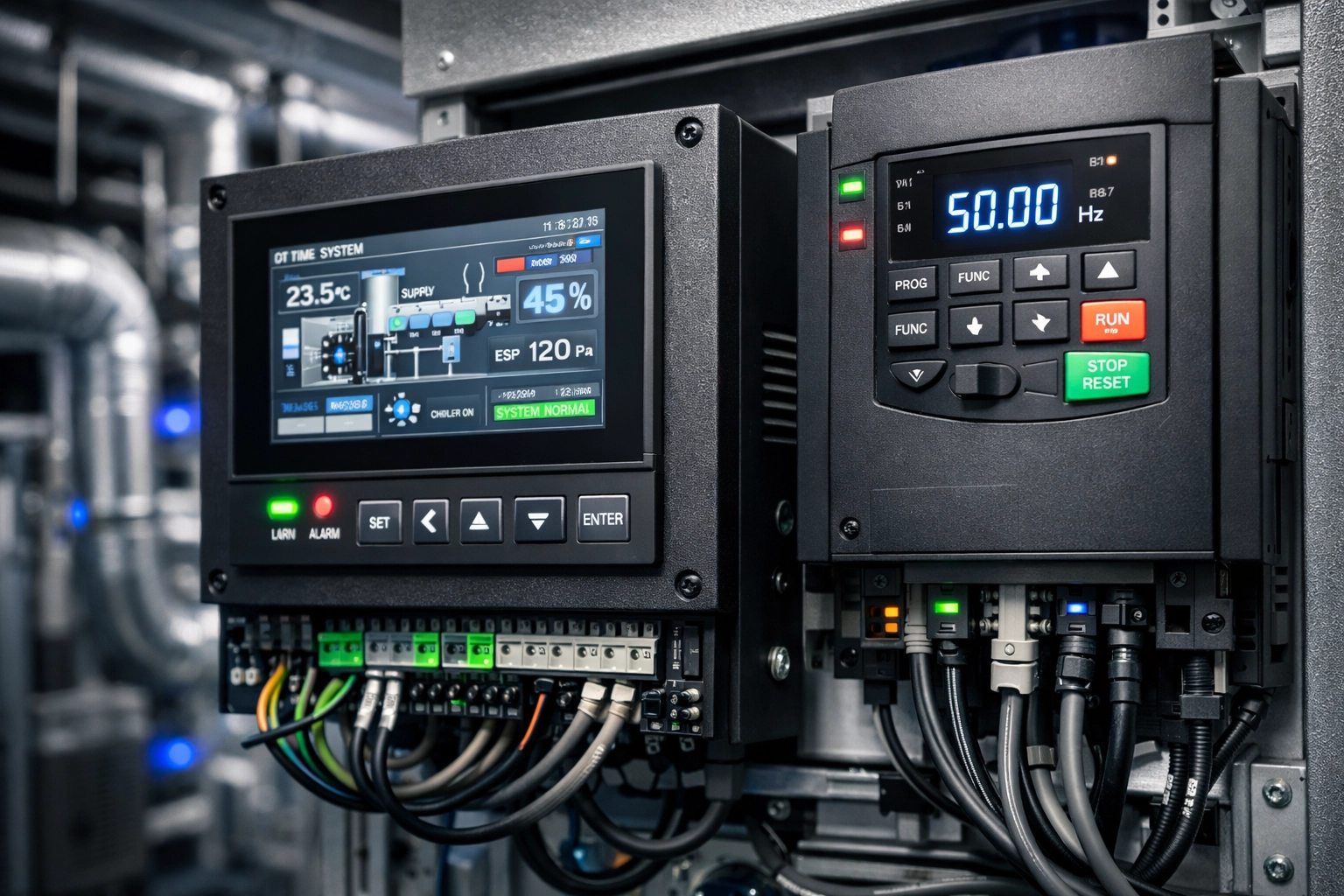
Modern HVAC systems rely on sophisticated digital controls, variable frequency drives (VFDs), and networked sensors. All of these components are sensitive to voltage sags, surges, and harmonic distortion. A single power quality event can:
- Corrupt control system programming
- Damage VFD electronics (which are expensive to replace)
- Cause compressors and motors to trip offline
- Create false alarms that waste technician time
Real-world impact: A pharmaceutical company lost an entire batch of temperature-sensitive products valued at $2.3 million when a brief power sag caused their cold storage HVAC controls to malfunction. The irony? Their servers were fine: fully protected by a robust UPS system. The cold storage controllers? Plugged directly into wall power.
Physical Security and Access Control
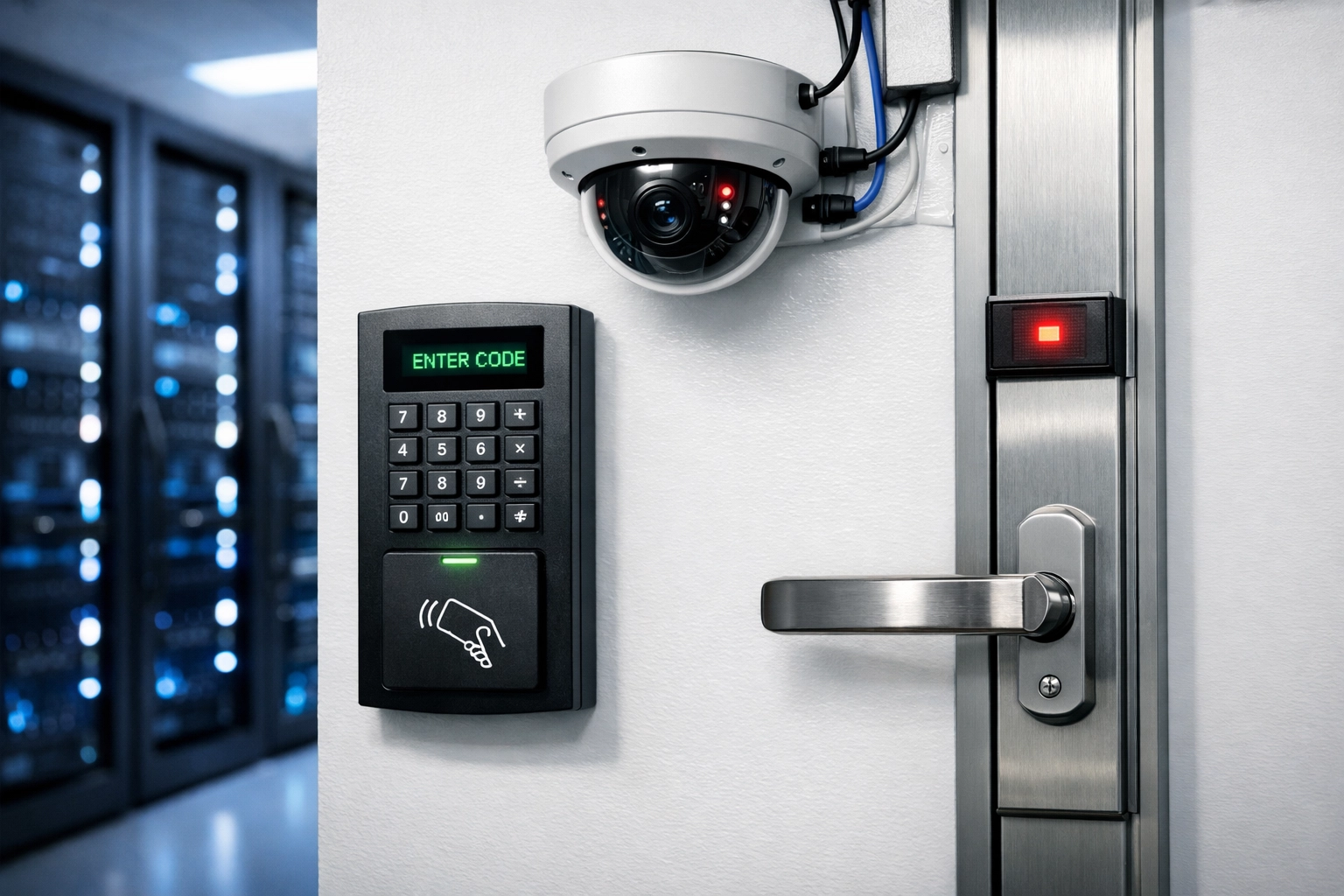
Your badge readers, electronic locks, surveillance cameras, and intrusion detection systems form your first line of defense. But how many of these systems are actually on protected power?
Security systems often get installed by different contractors than IT equipment, which means they're frequently on separate, unprotected circuits. When power quality issues strike:
- Cameras go offline, creating blind spots in your security coverage
- Access control systems default to "fail-safe" mode, potentially unlocking doors
- DVRs and NVRs can experience data corruption, losing forensic evidence
- Badge reader databases can become corrupted, requiring time-consuming reprogramming
Consider this: Virginia's data centers consumed 26% of the state's total electricity supply in 2023. With that kind of power density, power quality issues aren't rare: they're routine. Your security systems need the same level of protection as your servers.
Fire Suppression and Life Safety Systems
Fire alarm panels, emergency notification systems, and suppression controls are literally life-safety equipment. Most building codes require these systems to have battery backup, but code-minimum compliance isn't the same as robust power protection.
Power quality problems can cause:
- False alarms that trigger unnecessary evacuations (and fines from the fire department)
- Failure to detect actual emergencies
- Inadvertent discharge of suppression systems (have you priced clean agent refills lately?)
- Loss of communication with monitoring services
The legal and liability implications here go way beyond the cost of equipment replacement.
Why Traditional "Protection" Isn't Enough
Many facilities have some level of power protection for non-IT equipment: maybe a generator for emergency power, or small battery backups on individual devices. But there's a huge gap between "it keeps running during an outage" and "it's actually protected from power quality issues."
Here's what facility managers often miss:
Voltage Regulation vs. Battery Backup
A basic battery backup keeps things running when power goes out completely. But what about the 90% of power problems that aren't outages? Voltage sags, surges, frequency variations, and harmonic distortion can all damage equipment or cause malfunctions: and most basic battery units don't protect against these issues.
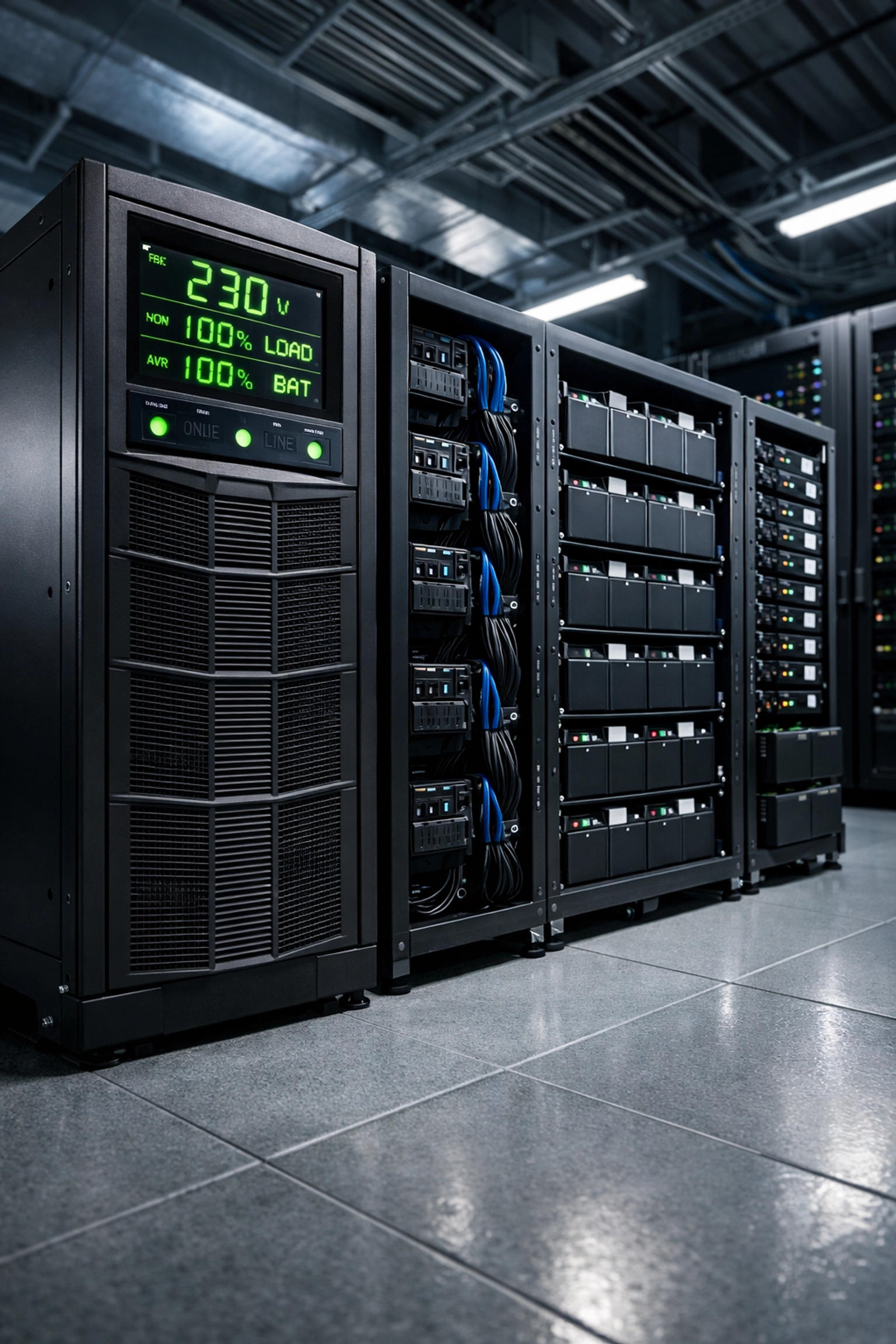
Quality UPS systems provide line-interactive or double-conversion topology that actively conditions power, protecting equipment from the full spectrum of power quality problems.
Load Calculation Mistakes
Non-IT equipment often has different power characteristics than servers:
- Inductive loads (motors, compressors) have high inrush current when starting
- Capacitive loads (LED lighting controls) can create harmonic distortion
- Non-linear loads (VFDs, electronic ballasts) draw power in ways that confuse basic UPS units
Sizing power protection for these systems requires understanding their actual power characteristics, not just their nameplate ratings. Undersized protection is almost as bad as no protection.
Geographic Concentration Creates Grid Stress
With data centers and critical facilities geographically concentrated in certain regions, local power grids are under increasing strain. As demand grows: projected to reach 325-580 TWh annually in the U.S. by 2028: power quality problems will become more frequent, not less.
Your non-IT infrastructure needs to be resilient against an increasingly unstable grid.
A Practical Approach to Comprehensive Protection
So how do you actually protect these "hidden" systems without breaking the budget? Here's a framework that works:
1. Conduct a Power Audit
Map out every critical system in your facility: not just IT equipment. Identify which systems are on protected power and which aren't. Pay special attention to:
- Building management systems and controllers
- Security and access control infrastructure
- Environmental monitoring equipment
- Communication systems (intercoms, emergency phones)
- Elevator controls (yes, these matter for accessibility and emergency evacuation)
2. Prioritize Based on Risk
Not every system needs the same level of protection. Use a risk matrix that considers:
- Impact of failure (life safety > operational > convenience)
- Likelihood of power problems affecting this system
- Cost of protection vs. cost of failure
- Recovery time if the system goes down
3. Design for Total Facility Protection
Consider a tiered approach:
- Tier 1: Generator backup for entire facility (handles extended outages)
- Tier 2: Central UPS systems for critical infrastructure zones
- Tier 3: Distributed UPS units for specific sensitive equipment
This provides redundant layers of protection at different price points.
4. Don't Forget Ongoing Maintenance
Power protection systems require regular maintenance to remain effective:
- Battery testing and replacement (typically every 3-5 years)
- UPS preventive maintenance
- Load testing to ensure capacity matches actual requirements
- Firmware updates for network-connected UPS systems
The Bottom Line: Total Facility Thinking
Power protection isn't just an IT issue: it's a facility-wide concern. As energy demands continue to grow and power grids face increasing stress, the facilities that thrive will be those that take a comprehensive approach to power protection.
Your HVAC controls, security systems, and building automation deserve the same level of protection as your servers. Because when these systems fail, the consequences go far beyond a crashed application: they impact safety, security, regulatory compliance, and the fundamental ability to operate your facility.
The good news? You don't have to figure this out alone. Our team at Ace Real Time Solutions specializes in designing comprehensive power protection strategies that cover your entire facility, not just the server room. We understand the unique power characteristics of different equipment types and can help you build a protection strategy that matches your actual risk profile and budget.
Ready to stop overlooking your hidden power hogs? Let's talk about what comprehensive facility protection looks like for your operation. Because reliable power protection isn't just about keeping the lights on: it's about keeping everything running, all the time.