

The Carbon Footprint of a UPS: How to Green Your Backup Power Without Compromising Reliability
A UPS protects critical systems when utility power fails, but it also carries an environmental cost. Electricity losses, battery manufacturing, cooling demand, maintenance visits, replacement cycles, and end-of-life disposal all contribute to the system’s total carbon footprint.
For sustainability managers and facility operators, the objective is not to remove backup power. It is to design a more efficient, longer-lasting, better-monitored system that delivers the required resilience with less energy and material waste. Modern Real-Time Solutions make that possible without weakening uptime commitments.
Why UPS Sustainability Matters Now
Data centers, healthcare facilities, government buildings, and distributed businesses are under pressure to reduce emissions while supporting increasingly power-intensive IT loads. A UPS may operate continuously for years, even though its batteries are used only during outages and scheduled tests. That means small conversion losses can accumulate into substantial energy consumption.
There are also major embodied-carbon considerations. The electronics, cabinets, batteries, transportation, installation, and eventual recycling of a UPS all contribute to its lifecycle impact. Replacing batteries every three to five years can create far more material waste than a facility budget initially accounts for.
The right strategy balances efficiency with redundancy, uptime, safety, and maintainability. A lower-carbon UPS that cannot support a critical load is not a sustainable solution. The best design reduces waste while preserving the power architecture required for the business.
Operational Carbon: Start With Efficiency
The most visible source of UPS-related operational carbon is electrical loss. In a double-conversion UPS, incoming AC power is converted to DC and then back to clean AC before reaching connected equipment. This topology provides excellent power conditioning and protects sensitive loads from voltage fluctuations, frequency issues, and disturbances. However, the conversion process produces heat and consumes energy.
Modern data-center UPS systems commonly achieve approximately 95% to 97% efficiency in online double-conversion mode, depending on model, voltage, capacity, and load. High-efficiency operating modes, including ECO, ESS, and ECOnversion-style modes, may approach 98% to 99% when utility power quality and site requirements allow.
That distinction matters. A facility should not compare a UPS using only its best-case efficiency number. Ask for:
- Efficiency at the expected operating load
- Efficiency across the full load range
- Performance in online double-conversion mode
- Efficiency in high-efficiency or bypass-assisted modes
- Battery charging losses
- Harmonic performance and power factor
- Cooling impact from UPS heat rejection
For a critical data center, online double conversion may remain the correct operating mode because it provides the strongest isolation and power conditioning. High-efficiency modes can be evaluated for less sensitive loads or sites with stable utility power, but they should be enabled only after a risk assessment.

Every percentage point of efficiency also affects thermal management. If a 500 kW UPS operates at 95% efficiency, approximately 25 kW is converted into heat. At 97% efficiency, the loss falls to approximately 15.5 kW. That difference reduces the cooling burden and can lower both facility energy consumption and operating costs.
Embodied Carbon: Batteries Often Dominate the Lifecycle
A UPS’s environmental impact is not limited to the electricity it consumes. Batteries may represent a significant portion of the system’s embodied carbon, particularly when they are replaced multiple times during the life of the UPS.
Traditional VRLA lead-acid batteries commonly have a practical data-center replacement cycle of approximately three to five years, depending on temperature, charging practices, discharge history, and maintenance. Lithium-ion UPS batteries often provide approximately eight to ten years or more, with some manufacturer estimates reaching 10 to 15 years under appropriate operating conditions.
The longer service life can reduce:
- The number of battery banks manufactured
- Transportation and installation activity
- Replacement-related downtime and labor
- Battery waste sent to recycling facilities
- Truck rolls for inspection and replacement
- The risk of disposing of otherwise serviceable UPS equipment
Lithium-ion is not automatically the best choice for every application. It requires appropriate battery management, fire protection, system compatibility, and qualified installation. It can also have a higher initial purchase price. However, when the system will operate for a decade or longer, the lifecycle analysis may favor lithium-ion because fewer replacement events are required.
Lead-acid batteries still have an important advantage: their recycling infrastructure is mature and widely established. Businesses should send spent lead-acid batteries to qualified recyclers and never place them in general waste. Lithium-ion batteries also require controlled handling and recycling. The U.S. Environmental Protection Agency provides guidance through its Battery Collection Best Practices Toolkit.

Right-Size the System, Not the Risk
Oversizing is one of the most common ways a backup power system accumulates unnecessary carbon. A UPS sized far above the actual load may operate inefficiently, especially if it spends most of its time at a very low percentage of rated capacity.
Right-sizing does not mean eliminating capacity margins. It means separating genuine resilience requirements from unverified assumptions.
A proper assessment should review:
- Current connected load in kW, not only nameplate VA
- Peak and average demand
- Power factor
- Required runtime in minutes
- Expected IT growth
- Generator start time
- Maintenance bypass requirements
- N, N+1, 2N, or distributed redundancy architecture
- Future rack density and cooling requirements
For example, a facility may need 400 kW of protected capacity today but plan to reach 600 kW within three years. A modular UPS architecture can provide the required N+1 redundancy now and add capacity as the load grows. This avoids purchasing a large, lightly loaded system on day one while preserving a defined expansion path.
Battery autonomy should also be realistic. If the generator starts within 30 seconds, designing the UPS battery bank for several hours may add significant embodied carbon without improving the actual continuity strategy. The correct runtime depends on generator start time, fuel logistics, load-shedding plans, safety requirements, and the consequences of a prolonged outage.
The Greener Backup Power Roadmap
Facility managers can begin reducing UPS-related emissions with five practical steps:
-
Measure the real load profile.
Capture current kW demand, peak load, utilization, power factor, and growth projections. Do not size solely from equipment nameplates or a simple percentage of service capacity. -
Compare efficiency at the intended load.
Request manufacturer data for online double-conversion efficiency and high-efficiency modes at your expected operating range. A system rated at 97% may perform differently at 20%, 50%, and 90% load. -
Evaluate battery chemistry over the full lifecycle.
Compare VRLA and lithium-ion using replacement frequency, temperature conditions, maintenance labor, monitoring requirements, recycling pathways, and the expected service life of the UPS. -
Set a documented autonomy requirement.
Coordinate with generator, facilities, and IT teams to determine how many minutes of battery runtime are genuinely required. Avoid adding battery capacity simply because more runtime appears safer. -
Create an end-of-life and monitoring plan before installation.
Use remote monitoring to identify declining battery health, abnormal temperatures, and efficiency changes. Establish a qualified recycling pathway and maintain records for removed batteries, transport, and final processing.
Remote monitoring is especially important for sustainability. A failed or degraded battery can trigger unnecessary replacement of an entire string, while poor load distribution can reduce system efficiency for months before anyone notices. Network-connected monitoring and lifecycle support help operators make decisions based on measured conditions instead of fixed calendar assumptions.
Pair Backup Power With Renewable Energy
Solar photovoltaic systems, battery energy storage, demand response, and intelligent building controls can complement a UPS strategy. Renewable generation may reduce reliance on grid electricity, while appropriately designed storage can help manage peak demand or support selected loads.
However, a standard UPS should not automatically be treated as a renewable-energy storage system. Integration depends on inverter architecture, controls, battery chemistry, interconnection requirements, protection settings, and the facility’s operating objectives.
A qualified design should answer:
- Is the UPS providing backup only, or also participating in energy management?
- Can the battery support the required number of charge-discharge cycles?
- Will peak shaving affect emergency runtime?
- How are renewable generation and utility failures prioritized?
- Does the control system maintain required redundancy?
- Are battery warranties compatible with the proposed operating profile?
Renewable pairing works best when it is designed as part of the complete electrical system rather than added as an afterthought.
Reliability Remains the First Requirement
Sustainability cannot come at the expense of uptime. Data centers may require Tier III or Tier IV-aligned design objectives, while healthcare, financial, and government environments may have their own continuity standards and risk tolerances.
Efficiency mode, lithium-ion batteries, modular expansion, renewable integration, and remote monitoring should all be evaluated against the site’s redundancy model. A design that saves energy but introduces a single point of failure is not an improvement.
Ace Real Time Solutions helps businesses make that assessment. We design and install power protection systems using trusted manufacturers, including APC by Schneider Electric, CyberPower, Vertiv, and Minuteman Technologies. Our services include UPS systems, batteries, power distribution, voltage regulation, monitoring, installation, and ongoing support.
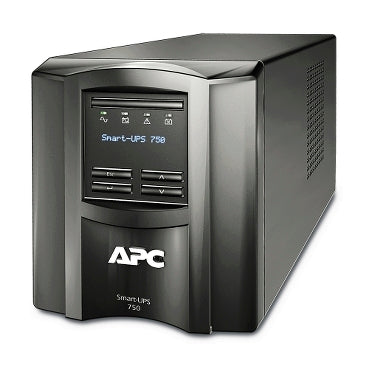
A Lower-Carbon UPS Is a Better-Designed UPS
The greenest backup power system is not necessarily the one with the newest battery or the highest advertised efficiency. It is the system that matches capacity, runtime, topology, battery chemistry, monitoring, and recycling practices to the actual operating requirement.
Start by separating operational carbon from embodied carbon. Improve conversion efficiency and thermal management. Choose battery technology based on lifecycle performance. Right-size capacity without compromising N+1 or 2N requirements. Pair renewable energy only where the controls and operating model support it.
Visit acerts.com to request a power audit, download technical information, or discuss a solution design for a more efficient and resilient facility. Ace Real Time Solutions can help you build greener backup power without sacrificing reliability.
Frequently Asked Questions
What is the carbon footprint of a UPS?
The carbon footprint of a UPS includes operational emissions from electrical conversion losses and cooling, along with embodied emissions from manufacturing, transporting, maintaining, replacing, and recycling the UPS and its batteries.
How does UPS efficiency reduce carbon emissions?
A more efficient UPS wastes less electricity as heat. Modern systems may achieve approximately 95% to 97% efficiency in online double-conversion mode and up to 98% to 99% in approved high-efficiency modes. Lower losses reduce both electricity use and cooling demand.
How does lithium-ion reduce the environmental impact of backup power?
Lithium-ion batteries generally last longer than VRLA lead-acid batteries: often eight to ten years or more compared with approximately three to five years. Fewer replacements can reduce manufacturing, transportation, maintenance, and end-of-life waste, although lithium-ion batteries still require qualified recycling and safety management.