
The Calm During the Storm: How Reliable Power Boosts Team Morale
The modern enterprise is built on a precarious foundation of electrons. As we move deeper into 2026, the strain on our national power grid has never been more apparent. For the CTOs and Facility Managers overseeing sprawling data centers or high-stakes office environments, the conversation has traditionally centered on hardware longevity and data integrity. We talk about PUE (Power Usage Effectiveness), we obsess over cooling loops, and we calculate the ROI of a new lithium-ion battery array. But there is a hidden metric that often goes unrecorded in the logs of a Network Management Card: the psychological well-being of the human beings who keep the wheels turning.
The "State of the Union" for today’s infrastructure is one of rising volatility. Between the increasing frequency of extreme weather events and the skyrocketing demand of AI-driven workloads, the grid is gasping for air. When the power flickers, it isn’t just the servers that take a hit; it’s the collective pulse of your workforce. In an era where "Real-Time Solutions" are the benchmark for success, a single second of unplanned downtime can shatter hours of focused "flow state" for a team of developers, designers, or analysts. The calm during the storm isn't just about keeping the lights on: it's about maintaining the mental equilibrium of your most valuable asset: your people.
Why Now: The Death of the "Wait and See" Strategy
For years, many organizations operated on a philosophy of "redundancy by hope." If the power went out, people would just take a coffee break. But in a world of synchronous cloud collaboration and hyper-connectivity, that "break" is now a source of massive anxiety. The status quo is failing because the threshold for latency in human productivity has dropped to zero. When a network goes dark, the immediate reaction isn't "time for a rest"; it's a frantic scramble to ensure that hours of unsaved progress haven't vanished into the ether.
The psychological toll of unreliable infrastructure is a silent productivity killer. When employees can’t trust their environment, they stop taking risks. They spend more time manually saving work, checking system statuses, and worrying about "what if" than they do actually innovating. This is where Thermal Management and power protection converge with human resources. A facility that lacks a Tier III or Tier IV resilience standard is essentially telling its team that their time isn't worth protecting. In the high-stakes world of hyperscalers and cloud providers, uptime is the ultimate form of respect for the workforce.
The Power-Reliability Roadmap
Creating an environment of "Infrastructure Certainty" requires more than just buying a few surge protectors from a big-box store. It requires a strategic approach to power protection that signals to your team that their work is safe. Here is a 5-step roadmap to building that foundation:
- Conduct a Comprehensive Power Audit: You can’t protect what you haven't mapped. A professional power audit identifies single points of failure in your power path: from the utility entrance to the individual IT rack. At Ace Real Time Solutions, we specialize in identifying these gaps before they become disasters.
- Standardize on High-Efficiency UPS Hardware: Move away from a "patchwork" of different brands and ages. Standardizing on top-tier providers like APC by Schneider Electric, CyberPower, Vertiv, or Minuteman Technologies allows for centralized management and predictable maintenance cycles.
- Implement Remote Monitoring and Control: Morale is boosted when IT managers can see a storm coming and know, via a dashboard, that their systems are reacting in real-time. Modern uninterruptible power supplies (UPS) offer cloud-based monitoring that sends alerts long before a battery fails.
- Invest in Scalable Battery Solutions: As your MW (Megawatt) per rack requirements grow, your backup capacity must keep pace. Moving toward lithium-ion batteries provides a longer lifecycle and higher energy density, reducing the "footprint stress" in your data center.
- Develop an "Auto-Save" Culture through Hardware: Configure your inverter-chargers and UPS systems to communicate directly with servers. Knowing that a system will gracefully shut down or switch to a secondary source without human intervention removes the panic from the power-loss equation.
Technical Depth: The Metrics of Trust
To the uninitiated, a UPS is just a "big battery." To a professional Facility Manager, it is a sophisticated piece of power electronics designed to maintain a perfect sine wave. When we talk about reliability, we are looking at specific technical benchmarks. For instance, the transition from Tier II to Tier III data center standards involves moving from "N+1" redundancy to "Concurrently Maintainable" infrastructure. This means every capacity component and distribution path can be removed/replaced without disrupting the end-user.
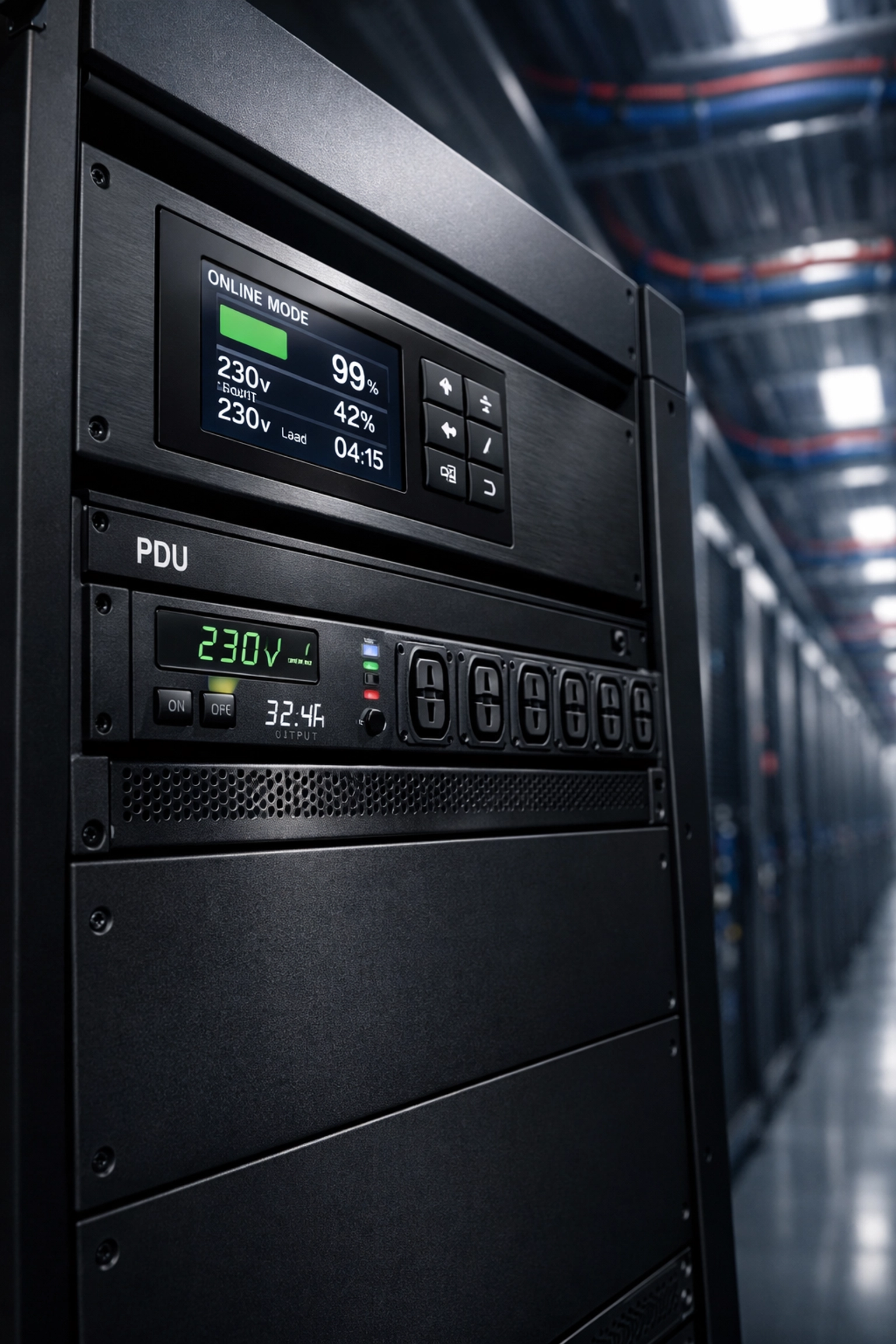
From a hardware perspective, we look at UPS efficiency ratings. Modern CyberPower products and Vertiv units often operate at 95% efficiency or higher in double-conversion mode. This doesn't just save money on the utility bill; it reduces the heat load (thermal output) in the IT rack, which in turn reduces the failure rate of the hardware your team relies on. When you're pushing 15kW to 20kW per rack in an AI-heavy environment, the precision of your battery chargers and power distribution units (PDUs) becomes the difference between a productive Tuesday and a week-long recovery effort.
The Ripple Effect of Uptime
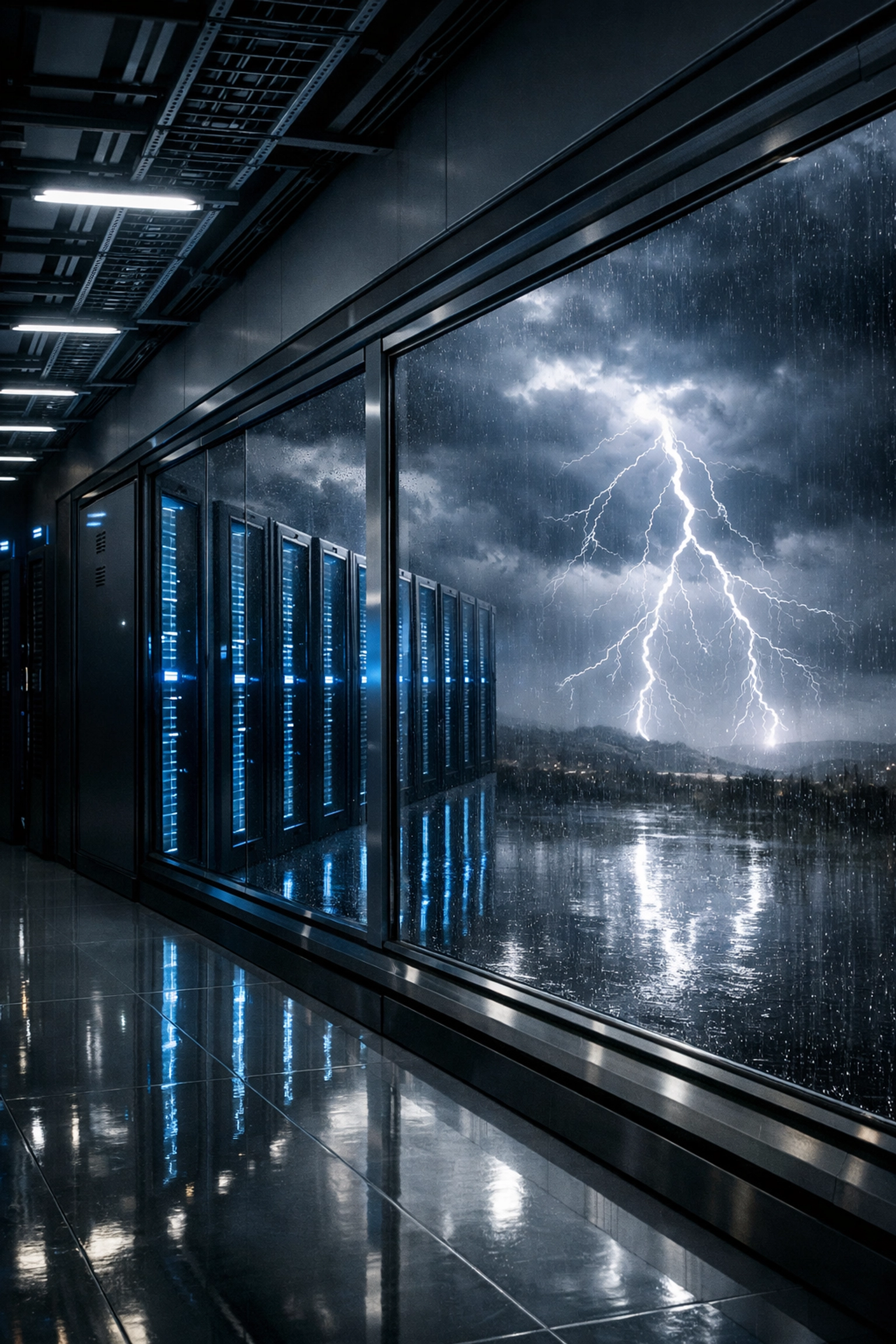
Imagine two scenarios. In Scenario A, a transformer blows during a summer heatwave. The office lights flicker, the servers groan, and the Wi-Fi dies. The team sits in a sweltering room, wondering if the project they’ve been working on for three weeks is corrupted. Morale plummets. Stress levels spike. The "storm" has won.
In Scenario B, that same transformer blows. Because the facility is equipped with Real-Time Solutions: perhaps a suite of Minuteman Technologies UPS systems and a robust solar-kit backup for non-critical loads: the transition is seamless. The lights don't even blink. The team continues their Zoom call, their rendering, or their coding, completely unaware that the outside grid has failed.
The "Calm" isn't just the absence of noise; it's the presence of invisible, reliable protection. By investing in high-quality IT racks, cable management, and air flow devices, you create a professional environment that breathes "stability." This stability translates directly into employee retention. People want to work where things work.
Building Your Fortress
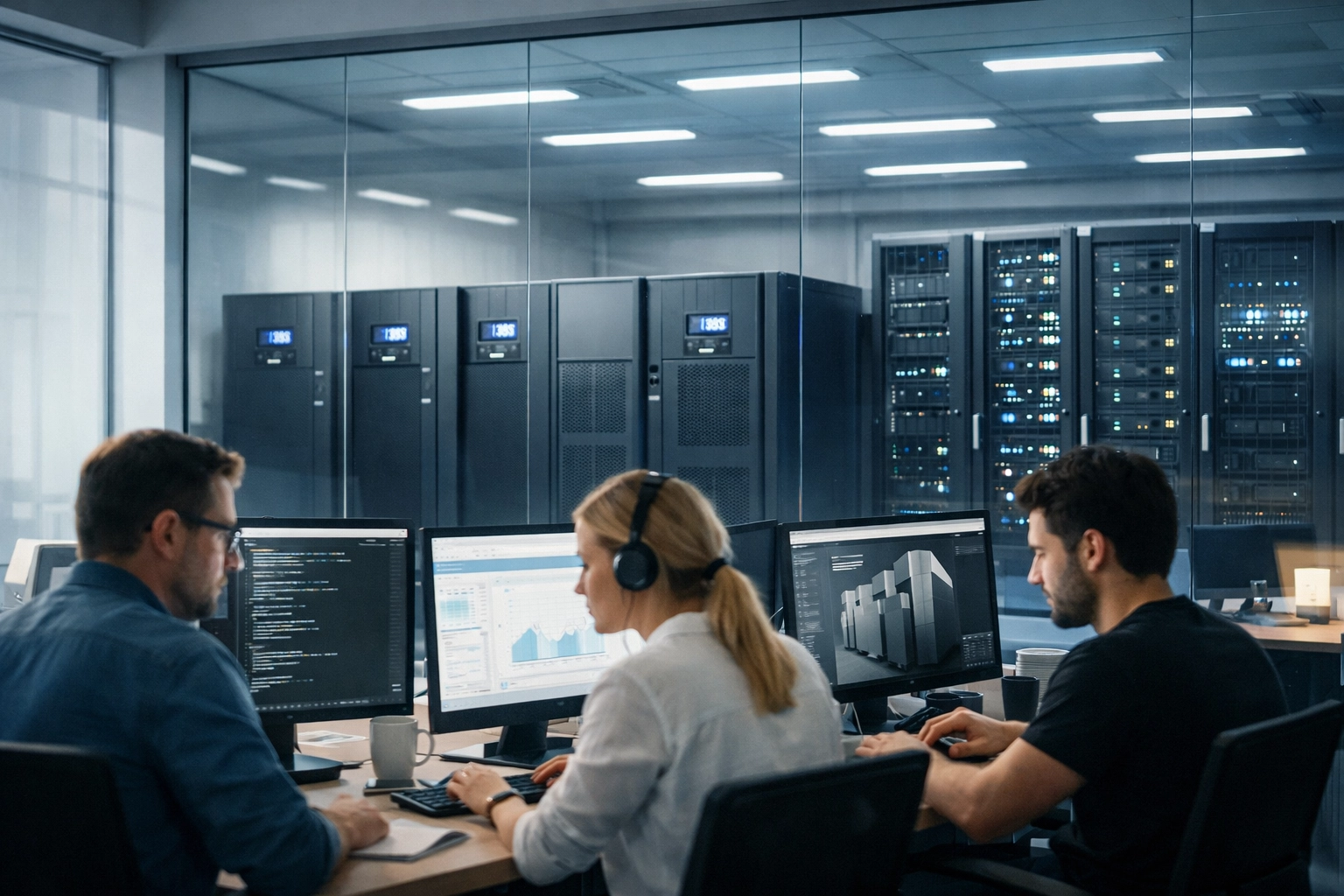
Whether you are managing a small edge computing site or a massive hyperscale facility, the goal remains the same: 100% uptime. This is achieved through a combination of hardware excellence and intelligent design. At Ace Real Time Solutions, we don't just sell boxes; we design the "Real-Time" environments that empower teams to do their best work without fear of the dark.
By leveraging our partnerships with industry leaders like APC, CyberPower, and Vertiv, we provide a holistic approach to power protection. This includes everything from the solar accessories that supplement your green energy goals to the solar controllers that manage your off-grid resilience.
If you’re ready to stop crossing your fingers every time the clouds turn grey, it’s time for a professional assessment. A reliable power strategy is the ultimate "silent perk" for your team. It’s the assurance that their hard work is protected by the best technology available.
Ready to secure your team’s productivity? Visit acerts.com today to download a technical spec sheet or request a comprehensive power audit and solution design. Let’s build your "Calm During the Storm" together.
Power Protection FAQ
What is the difference between a standby UPS and a double-conversion UPS for team productivity?
A standby UPS has a slight "transfer time" (usually milliseconds) when switching to battery power, which can occasionally cause sensitive equipment to reboot or flicker. A double-conversion (online) UPS constantly runs the power through its inverter, providing zero transfer time. For high-stakes environments where even a flicker can cause team panic or data sync issues, double-conversion is the industry standard for maintaining morale and uptime.
How does remote monitoring improve facility management?
Remote monitoring allows facility managers to see real-time data on battery health, load levels, and environmental conditions (like temperature and humidity) via a web browser or mobile app. This proactive approach allows you to replace a failing battery before it causes an outage, preventing the high-stress "fire drills" that lead to team burnout.
Why is power density (kW per rack) important for modern offices?
As businesses adopt more powerful hardware for AI and data processing, the amount of power required in a single IT rack is increasing. If your power protection isn't designed for high density, you risk overloading circuits, which leads to frequent tripped breakers. Designing for high power density ensures your infrastructure can grow with your team’s ambitions without causing technical bottlenecks.