

Tesla, Sunrun, and Renew Home Just Launched a 16.8 GW Virtual Power Plant: What It Means for Your Home Office
The State of the Grid: and the Home Office
On June 24, 2026, Tesla, Sunrun, and Renew Home announced a framework to deliver more than 16 gigawatts of flexible energy capacity to data centers, hyperscalers, and utilities. The initiative combines residential solar-plus-battery systems, electric vehicles, smart thermostats, and other controllable home devices into a nationwide virtual power plant, or VPP.
The announcement arrives as electricity demand rises from artificial intelligence, data centers, electric vehicles, and building electrification. For homeowners and remote professionals, the issue is immediate: the same grid constraints affecting large facilities can increase outage risk, power costs, and voltage instability at home. A VPP may help the grid balance demand, but it does not eliminate the need for local power protection for your router, computer, monitor, storage devices, and other critical electronics.
The companies describe the initiative as a “capacity-as-a-solution” framework. It is intended to use existing residential equipment rather than waiting years for new generation, transmission lines, land, or water-intensive infrastructure. In Northern Virginia’s Data Center Alley, the partners state that more than 300 megawatts of capacity is already available for deployment.
That is significant for the grid. It is also a useful reminder for homeowners: distributed energy is becoming part of critical infrastructure, but home-office continuity still depends on the equipment installed between the utility and your devices.
What the 16.8 GW VPP Actually Represents
A virtual power plant is not a single facility. It is a software-coordinated network of smaller energy resources that can respond to grid conditions.
In this case:
- Sunrun and Tesla contribute residential battery systems and solar-connected energy resources.
- Renew Home coordinates smart thermostats and other flexible household loads.
- The combined resource can discharge stored energy, reduce demand, or shift energy use during periods of grid stress.
- The partners say the framework can reach millions of devices across major U.S. power markets.
The 16.8 GW figure should be understood as an aggregate capacity calculation: not as 16.8 GW of continuous generation available to every home or data center at all times.
According to the official announcement’s methodology, battery capacity is calculated using installed battery rated capacity. HVAC capacity is based on the estimated one-hour peak load shift potential from connected smart thermostats and HVAC systems. Those are different services. A battery exports stored energy, while a thermostat generally reduces or delays consumption.
The framework is therefore best viewed as flexible grid capacity. It can help utilities manage peak demand, reduce congestion, and support large loads. It should not be confused with a guaranteed home backup system.
For additional details, see the official Sunrun announcement and Renew Home’s release.
Why Now: A VPP Does Not Replace Redundancy
The traditional assumption was that the utility grid would provide stable voltage and continuous power, while a small surge protector handled the occasional disturbance. That assumption is no longer sufficient for many home offices.
Grid stress can result in outages, brownouts, short-duration sags, and repeated power interruptions. These events create more than inconvenience. They can corrupt files, interrupt video meetings, damage power supplies, disconnect security systems, and force networking equipment to reboot.
Latency is another concern. A VPP may respond quickly at the grid level, but a home office cannot wait for a utility program to decide whether a device should remain online. Your local UPS must respond in milliseconds to maintain power while the grid, inverter, or backup system changes state.
Redundancy also works differently at home than it does in a data center. A Tier III or Tier IV facility may use multiple power paths, backup generators, and redundant UPS modules. A residence typically has one utility service and one electrical panel. A properly designed UPS, battery system, and surge protection strategy provide a smaller but important layer of redundancy for the equipment that matters most.

What the VPP Means for Your Home Office
1. Your battery may become a grid asset
If you own a compatible solar-plus-storage system, you may eventually have more opportunities to enroll in demand-response or VPP programs. In exchange for allowing a provider to manage charging, discharging, or load reduction during defined periods, you may receive bill credits, direct payments, or other incentives.
Participation terms will vary by provider, utility territory, battery model, and program. Review the agreement carefully. Confirm:
- How much battery capacity must remain reserved for an outage.
- Which hours the system may be dispatched.
- Whether you can opt out of individual events.
- How compensation is calculated.
- What happens if internet connectivity is lost.
- Whether participation affects battery warranty terms or expected lifecycle.
A grid program should support your resilience goals: not conflict with them.
2. A home battery and a UPS solve different problems
A home battery can provide backup power for selected circuits or an entire residence, depending on system design. It may require an inverter, transfer equipment, electrical work, and professional installation.
A UPS is designed for immediate, conditioned power to connected devices. It bridges the gap during an outage and helps protect sensitive electronics from sags, surges, and frequency disturbances. For a typical home office, the priority load may include:
- Internet modem and router.
- Computer or workstation.
- Monitor or docking station.
- Network-attached storage.
- Security equipment.
- VoIP phone or other communications hardware.
A battery system may keep the office powered for hours. A UPS helps ensure that the transition happens without interruption and can provide time for a graceful shutdown if the outage lasts longer than the available runtime.
3. Cooling and network equipment still matter
A home office backup plan often fails because only the computer is protected. If the router or modem loses power, the workstation may remain on but the user is still offline.
Similarly, a battery-backed office can become uncomfortable or unsafe during an extended outage if heating or air conditioning is not considered. VPP programs that manage thermostats may shift HVAC operation during peak events. That can be reasonable for a short period, but homeowners should understand how temperature settings, medical needs, pets, and equipment operating limits affect participation.
Power protection should also include cable management, ventilation, and safe placement. Keep UPS units away from heat sources, avoid overloaded power strips, and maintain airflow around equipment. Batteries and power electronics need appropriate clearance and installation conditions.
The Home Office Resilience Roadmap
Use these five steps to improve your home-office continuity today.
-
Identify your critical load and target runtime.
List the equipment that must stay online. Decide whether you need 15 minutes for a graceful shutdown, one hour for a meeting, or several hours for continued work. Runtime requirements determine whether a desktop UPS, extended-battery UPS, or larger home battery system is appropriate. -
Calculate capacity with operating headroom.
Record the wattage or VA demand of every critical device. Ace Real Time Solutions recommends dividing the calculated load by 0.80 when sizing a new UPS, creating room for future equipment changes and avoiding operation at the limit. Do not size only for the computer; include networking and storage equipment. -
Verify voltage, connectors, and circuit configuration.
Home-office equipment commonly uses 120-volt single-phase power, while larger commercial systems may use 230-volt or three-phase configurations. Confirm input and output connectors before ordering. A system with the wrong receptacles or voltage is not a usable solution, regardless of its advertised capacity. -
Separate fast protection from long-duration backup.
Use a UPS for immediate transfer and power conditioning. Use an appropriately installed battery system for longer runtime. Add surge protection and voltage regulation where needed. A VPP enrollment can complement these systems, but it should not be treated as a substitute for the UPS protecting your electronics. -
Add monitoring and test the plan.
Choose UPS management software, a network management card, or another monitoring method that can report battery health, runtime, overloads, and power events. Test the system under controlled conditions. If you enroll in a VPP, verify that the battery retains the outage reserve you need and that you understand the provider’s dispatch controls.

Where Ace Real Time Solutions Fits
The VPP announcement shows how energy resources are becoming more connected, distributed, and software-managed. The same principle applies to home-office power protection: reliable hardware, visibility, and ongoing service must work together.
Ace Real Time Solutions designs power protection solutions for homes and businesses, including UPS systems, backup batteries, voltage regulators, surge protection, and monitoring. Our team can help evaluate the difference between a short-runtime UPS and a whole-home backup strategy, identify critical circuits, and coordinate a solution that fits your equipment and objectives.
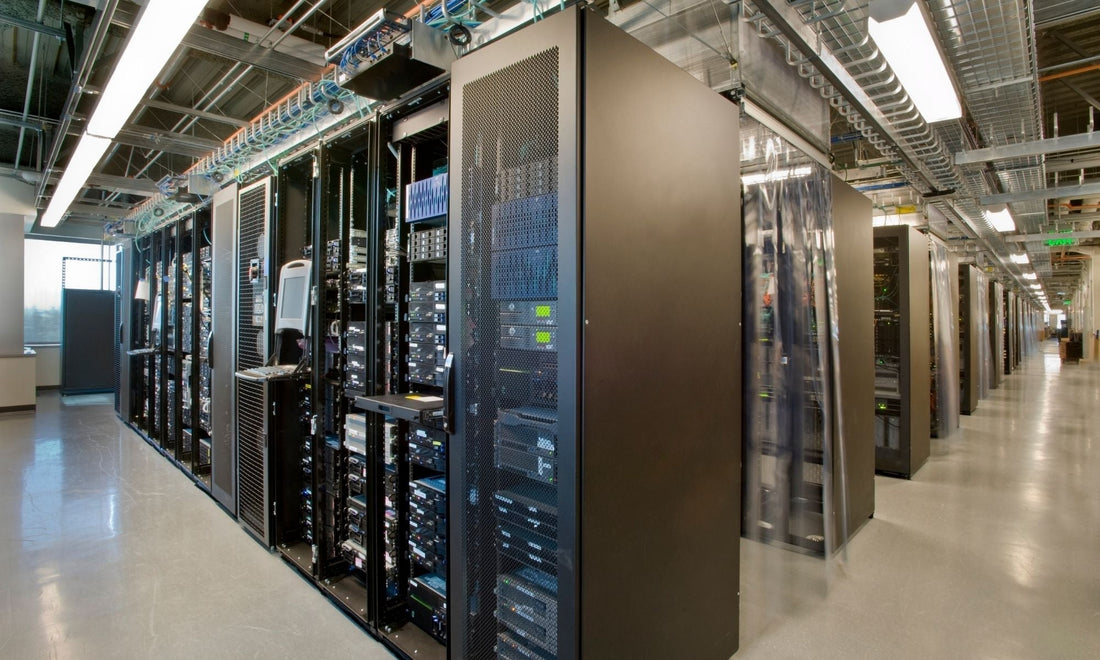
For larger facilities, the same planning discipline extends to racks, PDUs, cooling, cable management, remote monitoring, and redundant UPS architecture. A home office is smaller than a data center, but the objective is the same: protect the systems that keep work moving.
The Bottom Line
Tesla, Sunrun, and Renew Home’s 16.8 GW VPP could help utilities respond to peak demand and support the rapid growth of data centers. It may also create new incentives for homeowners who allow their batteries, thermostats, or vehicles to participate in grid services.
But grid-level flexibility and device-level continuity are not the same thing. A VPP helps coordinate energy across many homes. A UPS protects your specific workstation, router, and data when power quality changes now.
Real-Time Solutions are the standard for modern infrastructure and power protection. To review your home-office requirements, contact Ace Real Time Solutions to request a power audit, solution design, or technical specification guidance. You can also review our power protection services and UPS planning checklist.
Frequently Asked Questions
What is a virtual power plant?
A virtual power plant is a software-coordinated network of distributed energy resources, such as home batteries, solar systems, electric vehicles, smart thermostats, and controllable appliances. These resources can collectively reduce demand or provide stored energy to support the electric grid.
How does the Tesla, Sunrun, and Renew Home VPP work?
The framework aggregates residential batteries and flexible household loads. Batteries can export stored energy, while smart thermostats and HVAC systems can shift or reduce demand during peak periods. Utilities and large energy customers may then procure this aggregated flexibility as grid capacity.
How does a VPP protect a home office during an outage?
A VPP can support grid reliability, but it does not automatically replace a UPS. A UPS provides immediate, local backup and power conditioning for equipment such as computers, routers, monitors, and storage devices. Homeowners should confirm outage-reserve settings and program terms before enrolling a battery in a VPP.