

Solid State Batteries: Is This the Next Big Revolution in Power Protection?
If you've been in the power protection game for a while, you know that battery technology is the backbone of everything we do. From keeping data centers humming during grid failures to protecting mission-critical medical equipment, batteries are the unsung heroes of reliable power.
But here's the thing, lithium-ion and lead-acid batteries, while dependable, have some frustrating limitations. Fire risks, limited cycle life, temperature sensitivity, and the constant maintenance dance. Enter solid-state batteries, a technology that's been bubbling up in research labs and is now inching closer to commercial reality.
So, is this actually the next big revolution in power protection? Or just another overhyped tech trend? Let's break it down.
What Makes Solid-State Batteries Different?
At its core, the difference is pretty straightforward: traditional lithium-ion batteries use a liquid electrolyte to shuttle ions between the anode and cathode. Solid-state batteries replace that liquid with a solid material, think ceramics, polymers, or sulfides.
Why does that matter? That liquid electrolyte is actually the source of most headaches in conventional batteries. It's flammable, it degrades over time, and it doesn't play nice with extreme temperatures. Swap it for a solid, and suddenly you've eliminated a whole category of problems.
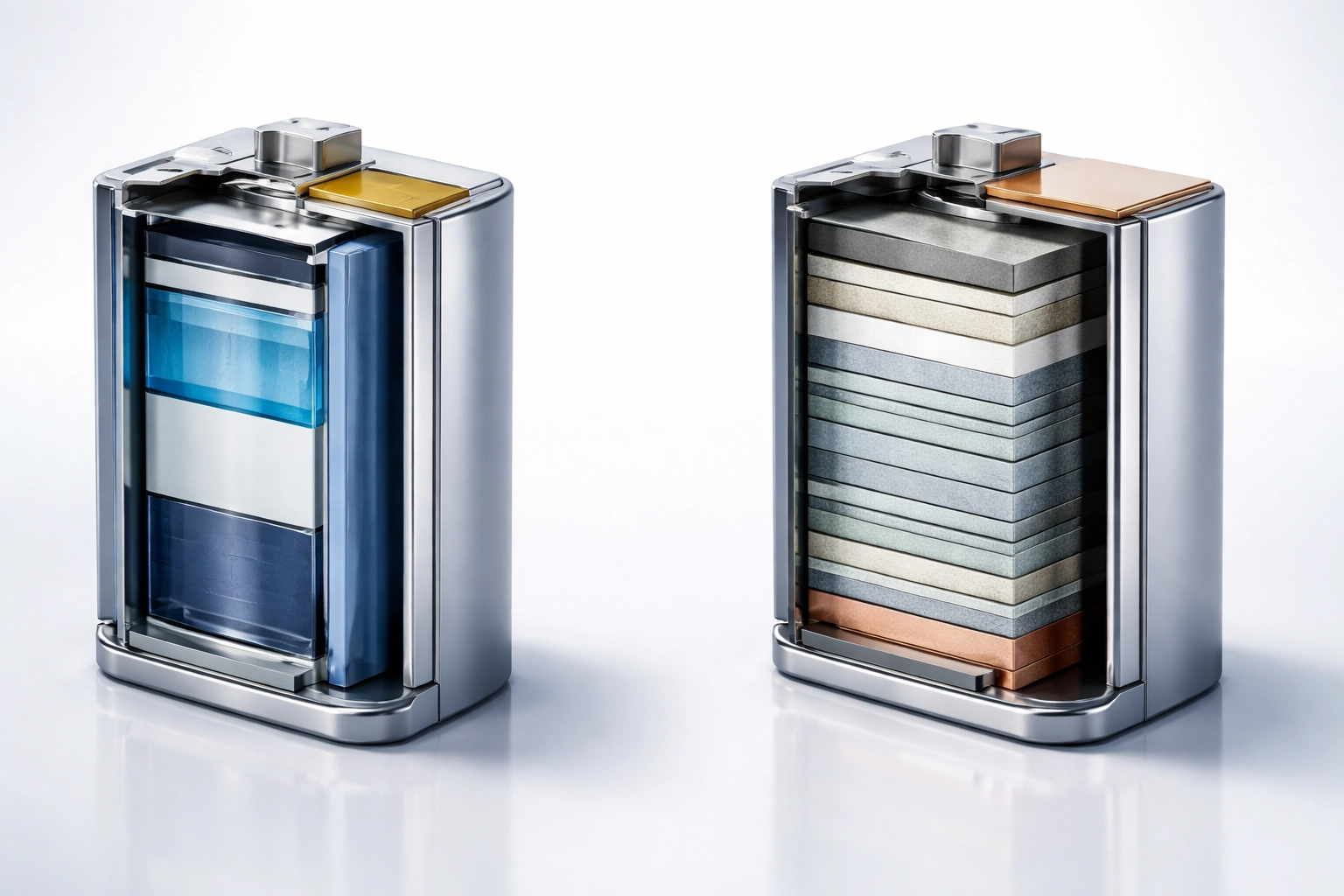
This isn't just an incremental improvement, it's a fundamental redesign of how batteries work. And for those of us in power protection, the implications are huge.
The Performance Advantages You Actually Care About
Let's cut through the marketing fluff and talk about what solid-state batteries actually deliver in terms of real-world performance:
Energy Density That Changes the Game
Solid-state batteries are targeting 400–500 Wh/kg, with some designs pushing as high as 900 Wh/kg. Compare that to conventional lithium-ion systems sitting around 250 Wh/kg, and you're looking at nearly double the energy in the same footprint.
For data center operators, this means:
- Smaller UPS footprints for the same backup capacity
- More flexibility in facility design
- Reduced cooling requirements (less mass = less heat to manage)
Safety That Actually Lets You Sleep at Night
Here's a stat that should matter to anyone managing critical infrastructure: the solid electrolyte in these batteries is non-flammable and chemically stable across a much wider temperature range. Thermal runaway, that terrifying cascade failure that can turn a battery into a fire hazard, is essentially eliminated.
For facilities in fire-prone regions or those with stringent safety requirements (think hospitals, government installations, or telecom towers in remote areas), this is a massive deal.
Cycle Life That Slashes Total Cost of Ownership
Traditional lithium-ion batteries typically deliver around 500 cycles before significant degradation. Solid-state batteries? We're talking over 1,000 cycles as a baseline, with some systems hitting 10,000 cycles at 80% depth of discharge.
Let's put that in perspective for a data center:
| Metric | Traditional Li-Ion | Solid-State |
|---|---|---|
| Typical Cycle Life | ~500 cycles | 1,000–10,000 cycles |
| Replacement Frequency | Every 3-5 years | Every 10-15+ years |
| Maintenance Requirements | Regular monitoring | Significantly reduced |
| TCO Impact | Higher long-term costs | Major savings over lifecycle |
When you're managing a fleet of UPS systems across multiple facilities, those replacement and maintenance savings add up fast.
Charging Speed and Temperature Tolerance
Solid-state batteries can charge from 10% to 80% in as little as 3-15 minutes. And they operate effectively from -50°C to 125°C, a range that would destroy conventional batteries.
For edge computing deployments, remote telecommunications infrastructure, or any installation where environmental control is limited, this temperature tolerance is transformative.
Real-World Applications in Power Protection
So where does this technology actually make sense in the power protection landscape? Here are the applications where solid-state batteries could be genuinely revolutionary:
Data Centers and Critical Infrastructure
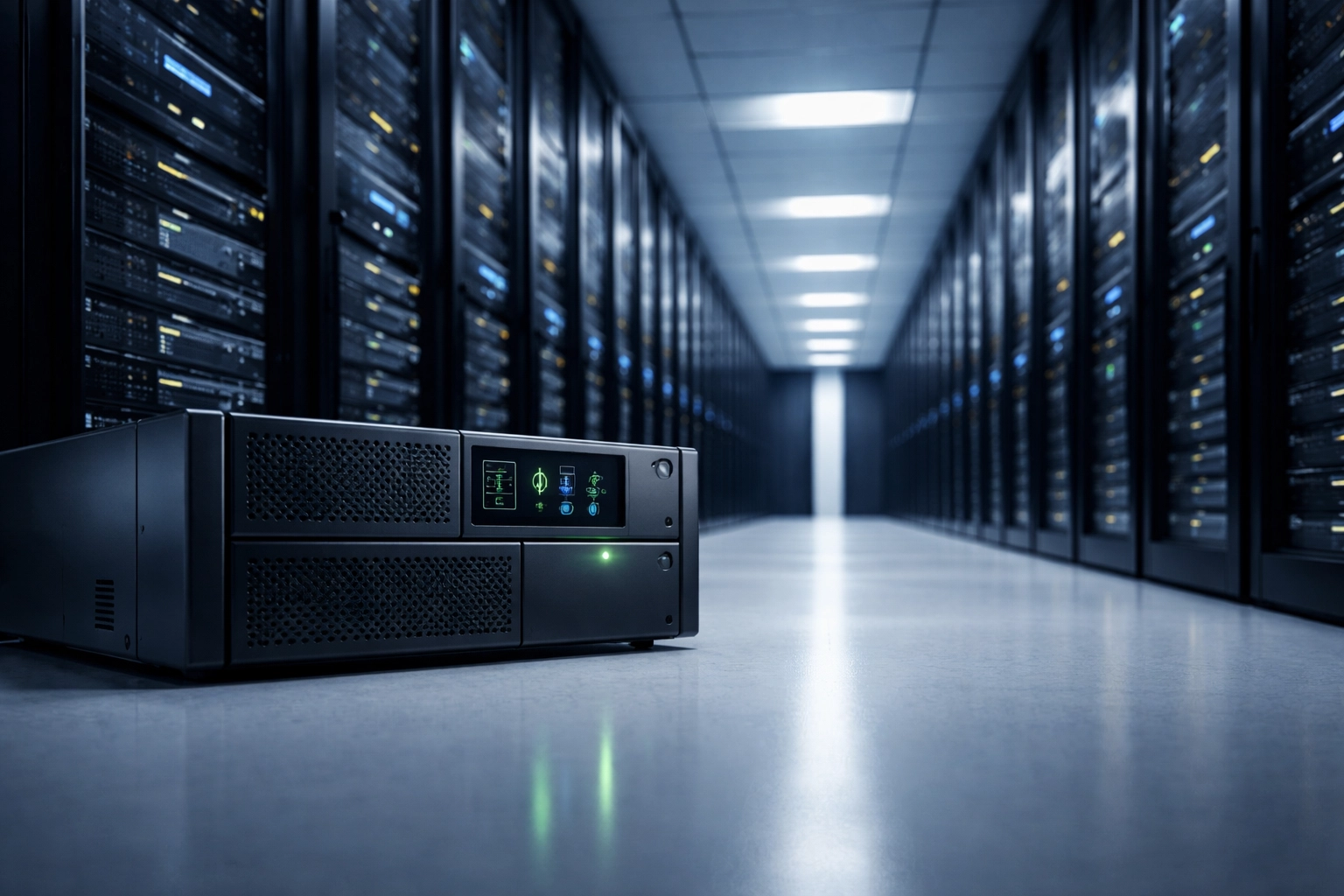
The combination of higher energy density, improved safety, and extended lifespan makes solid-state batteries ideal for next-generation UPS systems. Imagine cutting your battery footprint in half while doubling your backup runtime, that's the promise here.
For facilities pushing into AI and high-performance computing (where power densities are skyrocketing), every square foot matters. Solid-state technology could free up valuable floor space while improving reliability.
Remote and Harsh Environment Installations
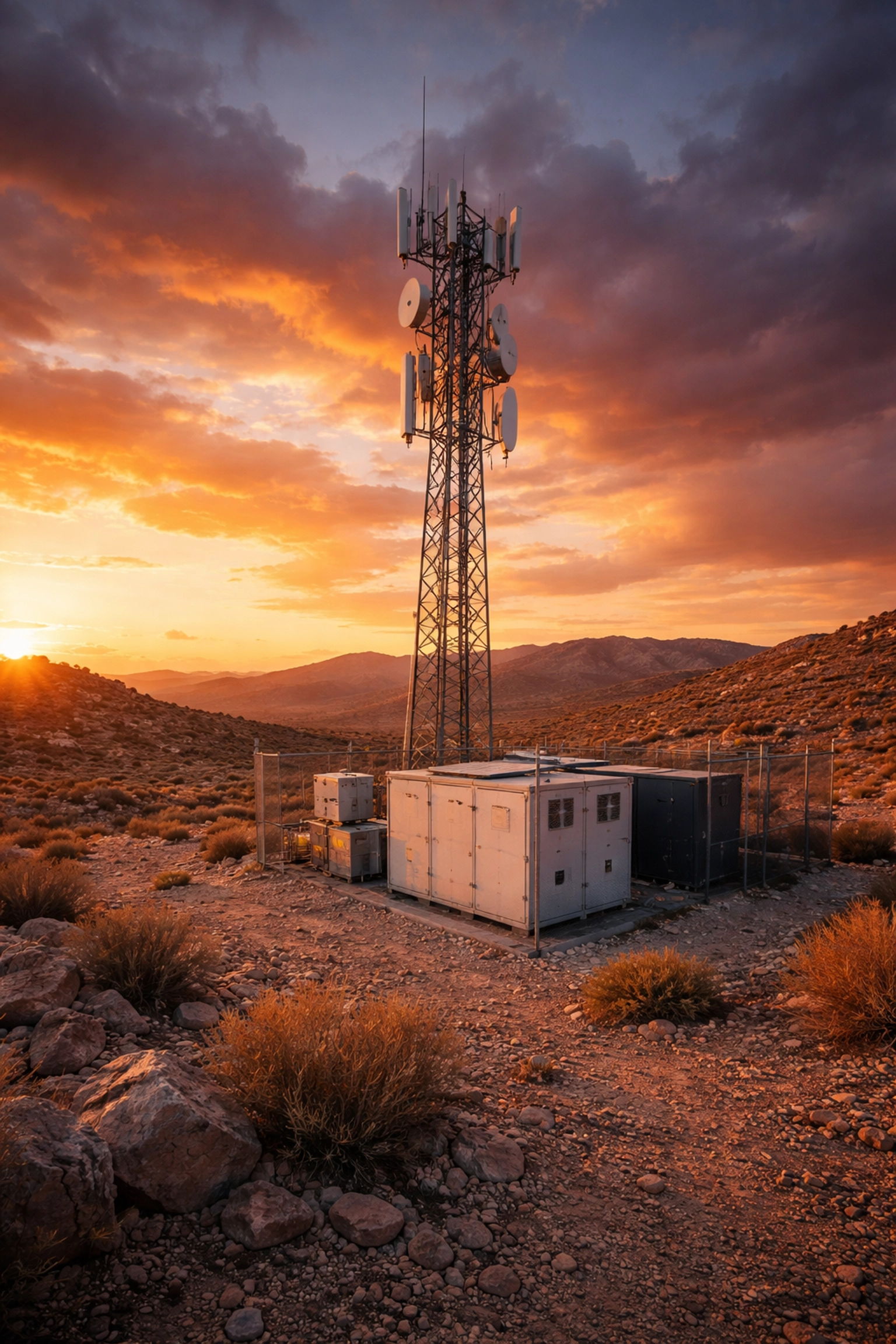
Telecom towers in extreme climates, emergency response systems in fire-prone areas, offshore installations, these are environments where traditional batteries struggle. The extended temperature range and elimination of fire risk make solid-state batteries a natural fit.
Edge Computing and Distributed Infrastructure
As computing moves closer to end users, power protection needs to follow. Edge deployments often lack the climate control and maintenance access of traditional data centers. Solid-state batteries' reduced maintenance requirements and environmental tolerance address these challenges head-on.
Healthcare and Life Safety Systems
Medical facilities require absolutely reliable backup power, lives literally depend on it. The enhanced safety profile and extended lifespan of solid-state batteries make them attractive for critical healthcare applications where failure isn't an option.
The Reality Check: Where Are We Actually At?
Now for some honest talk. Solid-state batteries aren't sitting on warehouse shelves ready to ship tomorrow. Here's the current state of play:
Commercial launches are anticipated around 2027. That's close enough to start planning, but far enough out that you shouldn't rip out your existing infrastructure just yet.
Recent breakthroughs are accelerating the timeline. Researchers have developed protective coatings that stabilize electrolytes and, critically, allow manufacturing using existing lithium-ion battery production infrastructure. That's huge for scaling up production and bringing costs down.
The automotive industry is driving massive investment in this technology (EV range anxiety is a powerful motivator), which means power protection applications will benefit from the R&D spillover.
What This Means for Your Procurement Strategy
If you're responsible for IT procurement or data center infrastructure planning, here's how to think about solid-state batteries:
Short-term (2024-2026):
- Continue investing in current-generation lithium-ion and lead-acid solutions from trusted suppliers
- Monitor solid-state developments closely
- Evaluate facility designs with future battery technology in mind (flexibility is your friend)
Medium-term (2027-2030):
- Expect early commercial solid-state UPS solutions to hit the market
- Plan pilot deployments in appropriate environments (remote sites, extreme conditions)
- Budget for potential technology transitions in lifecycle planning
Long-term (2030+):
- Solid-state may become the default for new installations
- Significant TCO advantages should drive widespread adoption
- Legacy systems will need migration strategies
The Bottom Line
Is solid-state battery technology the next big revolution in power protection? The evidence strongly suggests yes: but with the caveat that we're still a few years from widespread commercial availability.
The combination of dramatically improved safety, nearly double the energy density, and 10x longer cycle life addresses the fundamental limitations that have constrained battery-based power protection for decades.
For data center operators, IT procurement teams, and anyone responsible for critical infrastructure, now is the time to start understanding this technology and planning for its arrival.
Want to stay ahead of the curve on power protection technology? Our team at Ace Real Time Solutions keeps a close eye on emerging battery technologies and can help you plan infrastructure that's ready for tomorrow while meeting today's needs. Reach out to us to discuss your power protection strategy.
What's your take on solid-state batteries? Are you already factoring them into your long-term infrastructure plans? Drop a comment below: we'd love to hear how you're thinking about this technology shift.
Related Reading: