

Solar-Ready UPS Systems Explained in Under 3 Minutes: The Future of Hybrid Power Protection
Power outages cost businesses an average of $7,900 per minute according to Gartner research, while electricity rates continue climbing nationwide. For data center operators and IT managers, this creates a perfect storm: rising operational costs paired with zero tolerance for downtime. Traditional UPS systems solve half the equation by preventing outages, but they do nothing about escalating energy bills.
Enter solar-ready UPS systems: the hybrid solution that's revolutionizing how forward-thinking organizations approach power protection.
What Are Solar-Ready UPS Systems?
A solar-ready UPS system combines the instant backup protection of traditional uninterruptible power supplies with integrated solar energy generation and storage capabilities. Unlike conventional UPS units that only activate during emergencies, these hybrid systems work continuously to reduce grid dependence while maintaining the millisecond switching speeds critical for sensitive IT equipment.
Think of it as your UPS system's smarter, more economical cousin that pays you back while keeping your servers running.
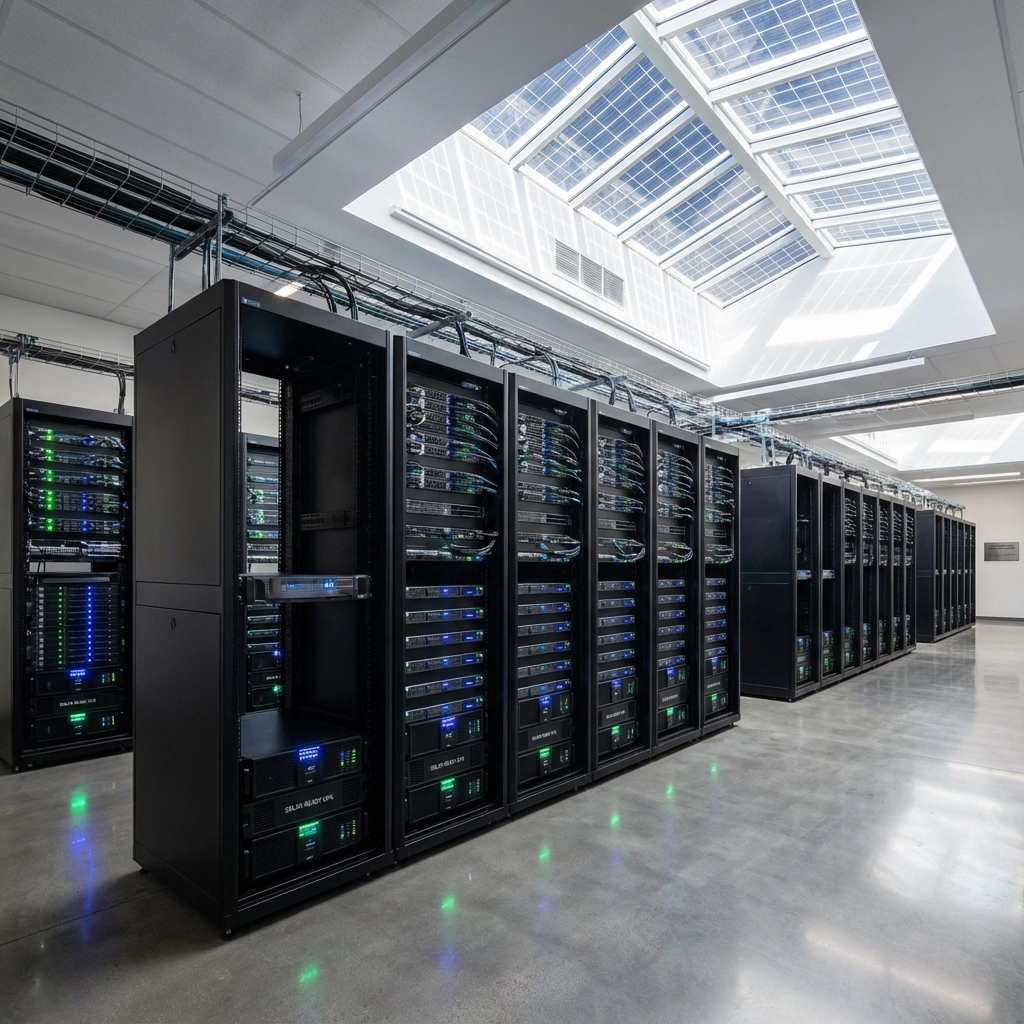
The key difference lies in the integration. Rather than bolting solar panels onto an existing UPS as an afterthought, solar-ready systems are engineered from the ground up to seamlessly manage multiple power sources: solar generation, grid power, and battery storage.
How Solar-Ready UPS Systems Operate
These intelligent systems function in three distinct modes, automatically switching between them based on conditions and programmed priorities:
Normal Solar Operation
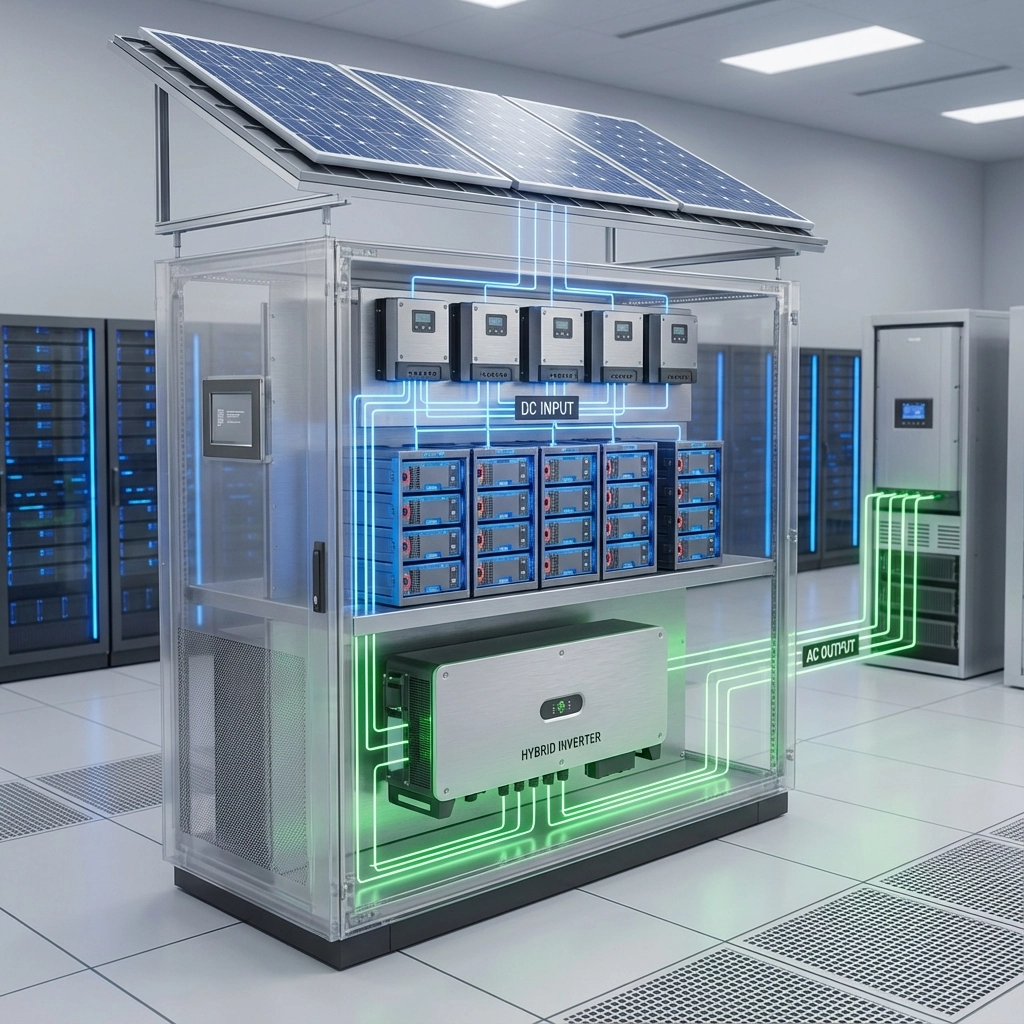
During daylight hours with sufficient solar generation, the system's charge controller directs clean DC electricity from panels through the hybrid inverter, which converts it to AC power for immediate use. Excess energy charges the battery bank for later deployment. Your facility runs primarily on free solar power while maintaining full UPS protection.
Grid Supplementation Mode
When solar production drops: due to weather, seasonal changes, or high demand periods: the hybrid inverter intelligently draws from stored battery power or grid electricity. Advanced systems can be programmed to optimize based on time-of-use rates, automatically switching to batteries during peak pricing periods and recharging when rates drop.
Emergency Backup Protection
During grid outages, the system behaves like a traditional UPS, switching to battery power within 0-10 milliseconds. However, unlike standard UPS systems limited by battery capacity, solar-ready units can extend runtime indefinitely as long as solar generation continues. Even partial sunlight can significantly extend backup duration.
Key Components Breakdown
Understanding the core components helps IT procurement teams evaluate systems and plan installations:
Solar Panels: Generate clean DC electricity. Modern panels maintain efficiency even in partial shade conditions, crucial for facilities with complex rooftops or nearby structures.
Charge Controller: The traffic director that regulates power flow to prevent battery overcharge and optimize charging cycles. MPPT (Maximum Power Point Tracking) controllers deliver 15-20% better efficiency than older PWM models.
Battery Bank: Stores energy for on-demand use. Lithium-ion batteries offer superior cycle life and faster charging compared to traditional lead-acid, though at higher upfront cost. For critical applications, the longer lifespan and reliability justify the investment.
Hybrid Inverter: The system's brain that converts DC to AC power and intelligently routes electricity between sources. Look for models with advanced grid-tie capabilities and comprehensive monitoring functions.
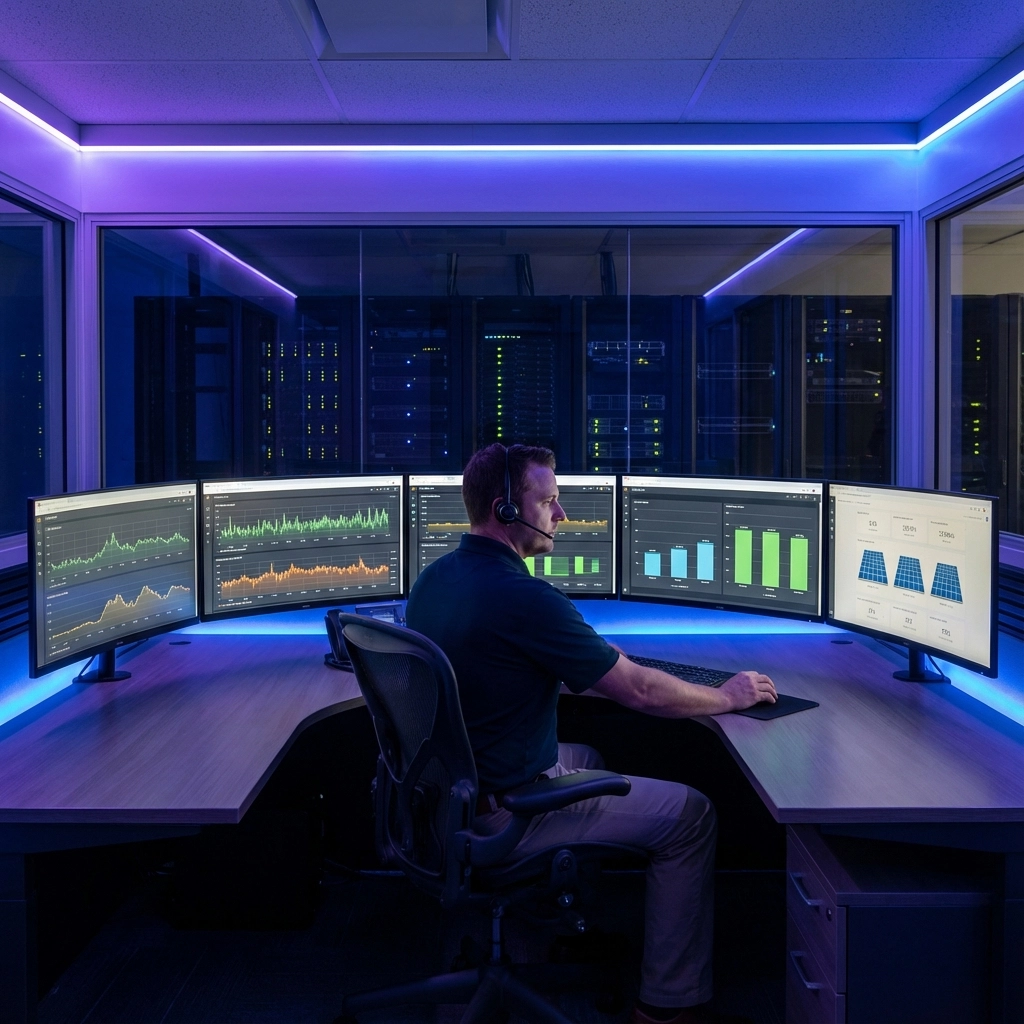
Monitoring System: Real-time dashboard showing energy production, consumption, battery status, and system health. Critical for proactive maintenance and optimizing performance.
Benefits for Data Centers and IT Operations
Immediate Cost Reduction
A mid-sized data center installing a 100kW solar-ready UPS system can reduce electricity costs by 40-60% annually, depending on local solar conditions and utility rates. In states with net metering, excess production generates credits during low-demand periods.
Extended Runtime Protection
Traditional UPS systems provide 15-30 minutes of backup power: enough for graceful shutdowns but insufficient for extended outages. Solar-ready systems can maintain operations for hours or days, depending on battery capacity and ongoing solar generation.
Regulatory Compliance
As sustainability reporting becomes mandatory for larger organizations, integrated solar-UPS systems help meet renewable energy targets while maintaining operational requirements. Many jurisdictions offer tax incentives for commercial solar installations.
Scalability and Future-Proofing
Modular designs allow capacity expansion as power requirements grow. Adding panels, batteries, or inverter capacity requires minimal infrastructure changes compared to separate solar and UPS installations.
Real-World Applications
A regional healthcare network recently deployed solar-ready UPS systems across three facilities. During a six-hour grid outage caused by severe weather, their main data center continued normal operations while generating enough excess power to support critical medical equipment. The system paid for itself within four years through energy savings alone.
Edge computing facilities particularly benefit from hybrid protection. Remote locations often face unreliable grid power and high electricity costs due to infrastructure limitations. Solar-ready UPS systems provide energy independence while ensuring consistent uptime for distributed computing workloads.
Implementation Considerations
Site Assessment
Roof condition, shading analysis, and electrical infrastructure capacity determine feasibility. Most installations require structural engineering review to ensure adequate support for panel arrays.
Utility Integration
Grid-tie capabilities vary by utility provider and local regulations. Some areas limit solar installation sizes or impose interconnection fees that affect project economics.
Maintenance Requirements
Solar components require minimal maintenance: primarily annual cleaning and periodic electrical connection inspections. Battery replacement remains the primary long-term cost, typically every 7-10 years for lithium-ion systems.
The Future of Hybrid Power Protection
As energy storage costs continue declining and solar efficiency improves, hybrid UPS systems will become the standard for new installations. Emerging technologies like vehicle-to-grid integration and AI-powered energy management will further enhance system capabilities.
Organizations planning power infrastructure upgrades should evaluate solar-ready UPS systems now, even if immediate installation isn't feasible. The rapidly evolving technology landscape rewards early adopters with significant operational advantages.
Take the Next Step
Power protection doesn't have to be just an operational expense. Solar-ready UPS systems transform essential infrastructure into profit centers while enhancing reliability and sustainability.
Ready to explore how hybrid power protection can benefit your organization? Contact our team for a customized assessment of your power protection needs and solar potential. Our experts will evaluate your facility's requirements and provide detailed ROI projections for solar-ready UPS implementation.
Don't wait for the next outage: or the next utility rate increase( to discover the advantages of hybrid power protection.)