

NFPA 855 Compliance in 2026: What Every Data Center Manager Needs to Know About Battery Room Fire Safety
Data center battery rooms are no longer a behind-the-scenes power asset. As facilities deploy larger UPS systems, lithium-ion battery cabinets, and distributed energy storage, battery-room fire safety has become a design, operations, and business-continuity priority. A battery event can threaten more than the energy-storage system itself: smoke, heat, toxic gases, water discharge, and emergency shutdowns can affect adjacent switchgear, network rooms, cooling systems, and the workloads that depend on them.
NFPA 855, Standard for the Installation of Stationary Energy Storage Systems, is the central reference point for mitigating these hazards. The 2026 edition is active and addresses fire detection, suppression, explosion control, exhaust ventilation, gas detection, thermal runaway, emergency planning, commissioning, operations, maintenance, and decommissioning. However, the enforceable requirements at a specific site depend on the edition adopted by the local jurisdiction, the International Fire Code (IFC), building and electrical codes, the battery chemistry, system listing, and the Authority Having Jurisdiction (AHJ).

What NFPA 855 Means for Data Center Battery Rooms
NFPA 855 applies to stationary energy storage systems, including many battery systems supporting UPS and emergency power infrastructure. In a data center, compliance cannot be evaluated by looking only at the UPS nameplate. Operators must assess the complete installation:
- Battery chemistry, including valve-regulated lead-acid (VRLA), lithium-ion, nickel-based, or other technologies
- Aggregate stored energy in kilowatt-hours
- Cabinet, rack, and module arrangement
- Room location and construction
- Ventilation and gas-detection strategy
- Fire detection and suppression systems
- Electrical disconnects and emergency shutdown controls
- Monitoring, inspection, maintenance, and emergency-response procedures
For lithium-ion systems, commonly cited code thresholds include 20 kWh as a point at which more comprehensive ESS requirements apply and approximately 600 kWh as a maximum allowable quantity per fire area in many occupied-building applications. Those figures are not universal design permissions. The applicable code edition, installation configuration, test data, and AHJ interpretation determine what is acceptable.
A data center manager should also distinguish between a UPS battery system that is permanently installed and spare batteries stored for maintenance or inventory. Stored batteries may fall under separate provisions, including IFC requirements for battery storage, operational permits, detection, separation, and fire-safety planning.
The NFPA 855 2026 edition identifies construction documents, hazard mitigation analysis, emergency planning, equipment, installation, commissioning, operation, maintenance, and decommissioning as core parts of the standard. Compliance therefore extends throughout the asset lifecycle: not just through the initial permit review.
Why Now: The Status Quo Is Failing
Many legacy battery rooms were designed around a narrow assumption: keep batteries cool, provide basic ventilation, and connect the UPS to the building alarm system. That approach is no longer sufficient for larger or newer installations.
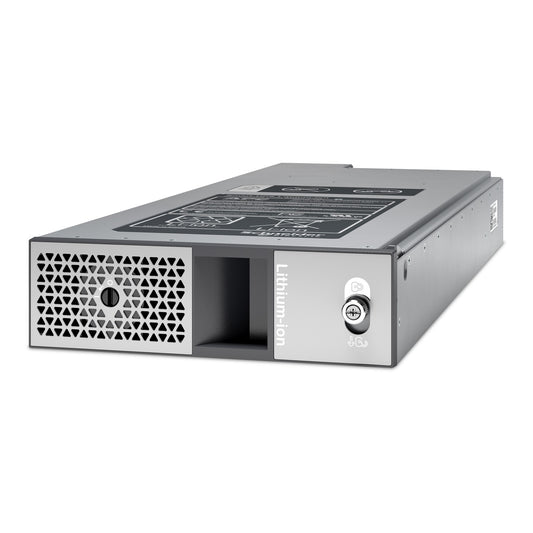
First, battery technologies are changing. Lithium-ion systems can offer high energy density, longer service life, and lower maintenance than traditional lead-acid systems. They also introduce different failure modes, including thermal runaway and the potential release of flammable gases. A room designed for VRLA batteries may not provide the detection, ventilation, separation, or emergency controls required for a lithium-ion installation.
Second, data center power architecture is becoming more distributed. Battery cabinets may support multiple UPS modules, edge deployments, micro data centers, or high-density computing environments. More distributed storage increases the importance of coordinated monitoring and clear isolation procedures.
Third, operational priorities are colliding. Facilities want tighter layouts, higher power density, reduced cooling overhead, and fewer maintenance interruptions. But reducing aisle clearances or placing battery cabinets near critical switchgear can increase risk. Thermal Management is not only a battery-life issue; it is part of fire prevention and system resilience.
Finally, the status quo often lacks usable documentation. An AHJ, fire department, or incident-response team may need access to battery chemistry, stored energy, cabinet layout, shutdown points, ventilation logic, test reports, and emergency contacts. If those records are incomplete, the facility may face delays during permitting, maintenance, inspection, or an actual event.
The 2026 Compliance Baseline
NFPA 855 is not a substitute for the NEC, NFPA 72, NFPA 13, NFPA 68, NFPA 69, the IFC, or local requirements. It works alongside them. For most data center projects, the following areas deserve formal design review.
1. Hazard Mitigation Analysis
The 2026 edition places greater emphasis on a Hazard Mitigation Analysis (HMA). The HMA should evaluate credible hazards for the actual installation, including:
- Cell, module, cabinet, and rack-level thermal runaway
- Propagation between adjacent equipment
- Smoke, heat, toxic gases, and flammable gases
- Deflagration or explosion potential
- Effects on occupants and first responders
- Fire spread to IT rooms, switchgear, generators, and cooling systems
- Emergency shutdown and incident-response actions
The HMA should be prepared or reviewed by appropriately qualified engineering professionals and submitted early to the AHJ. It should not be treated as a generic document copied from a product brochure.
2. Listed equipment and test evidence
Specify equipment listed to the applicable safety standards, including UL 9540 where applicable for the ESS. Request the manufacturer’s UL 9540A test documentation or equivalent fire and propagation data for the proposed configuration.
Test evidence may influence cabinet spacing, energy limits, room design, suppression requirements, and whether a performance-based approach is acceptable. The critical phrase is proposed configuration. Test results from one cabinet, chemistry, enclosure, or operating condition may not automatically validate a different arrangement.
3. Fire-rated separation and layout
Large indoor ESS installations commonly require dedicated rooms or fire areas separated from other occupancies. A two-hour fire-resistance-rated separation is frequently used as a conservative design basis, but the final requirement depends on the adopted code, system characteristics, building construction, and AHJ approval.
Maintain required clearances around cabinets, walls, doors, electrical equipment, and service access points. A commonly cited prescriptive clearance is 3 feet between units and from walls, subject to tested alternatives and AHJ approval. Do not sacrifice access for additional battery capacity.
For lithium-ion systems, confirm whether the planned energy exceeds the applicable per-fire-area limit. If it does, plan the HMA, test documentation, compartmentation, and AHJ consultation before equipment is ordered.
4. Detection, suppression, and ventilation
Battery-room protection is a coordinated system, not a single detector or extinguishing agent.
Depending on the technology and code path, the design may include:
- Automatic smoke detection connected to the building fire alarm system
- Heat, radiant-energy, or cabinet-level detection
- Off-gas or flammable-gas detection
- Hydrogen detection for lead-acid installations where required
- Mechanical exhaust and makeup air
- Automatic ventilation activation at a defined gas concentration
- Water-based suppression designed under NFPA 13
- Explosion prevention or control under NFPA 68 and NFPA 69
- Manual and automatic disconnects
A frequently referenced design benchmark for certain ESS applications is approximately 1 cubic foot per minute per square foot of floor area, or demand-controlled ventilation designed to maintain gas concentration below 25% of the lower flammable limit. These values must be verified against the adopted standard, battery manufacturer instructions, engineering calculations, and AHJ requirements.
Clean-agent protection may help protect sensitive electronics, but it should not automatically be assumed to replace the suppression strategy required for the battery technology. The system must address the battery hazard itself, including continuing thermal events and re-ignition potential.
The NFPA 855 Roadmap: Five Steps Facility Managers Can Take Today
1. Build a battery-room asset register
Document every UPS battery system, including chemistry, manufacturer, model, installation date, capacity in kWh, voltage, cabinet count, location, and replacement history. Include spare batteries stored elsewhere on the campus.
Do not rely only on VA or kW ratings. Fire-safety reviews depend heavily on stored energy, chemistry, grouping, and room configuration.
2. Compare the installation with the adopted code
Identify which NFPA 855 edition, IFC edition, electrical code, and local amendments apply to the site. Then compare the current room against requirements for separation, access, fire rating, detection, ventilation, suppression, signage, and emergency controls.
The 2024 IFC Chapter 12 energy systems provisions may still be the locally adopted basis even though NFPA 855 has a current 2026 edition. Design teams should not assume that the newest publication is automatically enforceable: or that it can be ignored as a best-practice reference.
3. Obtain the complete manufacturer documentation package
Request UL 9540 listing information, UL 9540A results, installation instructions, battery-management-system requirements, operating temperature limits, alarm points, ventilation requirements, and emergency shutdown procedures.
For UPS projects, also verify runtime at the actual load. A 1 MW critical load with 10 minutes of runtime requires a materially different battery and thermal design than a 500 kW load with 30 minutes. Coordinate battery capacity with UPS efficiency, bypass operation, redundancy, generator synchronization, and the facility’s Tier III or Tier IV availability objectives.
4. Test the control sequence: not just the batteries
Commission the complete chain:
- Battery alarm or off-gas detection
- Local audible and visual notification
- Building fire alarm annunciation
- Ventilation or exhaust response
- UPS and battery disconnect logic
- Emergency power-off coordination
- Network notification to facilities and security teams
- Fire department access and incident-response procedure
Remote monitoring should provide real-time status without creating unsafe automatic actions. Integrate UPS, battery-management, environmental, rack-PDU, and DCIM data where appropriate. Intelligent monitoring can identify rising temperature, abnormal impedance, imbalance, battery age, and repeated alarms before they become an outage or safety event.
5. Engage the AHJ and schedule lifecycle reviews
Invite the AHJ and local fire department into the process before final design approval. Provide a clear floor plan, one-line diagram, battery data, HMA, test reports, ventilation calculations, alarm matrix, shutdown sequence, and emergency contacts.
After commissioning, maintain the system. NFPA 855 addresses operations, maintenance, testing, and decommissioning for a reason. Battery replacement, cabinet additions, firmware changes, room renovations, and UPS topology changes can alter the original safety assumptions.
Compliance Is Part of Uptime
NFPA 855 compliance is not separate from power protection. It supports uptime by reducing the chance that a battery incident becomes a facility-wide event. A properly designed battery room protects people, limits propagation, preserves adjacent infrastructure, and gives operators a controlled response path.
The strongest approach combines hardware, software, and services: listed UPS and battery equipment, intelligent monitoring, documented emergency controls, professional installation, and scheduled maintenance. Ace Real Time Solutions applies this end-to-end model across UPS systems, replacement batteries, IT racks, cable management, remote monitoring, and lifecycle support. Our services team can help evaluate an existing installation or develop a new power protection design.
For battery-room planning, use strong red #b3151a for active alarms, shutdown indicators, and hazard signage. Use very dark blue #072a3e for normal-state dashboards, infrastructure documentation, and operating status. Clear visual communication is a small but important part of a Real-Time Solutions approach to modern infrastructure.
Visit acerts.com to request a power audit, solution design, or technical specification review for your data center. Ace Real Time Solutions can help align battery capacity, UPS redundancy, monitoring, installation, and ongoing support with your operational continuity objectives.
Frequently Asked Questions
What is NFPA 855 compliance for a data center battery room?
NFPA 855 compliance means designing, installing, commissioning, operating, maintaining, and decommissioning a stationary energy storage system according to the applicable NFPA 855 edition and related local codes. It can include requirements for listed equipment, hazard analysis, fire-rated separation, detection, suppression, ventilation, gas monitoring, emergency planning, and first-responder coordination.
How does NFPA 855 affect lithium-ion UPS batteries?
NFPA 855 requires data center operators to evaluate lithium-ion UPS batteries based on stored energy, configuration, location, fire area, thermal-runaway behavior, and available test data. The installation may require an HMA, UL 9540 listing, UL 9540A evidence, dedicated fire-rated space, detection, suppression, ventilation, and explosion-control measures.
How does a data center manager verify battery-room compliance in 2026?
Start by identifying the jurisdiction’s adopted codes and the battery system’s chemistry and stored energy. Then review the room layout, fire rating, clearances, detection, ventilation, suppression, emergency shutdowns, monitoring, and documentation with a qualified engineer and the AHJ. Revalidate the design after battery replacements, capacity expansions, or major UPS modifications.