
Looking For Modular UPS? Here Are 5 Things You Should Know About Scaling for AI
The data center industry is currently navigating a seismic shift, driven by the insatiable power demands of Artificial Intelligence (AI) and Machine Learning (ML). We are no longer in an era where power growth is linear or predictable. Today, hyperscalers and enterprise facility managers are grappling with a "power crunch" that threatens to outpace grid capacity. Legacy power architectures, once the gold standard, are proving too rigid to handle the erratic, high-density workloads that AI necessitates. As we move toward 50kW, 70kW, and even 100kW per rack, the margin for error in power protection has effectively vanished.
The challenge is twofold: availability and agility. With supply chains for large-scale electrical components still recovering and the grid facing unprecedented constraints, the ability to deploy infrastructure in stages is no longer just a financial preference, it is a survival strategy. To maintain "Real-Time Solutions" in this environment, leadership must pivot away from monolithic, "all-at-once" power builds and toward granular, modular architectures that can scale at the speed of silicon.
Why Now? The Failure of the Monolithic Status Quo
For decades, the standard approach was to install a massive, monolithic Uninterruptible Power Supply (UPS) that would meet the facility's projected "day ten" load from day one. In an AI-driven world, this model is failing for three specific reasons: inefficiency, thermal management, and lack of redundancy. A monolithic UPS running at 20% load is a "stranded asset" that bleeds energy through heat and inefficiency, complicating your thermal management strategy and driving up PUE (Power Usage Effectiveness).
Furthermore, the "all eggs in one basket" approach increases the risk of catastrophic failure. In high-density AI clusters, even a micro-second of latency in power delivery or a failure in a single-point-of-failure system can lead to massive data corruption or hardware damage. AI hardware, specifically GPUs, draws power in massive, synchronized bursts. If your UPS cannot handle these rapid step-loads with precision, your entire AI strategy is at risk. This is why modularity has become the new North Star for resilient infrastructure.
1. Flexibility Meets Growing Demand: The Pay-As-You-Grow Model
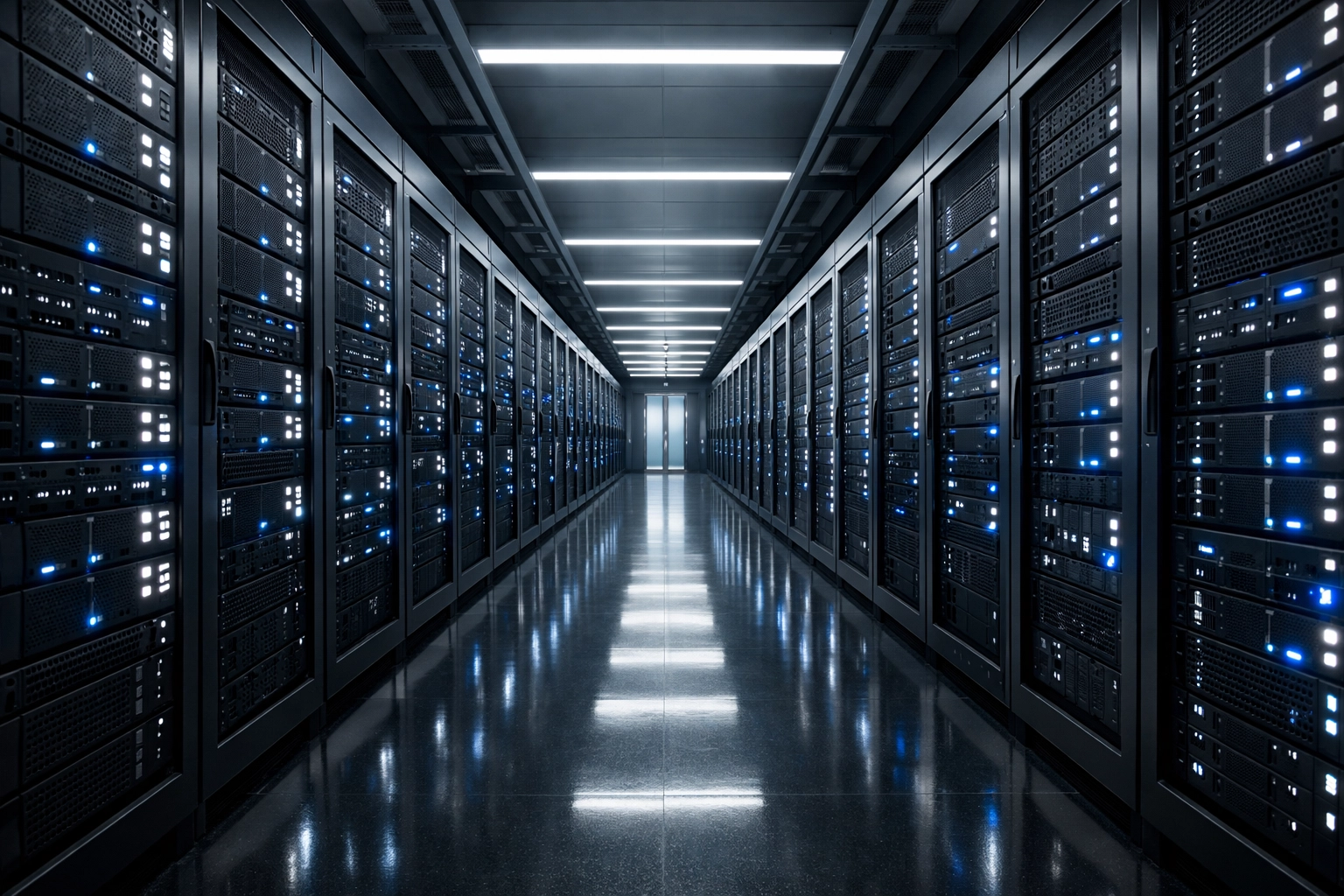
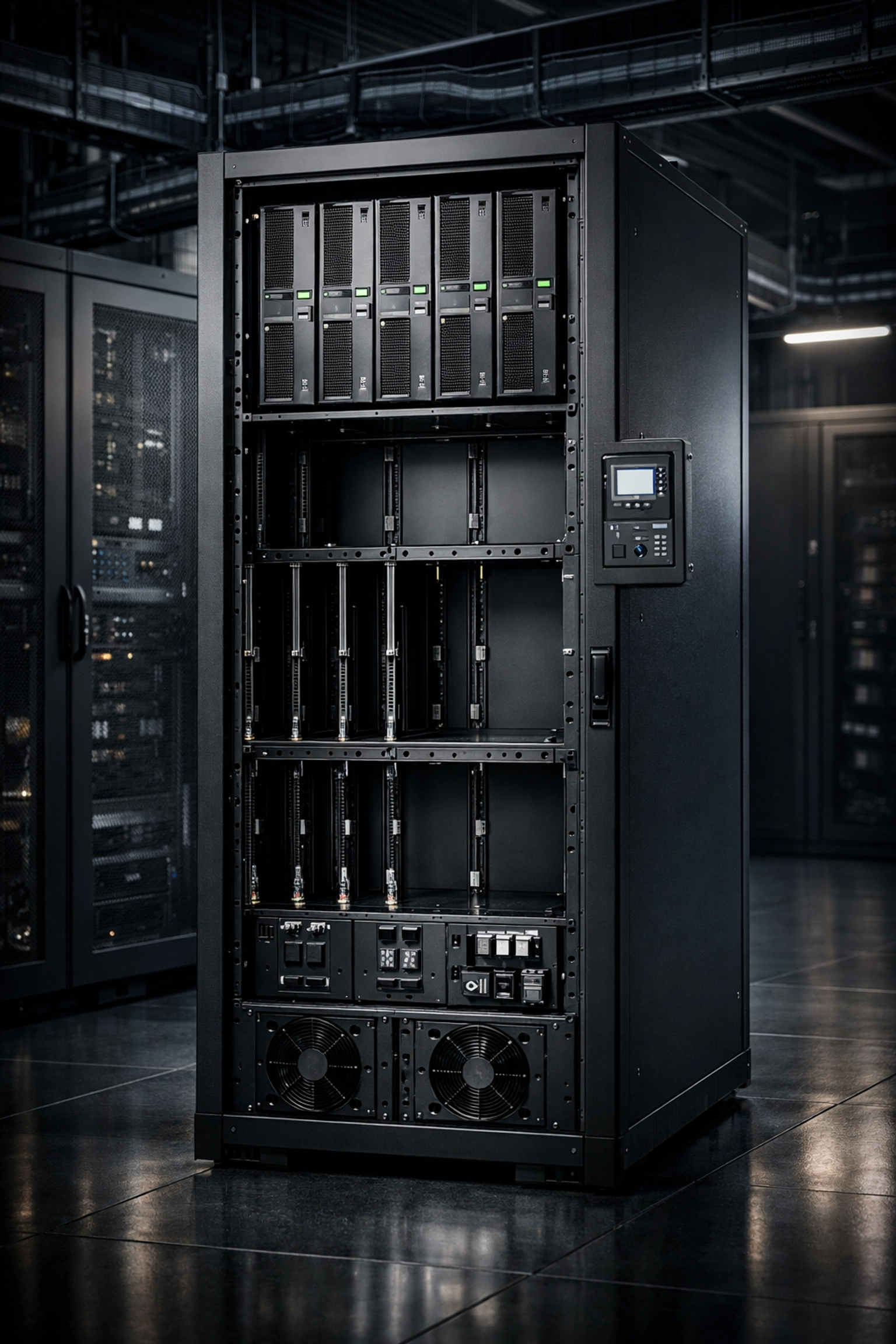
The primary advantage of a modular UPS is the ability to right-size your infrastructure. For AI deployments, where the final scale of a cluster might not be known during the initial build, modularity allows you to add power capacity incrementally. Instead of deploying a 1MW monolithic block for a cluster that currently only needs 200kW, you can install a modular frame and populate it with 50kW power modules as your GPU count increases.
This approach keeps individual modules operating near their "sweet spot" for efficiency, usually 90% or higher. When you operate a UPS at its peak efficiency, you reduce the heat load on your cooling systems, which is critical when you are already dealing with the high thermal output of AI racks. Ace Real Time Solutions specializes in designing these scalable environments, ensuring that your power protection grows in lockstep with your computing needs.
2. Built-in Redundancy Prevents Failures
In a traditional UPS setup, achieving redundancy often means buying two of everything (2N). Modular systems change the math by offering N+1, N+2, or even N+X redundancy within a single chassis. Because each module operates independently but as part of a collective system, the failure of one module does not bring down the load. The remaining modules simply pick up the slack instantly.
This distributed design eliminates the single point of failure inherent in older systems. For mission-critical AI training that may run for weeks or months at a time, this level of resilience is non-negotiable. Leading partners like Vertiv and APC by Schneider Electric have pioneered these internal redundant architectures, allowing for a level of uptime that Tier III and Tier IV standards demand without the massive footprint of traditional 2N builds.
3. AI Integration and Predictive Management
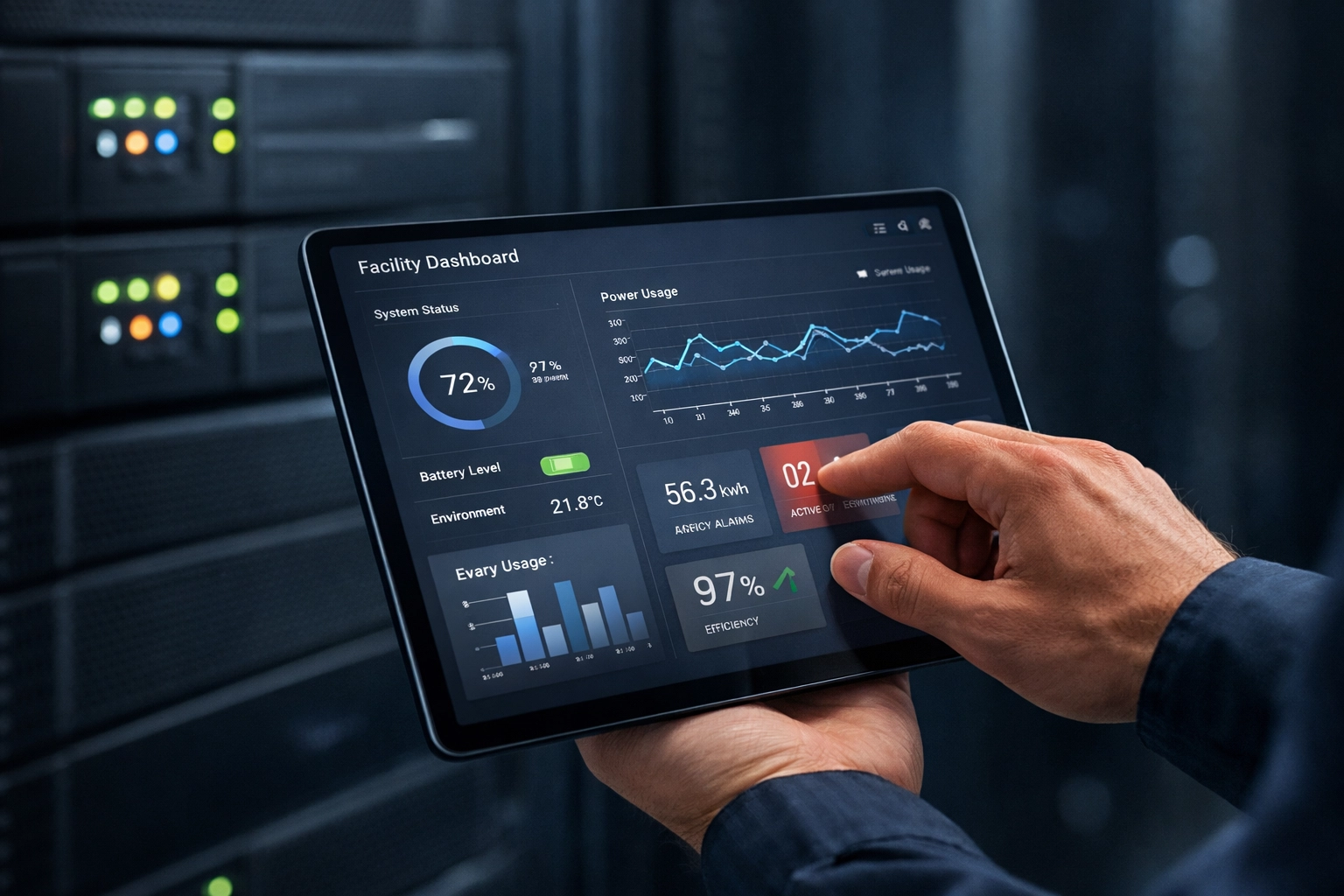
Modern modular UPS systems are no longer "dumb" batteries. They are IoT-enabled devices that use AI to protect AI. By integrating remote monitoring and control, these systems provide predictive maintenance capabilities. Instead of waiting for a Strong Red (HEX #b3151a) alarm to signal a failure, the system uses algorithms to detect anomalies in battery impedance, temperature, or voltage before a fault occurs.
Real-time data visualization, often displayed on a dashboard using Very Dark Blue (HEX #072a3e) for stability and clarity, allows facility managers to see exactly how their power is being utilized. This level of remote monitoring and control is essential for edge computing sites where on-site technical staff may be limited.
4. Lithium Technology: The Power Density King
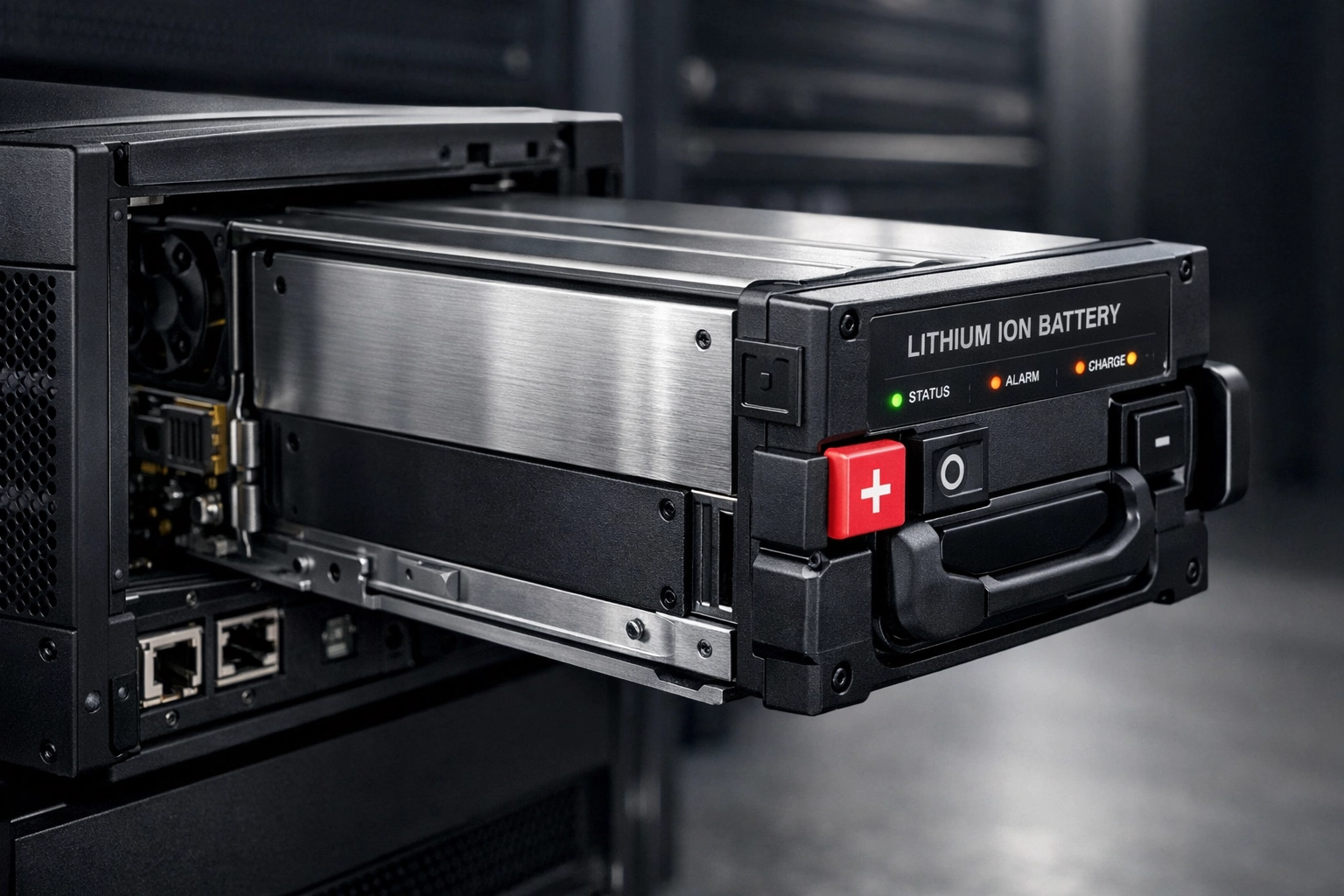
While lead-acid (VRLA) batteries have served the industry for decades, AI workloads require the superior performance of Lithium-Ion technology (specifically LFP or NMC). Lithium modules offer significantly higher power density, allowing you to pack more runtime and more power into a smaller footprint. This is vital when AI racks are already consuming most of the available floor space.
Lithium-based UPS solutions also recharge much faster than VRLA. After a power event, an AI cluster needs to be ready for the next potential outage as soon as possible. Lithium’s ability to cycle quickly and maintain a longer lifespan (often 10-15 years versus 3-5 for VRLA) makes it the standard for modern "Real-Time Solutions." Brands like CyberPower and Minuteman Technologies are increasingly incorporating these advanced chemistries into their modular lineups to meet the needs of modern IT continuity.
5. Live Swap Capability: Zero Scheduled Downtime
Perhaps the most significant operational advantage of modularity is "Live Swap" or "Hot Swap" capability. In a monolithic environment, servicing the UPS often requires bypassing the system or scheduling a total shutdown, both of which are risky and expensive. With modular systems, power modules can be added or replaced in minutes while the system remains fully operational and protected.
This capability dramatically reduces the Mean Time to Repair (MTTR). If a module indicates a potential failure, a technician can simply slide it out and slide a new one in. There is no need to disconnect the load or risk dropping the AI cluster. This ensures that your data and compliance standards remain intact, even during routine maintenance.
The Modular UPS Roadmap: 5 Steps to AI Readiness
Transitioning to a modular power architecture requires a strategic approach. Here is how a facility manager should proceed today:
- Audit Your Current Load Density: Determine your current kW per rack and project your AI growth over the next 24 months. If you are approaching 15kW+ per rack, it is time to move to three-phase modular systems.
- Evaluate Battery Chemistry: Assess whether your facility can support Lithium-Ion. While the upfront cost is higher, the TCO (Total Cost of Ownership) and footprint savings usually make it the better choice for AI.
- Prioritize Management Software: Ensure your UPS hardware integrates with your DCIM (Data Center Infrastructure Management) tools. If you can't monitor it remotely in real-time, you aren't truly protected.
- Plan for "Live Swap" Logistics: Ensure your staff or your value-added reseller is trained on hot-swapping procedures to minimize MTTR.
- Secure Your Partnerships: Work with a provider like Ace Real Time Solutions who understands the nuances of APC, Vertiv, CyberPower, and Minuteman to ensure you are getting the right hardware for your specific use case.
Technical Depth: The Metrics That Matter
When specifying a modular UPS for AI, keep these technical benchmarks in mind:
- Efficiency Ratings: Look for systems offering 97% or higher in double-conversion mode and up to 99% in "eco-mode" or "e-conversion" modes.
- Power Factor: A Unity Power Factor (1.0) is essential. It ensures that the kVA equals the kW, providing the maximum amount of "real power" to your hungry GPUs.
- Scalability Range: Ensure the chassis can scale significantly. For example, a frame that can grow from 50kW to 250kW provides the runway needed for AI expansion.
- Standard Compliance: For government or high-security AI projects, ensure your hardware meets TAA compliance and securing critical infrastructure standards.
Conclusion: Positioning for the AI Future
The era of static data center design is over. The dynamic, bursty, and high-density nature of AI demands a power protection strategy that is just as flexible as the software it supports. Modular UPS systems represent the pinnacle of this evolution, offering the redundancy, efficiency, and scalability required to keep modern businesses online.
At Ace Real Time Solutions, we don't just sell hardware; we design resilience. Whether you are building out a new edge site or retrofitting a legacy data center to handle AI workloads, our team provides the technical expertise and world-class hardware from partners like APC, Vertiv, and CyberPower to ensure your mission-critical systems never skip a beat.
Ready to future-proof your power infrastructure? Visit acerts.com today to download a technical spec sheet, request a comprehensive power audit, or start your custom solution design.
FAQ: Modular UPS and AI Scaling
What is the difference between a modular UPS and a monolithic UPS?
A monolithic UPS is a single, fixed-capacity unit. If you need more power, you must add another entire unit. A modular UPS uses a frame that can hold multiple smaller power modules, allowing you to add capacity incrementally within the same footprint.
How does modular UPS efficiency help with AI cooling?
High-density AI racks generate immense heat. Modular UPS systems are designed to operate at high efficiency even at partial loads. Higher efficiency means less energy is wasted as heat, which reduces the overall thermal burden on your data center's cooling infrastructure.
Can I mix different battery types in a modular UPS?
Generally, no. You should not mix VRLA and Lithium-Ion batteries within the same UPS system. When scaling or upgrading, it is best to commit to a single battery chemistry: ideally Lithium-Ion for AI applications: to ensure consistent discharge rates and charging profiles.