
Lithium-Ion vs. New Battery Tech: Which Is Better for Your 2025 Power Protection Strategy?
When you're planning your power protection strategy for 2025, one question keeps coming up in conversations with IT managers and data center operators: should you stick with proven lithium-ion batteries, or is it time to jump on the new battery technology bandwagon? It's a fair question, especially when downtime costs average $7,900 per minute according to Gartner, and your battery choice directly impacts your uptime reliability.
The honest answer? Both traditional lithium-ion and emerging battery technologies have compelling advantages, but the "right" choice depends entirely on your specific use case, budget, and performance requirements. Let's break down what's actually available in 2025 and help you make an informed decision.
Traditional Lithium-Ion: Still the Reliable Workhorse
Why Lithium-Ion Remains King in 2025
Traditional lithium-ion batteries aren't going anywhere in 2025, and for good reason. They've hit some impressive milestones this year that make them more attractive than ever for most applications. First, prices have dropped to record lows of $108 per kilowatt-hour as of December 2025 – that's an 8% decrease from 2024 alone.
From a performance standpoint, modern lithium-ion systems are delivering energy densities around 250 Wh/kg with charge/discharge efficiency rates between 90-95%. Most importantly for power protection applications, they can achieve full charges in approximately 30 minutes and operate reliably in temperature ranges from 0-45°C.
The Real-World Advantages
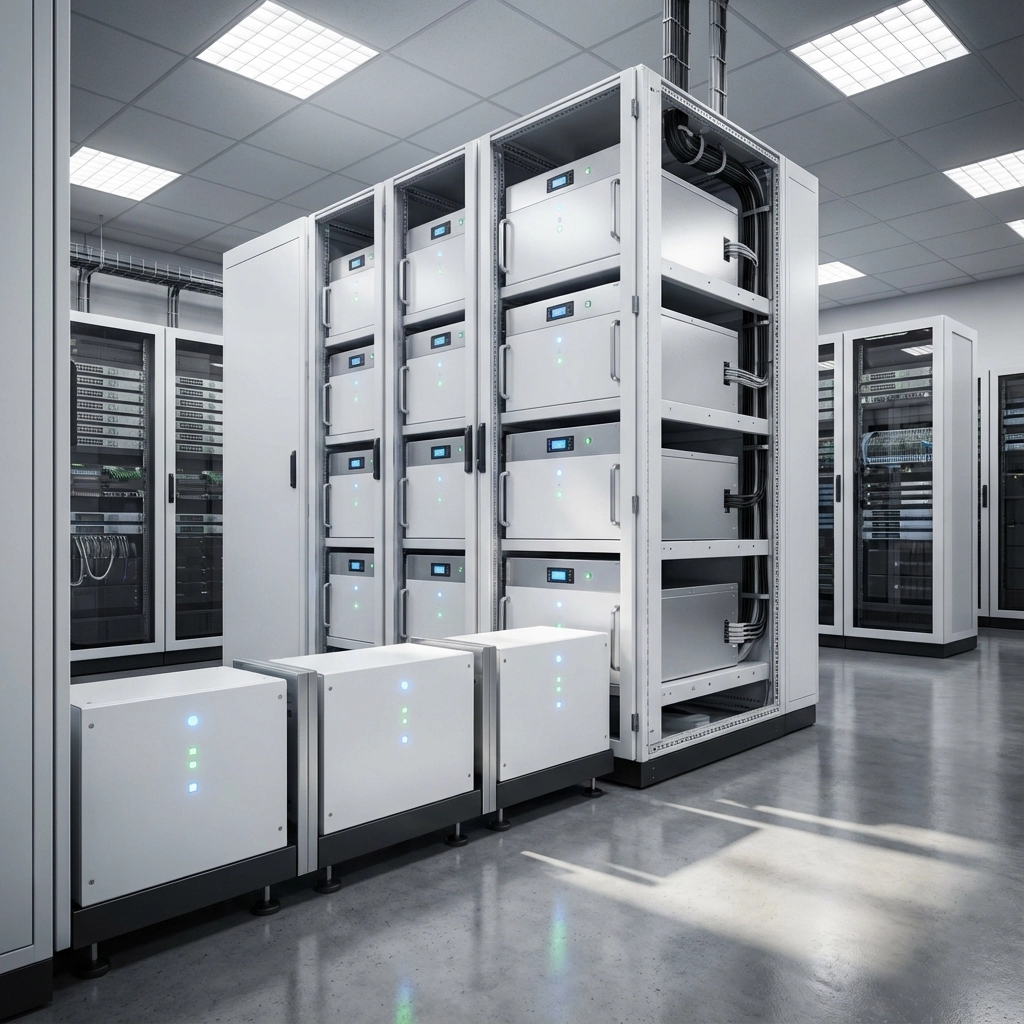
Here's what makes lithium-ion batteries particularly attractive for power protection in 2025:
- Proven track record: Millions of installations worldwide with documented performance data
- Supply chain maturity: Multiple suppliers, competitive pricing, and readily available replacement parts
- Compatibility: Works seamlessly with existing UPS systems and monitoring infrastructure
- Regulatory compliance: Well-established safety certifications and standards
- Service network: Technicians everywhere know how to maintain and troubleshoot these systems
Where Lithium-Ion Falls Short
However, traditional lithium-ion isn't perfect. Standard formulations typically last 500-1,000 charge cycles, though advanced chemistries can push this to over 5,000 cycles. They also require more intensive temperature management and have higher self-discharge rates compared to some newer alternatives.
Emerging Battery Technologies: The Next Generation Players
Solid-State Lithium-Ion: The Immediate Game-Changer
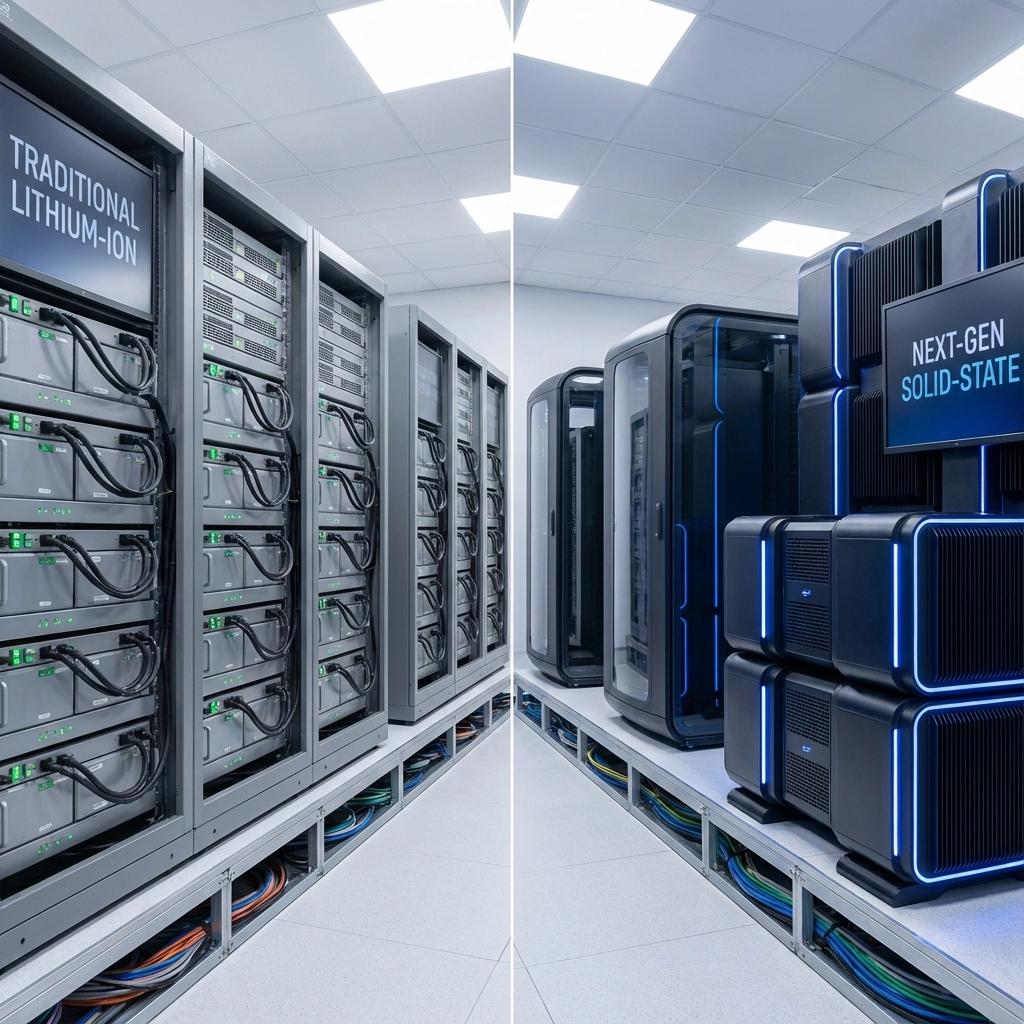
Solid-state lithium-ion batteries are finally hitting mainstream markets in 2025, and they're addressing many of the limitations we've dealt with in traditional lithium-ion systems. By replacing liquid electrolytes with solid electrolytes, these batteries can charge to full capacity in just 15 minutes – half the time of conventional lithium-ion.
The safety improvements are significant too. Solid-state batteries eliminate many of the thermal runaway risks associated with liquid electrolytes, and they're showing promising longevity through graphene-enhanced electrodes and AI-optimized battery management systems.
Lithium Polymer: The High-Performance Alternative
If you're looking for the best performance available today, lithium polymer batteries are worth serious consideration. They're delivering energy densities of 300-400 Wh/kg compared to lithium-ion's 150-250 Wh/kg range. More importantly for power protection applications, they sustain 1,500-2,000 charge cycles and maintain exceptionally low self-discharge rates below 1% monthly.
The temperature operating range is also impressive – from -20°C to 60°C – making them ideal for edge data centers and remote installations where climate control might be limited.
Sodium-Ion: The Future Cost Disruptor
Sodium-ion batteries represent the wild card in 2025. While still in early adoption phases, they use sodium instead of lithium – a material that's significantly more abundant and less expensive. Industry predictions suggest these batteries will achieve cost-competitiveness with lithium-ion by the 2030s, potentially revolutionizing energy storage economics.
Head-to-Head Performance Comparison
When you strip away the marketing hype, here's how these technologies actually stack up for power protection applications:
| Feature | Lithium-Ion (2025) | Solid-State Li-Ion | Lithium Polymer | Sodium-Ion |
|---|---|---|---|---|
| Energy Density (Wh/kg) | 150-250 | ~300 (projected) | 300-400 | Lower (developing) |
| Full Charge Time | ~30 minutes | ~15 minutes | Fast (2-3C rate) | In development |
| Cycle Life | 500-5,000 | Extended (projected) | 1,500-2,000 | TBD |
| Self-Discharge Rate | 2-3% monthly | Lower (expected) | <1% monthly | TBD |
| Cost Per kWh | $108 | Premium pricing | Moderate | Lower (future) |
| Temperature Range | 0-45°C | Wider (expected) | -20-60°C | In development |
| Market Maturity | Fully established | 2025+ rollout | Established niche | Early stage |
Choosing the Right Technology for Your Specific Needs
For Standard Data Center Applications
If you're running a typical data center with controlled environment and standard backup power requirements, lithium-ion batteries remain your best bet in 2025. The combination of proven reliability, competitive pricing, and established service infrastructure makes them the safe choice for mission-critical applications.
Consider this: we recently worked with a regional financial services firm that was tempted by the latest battery technology for their new data center. After analyzing their actual requirements – 15-minute backup power for a controlled environment with redundant cooling – traditional lithium-ion delivered the same performance at 40% lower total cost of ownership over five years.
For Edge Computing and Remote Sites
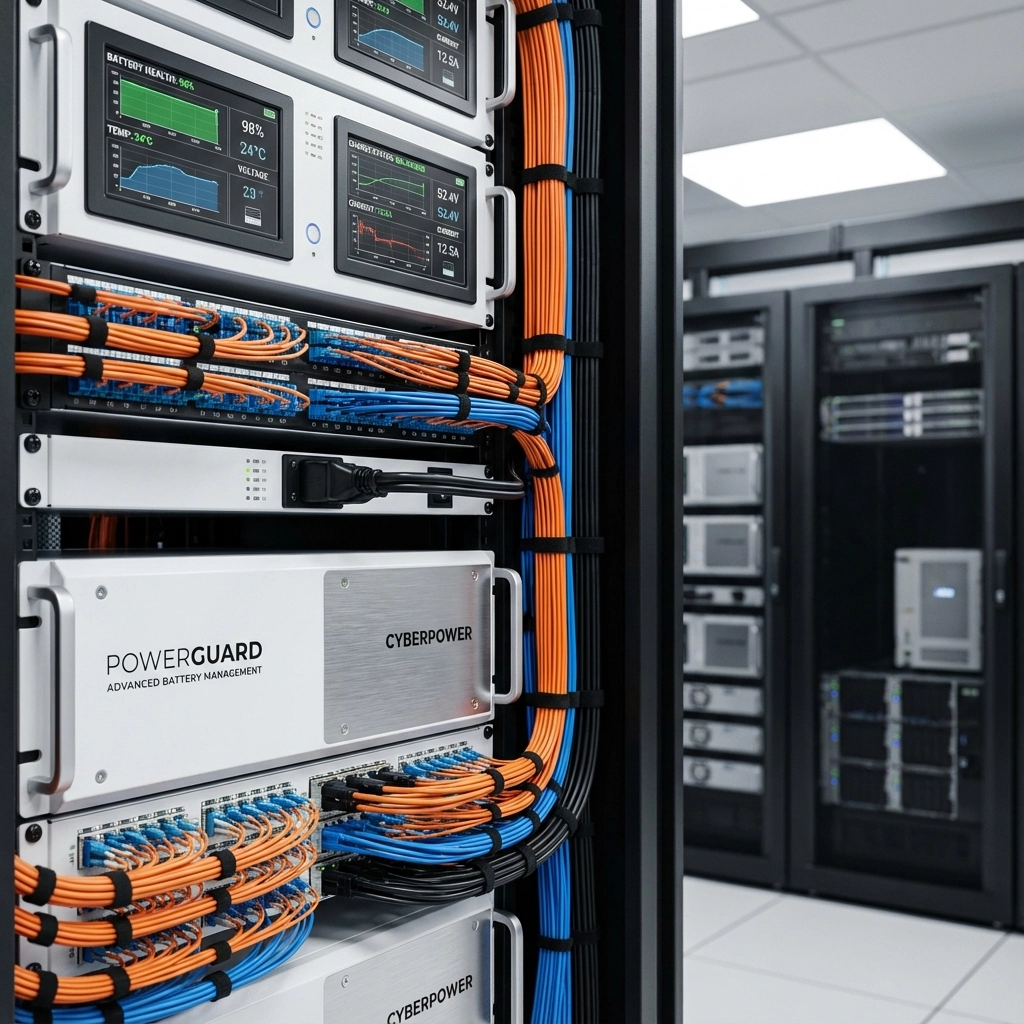
This is where lithium polymer batteries shine. If you're dealing with edge data centers, cell tower backup systems, or remote monitoring stations, the extended temperature range (-20°C to 60°C) and low self-discharge rates make lithium polymer worth the premium.
A telecommunications client recently deployed lithium polymer batteries across 200 remote cell sites in harsh climate conditions. The result? 99.97% uptime over 18 months with minimal maintenance visits, compared to 97.8% uptime they were seeing with their previous lead-acid systems.
For Future-Proofing New Installations
If you're building new infrastructure and can absorb a moderate premium, solid-state lithium-ion batteries are worth considering for their charging speed and projected longevity. The 15-minute charging capability can reduce generator runtime during extended outages, potentially lowering fuel costs and maintenance requirements.
For High-Cycle Applications
Applications that require frequent charge/discharge cycles – like renewable energy integration or grid-tied storage – benefit significantly from lithium polymer's 1,500-2,000 cycle lifespan. This translates to lower replacement frequency and reduced lifecycle costs despite higher upfront investment.
The Smart Procurement Strategy for 2025
Rather than betting everything on one technology, consider a hybrid approach. Deploy proven lithium-ion for your core infrastructure while piloting newer technologies for specific applications where their advantages justify the premium.
Here's a practical framework:
- Critical path systems: Stick with lithium-ion for proven reliability
- Edge and remote sites: Evaluate lithium polymer for harsh environments
- New construction: Consider solid-state lithium-ion where charging speed matters
- Pilot programs: Test sodium-ion for non-critical applications to prepare for future cost advantages
Making the Decision That's Right for Your Organization
The battery technology landscape in 2025 offers more options than ever, but the fundamentals of good power protection planning haven't changed. Start with your actual requirements: runtime needs, environmental conditions, cycle frequency, and budget constraints.
For most applications, traditional lithium-ion batteries deliver the reliability and cost-effectiveness that power protection systems demand. But if your specific use case can benefit from the unique advantages of emerging technologies – whether that's extended temperature range, faster charging, or longer cycle life – the premium investment can pay dividends.
Ready to evaluate battery options for your specific power protection needs? Our team at Ace Real Time Solutions helps organizations design power protection strategies that balance performance, reliability, and cost-effectiveness. We work with all major battery technologies and can provide real-world performance data to support your decision-making process.
Contact us today to discuss how the right battery technology can improve your power protection strategy and reduce your total cost of ownership.