
Lithium-Ion UPS Systems vs Lead-Acid: Which Is Better For Your 2026 Power Protection Budget?
When it comes to uninterruptible power supply (UPS) systems, choosing between lithium-ion and lead-acid batteries isn't just about upfront costs anymore. With power reliability becoming more critical than ever and energy costs rising, the battery technology you choose today will impact your budget for the next decade.
The question isn't really which technology is "better" – it's which one makes the most financial sense for your specific situation. Lead-acid batteries have dominated the UPS market for decades with their low initial price point, but lithium-ion technology is rapidly changing the economics of power protection. Let's break down the real costs and benefits so you can make an informed decision for your 2026 budget planning.
The Initial Investment Reality Check
Lead-acid UPS systems win hands down when it comes to upfront costs. You'll typically pay 40-60% less for a lead-acid system compared to an equivalent lithium-ion setup. For organizations with tight capital budgets or those looking for basic backup power, this price difference can be compelling.
However, this initial savings comes with a catch that many procurement teams overlook. Lead-acid batteries typically need replacement every 3-5 years, while lithium-ion systems can run for 8-15 years without battery replacement. When you factor in the cost of multiple lead-acid battery replacements over a 10-year period, the financial picture changes dramatically.
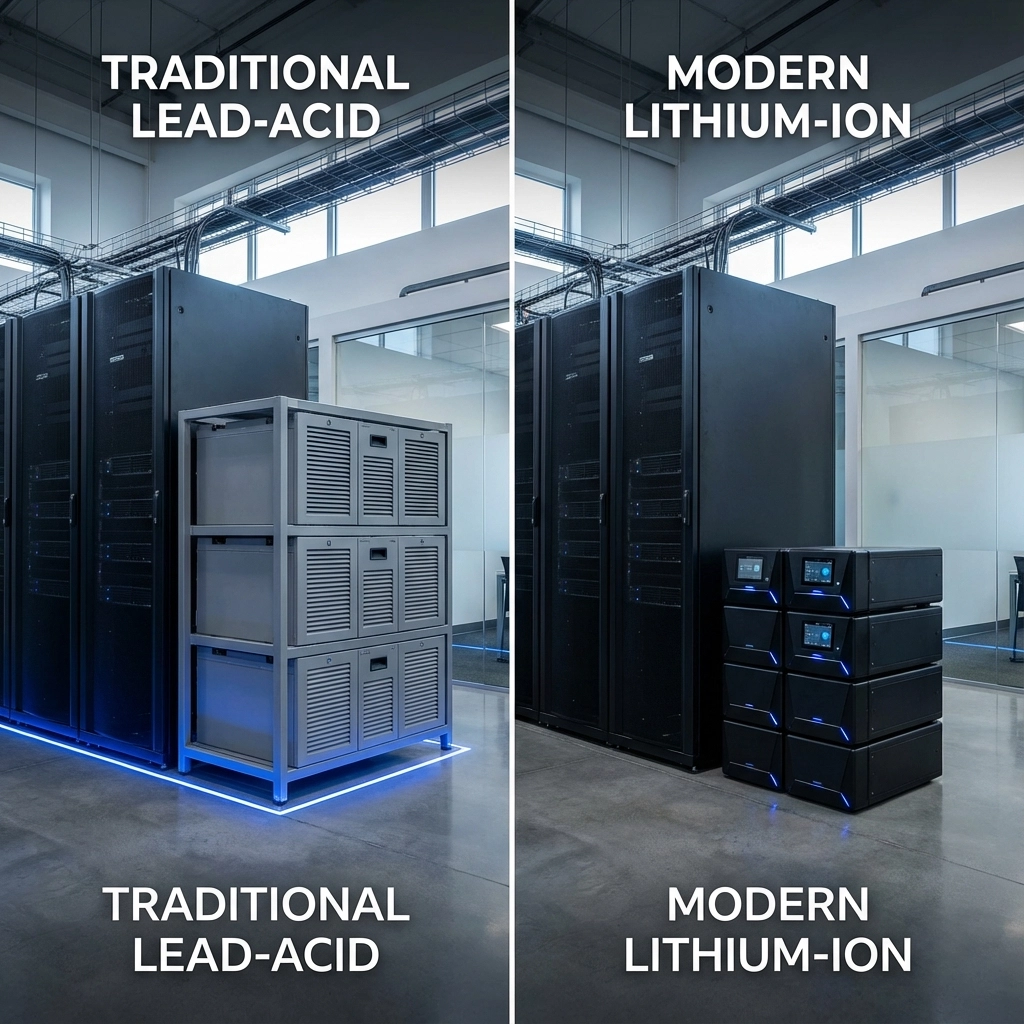
Here's a practical example: A 10kVA UPS system with lead-acid batteries might cost $8,000 initially, but you'll need to replace those batteries twice over 10 years at $3,000 each time. That's $14,000 total. The same system with lithium-ion batteries might cost $12,000 upfront but require no battery replacements over that same period.
Performance That Impacts Your Bottom Line
The performance differences between these technologies directly affect your operational costs. Lithium-ion UPS systems deliver 30-60% more runtime than lead-acid systems of the same capacity. This means you can either get longer backup time with the same battery bank size, or achieve the same runtime with a smaller, less expensive UPS system.
Lithium-ion batteries also handle temperature variations much better than lead-acid. While lead-acid batteries lose significant capacity in high temperatures (reducing lifespan even further), lithium-ion systems maintain consistent performance across a wider temperature range. This is particularly important for edge computing sites or locations without precise climate control.
The charging characteristics also matter for your power budget. Lithium-ion batteries charge faster and more efficiently than lead-acid, reducing the energy costs associated with keeping your UPS system ready. They also handle frequent charge-discharge cycles without the capacity degradation that plagues lead-acid batteries.
Space Equals Money in Modern Facilities
Real estate costs are a hidden factor in UPS decisions that many organizations underestimate. Lithium-ion batteries have 3-5 times the energy density of lead-acid batteries, meaning you need significantly less floor space to achieve the same backup capacity.

For data centers where every square foot costs money, this space efficiency translates directly to cost savings. A lithium-ion UPS system occupies 40-60% less space than an equivalent lead-acid system, freeing up valuable floor space for revenue-generating equipment.
The weight reduction is equally important. Lithium-ion systems are substantially lighter, reducing structural requirements and potentially eliminating the need for floor reinforcements that lead-acid systems might require. This weight advantage also reduces shipping and installation costs.
Maintenance Costs Add Up Faster Than You Think
Lead-acid UPS systems require regular maintenance to ensure reliability. This includes monthly visual inspections, quarterly voltage checks, annual capacity testing, and periodic electrolyte level monitoring for flooded cell batteries. Each maintenance visit costs time and money, and missed maintenance can lead to unexpected failures.
Lithium-ion systems are essentially maintenance-free. They include sophisticated battery management systems that continuously monitor cell health and performance, alerting you to potential issues before they become problems. This predictive capability reduces the risk of unexpected downtime and eliminates most routine maintenance costs.
The labor savings alone can be substantial. Organizations typically spend 50-75% less on maintenance labor with lithium-ion UPS systems compared to lead-acid equivalents. For facilities with multiple UPS systems, these savings compound quickly.
Total Cost of Ownership: The Real Story
When you calculate the total cost of ownership (TCO) over a 10-year period, lithium-ion systems often cost 30-50% less than lead-acid systems despite their higher initial price. This calculation includes purchase price, installation, maintenance, energy costs, and battery replacements.

Studies consistently show that lithium-ion UPS systems deliver lower TCO through:
- Reduced battery replacement costs (often zero over 10 years)
- Lower maintenance requirements (up to 75% reduction in labor)
- Higher energy efficiency (5-10% better than lead-acid)
- Longer service life (often outlasting the UPS itself)
- Better space utilization (reducing facility costs)
Making the Right Choice for Your Organization
The decision between lithium-ion and lead-acid UPS systems depends on your specific circumstances:
Choose lead-acid if:
- You have severe capital budget constraints
- Your backup power needs are infrequent and non-critical
- You're operating in a controlled environment with minimal temperature variation
- You have staff available for regular maintenance
- Your planning horizon is less than 5 years
Choose lithium-ion if:
- You need reliable, critical power protection
- Your facility experiences frequent power events
- Space is at a premium in your location
- You want to minimize ongoing maintenance
- You're planning for long-term operation (5+ years)
- Energy efficiency is important to your operation
Future-Proofing Your Investment
Looking ahead to 2026 and beyond, several trends favor lithium-ion technology. Energy costs continue to rise, making the higher efficiency of lithium-ion more valuable. Environmental regulations are becoming stricter, favoring the longer lifespan and recyclability of lithium-ion batteries. Additionally, the price gap between technologies continues to narrow as lithium-ion manufacturing scales up.
For most organizations planning power protection investments in 2026, lithium-ion UPS systems represent the better long-term value despite higher upfront costs. The combination of lower operating expenses, reduced maintenance, and longer service life typically justifies the initial premium within 3-5 years.
At Ace Real Time Solutions, we help organizations navigate these technology decisions by analyzing their specific power protection needs and budget constraints. Whether you're protecting a single server room or planning a multi-site deployment, the right UPS technology choice can significantly impact your operational costs and reliability for years to come.
The key is looking beyond the initial purchase price to understand the total economic impact of your power protection investment. In 2026's challenging economic environment, that long-term perspective on costs and reliability has never been more important.