

LFP vs. NMC: Why Lithium Iron Phosphate is the New Standard for Data Center Resilience
The transition from traditional Valve Regulated Lead Acid (VRLA) batteries to lithium-ion technology in the data center is no longer a "future" trend, it is a current reality. As rack densities skyrocket to accommodate AI-driven workloads, facility managers are finding that lead-acid simply cannot keep up with the footprint or the cycling demands of modern infrastructure. However, as the industry moves toward lithium, a new debate has emerged within the four walls of the data center: the choice between Lithium Iron Phosphate (LFP) and Nickel Manganese Cobalt (NMC).
For CTOs and facility managers, this isn't just a chemistry lesson; it is a critical decision impacting fire safety, lifecycle costs, and overall system availability. In an era where a single minute of downtime can cost a hyperscaler or a large enterprise hundreds of thousands of dollars, the chemical stability of your energy storage is as important as the UPS it feeds. As we look at the requirements of Tier III and Tier IV data centers, the choice of battery chemistry becomes a foundational element of a "Real-Time Solution" for power protection.
Why Now? The Failure of the Status Quo
The status quo of "dense at any cost" is failing because it ignores the long-term physics of Thermal Management. In the race to pack more power into smaller footprints, many early adopters turned to NMC batteries. NMC is the chemistry that powers your smartphone and your electric vehicle; it is prized for its high energy density. But what works for a Tesla driving 70 mph doesn't necessarily translate to a UPS sitting in a rack for a decade.
The primary challenge today is Latency: not just in data transfer, but in the physical response to power anomalies. Modern GPU clusters require instantaneous, high-burst power. While NMC provides that density, it does so at the cost of a lower thermal runaway temperature. If an NMC cell is compromised, the resulting fire is oxygen-self-sustaining and notoriously difficult to extinguish. For a facility manager responsible for millions of dollars in IT hardware, that risk profile is becoming unacceptable. Furthermore, the push for 100kW+ per rack means that Redundancy must be built into the chemistry itself, not just the system architecture.

The Technical Breakdown: LFP vs. NMC
To understand why the industry is shifting toward LFP for stationary power protection, we have to look at the specific technical benchmarks that define reliability.
1. Thermal Stability and Safety
The most significant differentiator is the thermal runaway temperature. NMC batteries can enter thermal runaway at temperatures as low as 150°C to 200°C (302°F to 392°F). LFP batteries, conversely, are stable up to approximately 270°C (518°F). In a high-density environment where Thermal Management is already a primary concern, using a battery chemistry that is inherently more resistant to fire is a massive advantage. LFP’s chemical structure is more robust, meaning even if the cell is punctured or short-circuited, it is significantly less likely to ignite.
2. Cycle Life and Longevity
In the world of Real-Time Solutions, we measure value by the total cost of ownership (TCO).
- NMC batteries typically offer between 800 and 2,000 charge-discharge cycles. In a standard business environment, this translates to a replacement cycle every 3 to 5 years.
- LFP batteries are the marathon runners of the industry, offering 3,000 to over 6,000 cycles.
For a facility manager, this means an LFP-based UPS system from partners like Vertiv or APC by Schneider Electric can easily last 10 to 15 years. This aligns the battery life with the expected life of the UPS electronics, eliminating the mid-life battery replacement "maintenance window" that plagues VRLA and NMC installations.
3. Energy Density vs. Power Density
It is true that NMC has a higher energy density, meaning you can store more "total fuel" in a smaller box. However, UPS applications prioritize power density: the ability to discharge a lot of energy very quickly during a power failure. LFP excels at high-rate discharge. While the battery cabinet might be slightly larger than an NMC equivalent, it is still 50-70% smaller than a traditional VRLA setup, providing the perfect middle ground for modern IT racks.
The LFP vs. NMC Roadmap: 5 Steps to Upgrading Your Power Strategy
Transitioning your power protection strategy requires more than just swapping out a cabinet. Here is the roadmap for facility managers looking to implement high-reliability lithium solutions.
- Audit Your Power Density Requirements: Determine your current MW per rack. If you are operating at the "Edge" with lower densities, VRLA might still seem attractive, but for anything approaching Tier III standards, LFP is the logical choice to support AI and high-performance computing (HPC).
- Evaluate Floor Loading and Space: While LFP is lighter than lead-acid, it is slightly heavier than NMC. Ensure your raised flooring or concrete slabs are rated for the specific footprint of your chosen UPS.
- Review Fire Suppression Protocols: Consult with your local Fire Marshal. Many jurisdictions are tightening regulations on lithium-ion. Because LFP is more stable, it often simplifies the permitting process and reduces the requirement for specialized, expensive fire suppression systems like localized misting.
- Analyze 10-Year TCO: Don't get blinded by the initial CAPEX. Calculate the costs of battery replacement, cooling (LFP can operate at higher ambient temperatures than VRLA or NMC), and labor. You will find that LFP’s "Real-Time" value far exceeds its upfront premium.
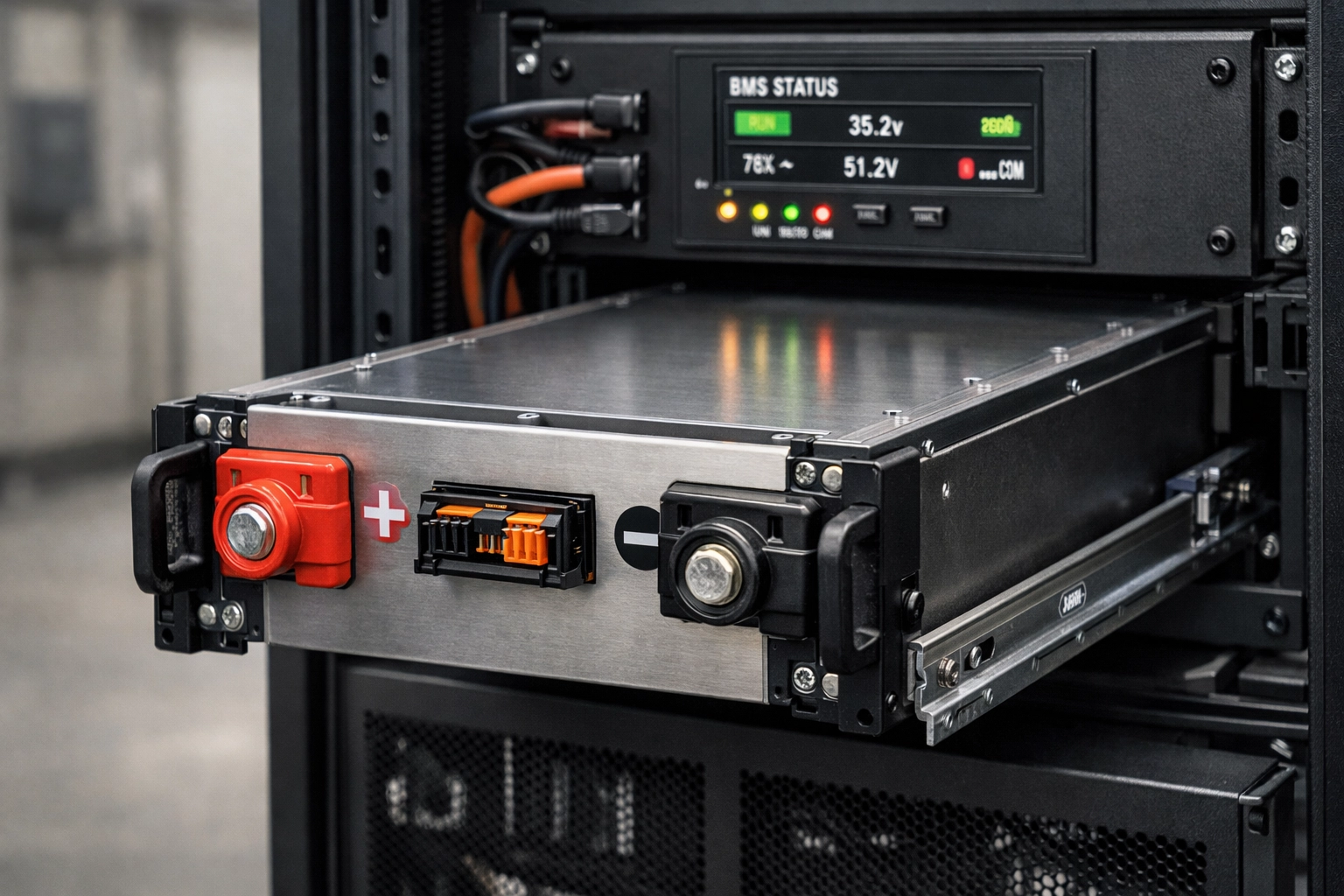
- Integrate Remote Monitoring: Modern lithium UPS systems from CyberPower and Minuteman Technologies include sophisticated Battery Management Systems (BMS). Ensure these are integrated into your DCIM (Data Center Infrastructure Management) for real-time visibility into cell health, temperature, and voltage.
Engineering for the AI Era: MW-Scale Reliability
As we look toward the 2030s, the demand on the grid is only going to increase. Ace Real Time Solutions sees the shift toward LFP as a necessity for sustainable power. In high-stakes environments: such as government operations, educational technology systems, or hyperscale cloud providers: redundancy cannot be a "maybe."
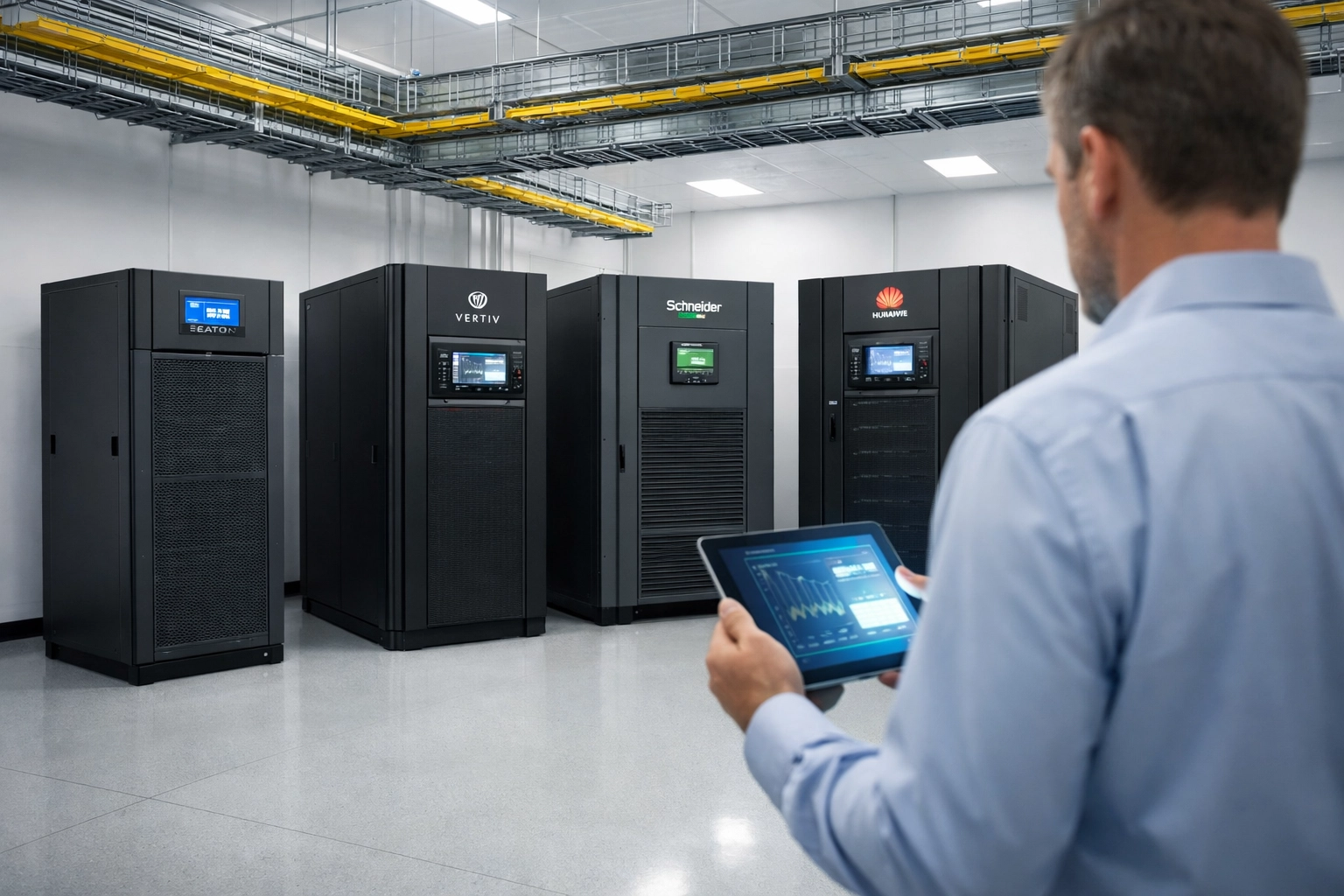
When we design power protection for our clients, we leverage partnerships with industry leaders. For example, Vertiv has been a pioneer in integrating LFP chemistry into their large-scale UPS lineups, offering the high efficiency (96% or better in double-conversion mode) that modern data centers demand. Similarly, APC by Schneider Electric has set the standard for modularity, allowing businesses to scale their LFP energy storage as their compute needs grow.
By choosing LFP, you are not just buying a battery; you are investing in a safety-first architecture that minimizes the risk of catastrophic failure. In a world of "Real-Time" demands, your power protection shouldn't be the thing keeping you up at night.
Taking the Next Step in Power Protection
The nuances between LFP and NMC can be the difference between a resilient infrastructure and a liability. If you are currently evaluating a UPS refresh or designing a new facility, the chemistry you choose today will define your operational efficiency for the next decade.
At Ace Real Time Solutions, we specialize in navigating these technical complexities. Whether you are managing a single server room or a multi-megawatt data center, our team can provide the technical spec sheets and solution designs necessary to ensure your uptime is never in question.
Ready to secure your infrastructure? Visit acerts.com today to:
- Download a technical spec sheet for LFP-based UPS systems.
- Request a comprehensive Power Audit for your facility.
- Consult with our engineering team on a custom Power Protection Solution Design.
FAQ: Understanding Lithium UPS Options
What is the primary difference between LFP and NMC in a UPS?
LFP (Lithium Iron Phosphate) is known for its superior thermal stability and long cycle life (up to 6,000 cycles), making it safer and more cost-effective over 10 years. NMC (Nickel Manganese Cobalt) has higher energy density but is more prone to thermal runaway and has a shorter lifespan (800–2,000 cycles).
How does LFP chemistry improve data center safety?
LFP has a much higher thermal runaway threshold (around 270°C) compared to NMC. Its chemical structure is more stable, meaning it does not release oxygen if the battery is damaged, which significantly reduces the risk of an uncontrollable fire.
Is LFP more expensive than NMC for business applications?
While LFP may have a slightly higher upfront cost due to the size of the cells required for power density, its total cost of ownership (TCO) is much lower. Because LFP lasts 2-3 times longer than NMC and requires less specialized fire suppression and cooling, it is the more economical choice for long-term power protection.