

Jackery's 7-Layer FortiShield: Is Home Battery Safety Finally Getting the Attention It Deserves?
Home battery storage is moving beyond emergency phone charging. Large residential systems can now support essential circuits, solar generation, electric vehicles, heating and cooling, and extended outage protection. That increased capability also raises an important question: how much attention is being given to safety?
Jackery’s answer is its FortiShield Safety System, a company-defined framework built around seven areas of protection. The framework is designed to cover the battery cell, electronics, enclosure, software, installation environment and connected data: not just the battery pack itself.
FortiShield is a noteworthy development because it reflects a broader shift in the home energy market. Battery buyers should no longer evaluate systems only by capacity, output and price. Thermal monitoring, cell-level controls, fire mitigation, grid safety and recognized certifications deserve equal attention.
What is Jackery’s FortiShield system?
Jackery introduced FortiShield at IFA 2026 as a seven-layer safety architecture for its portable power stations, solar generators and larger residential energy storage systems. Public descriptions identify the seven areas as:
- Battery cell-level protection
- Smart battery management system monitoring
- Thermal and structural protection
- Fault and emergency intervention
- Electrical-load protection
- All-weather structural and environmental protection
- Data and living-environment safety
The important distinction is that FortiShield is not itself a regulatory certification. It is Jackery’s own engineering and product-safety framework. A manufacturer’s safety architecture can be valuable, but homeowners should still verify the applicable third-party listings and installation requirements for the exact model being considered.
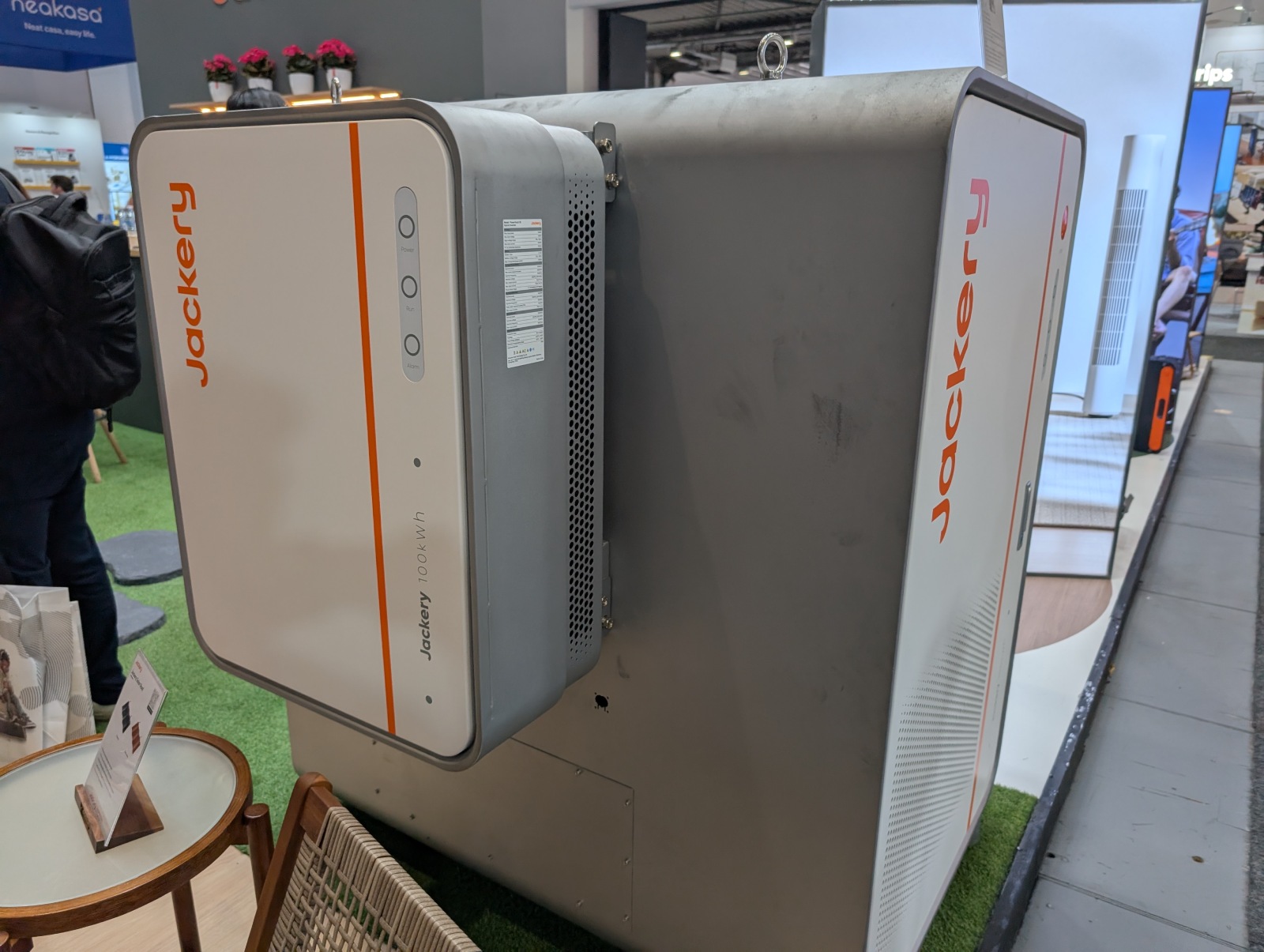
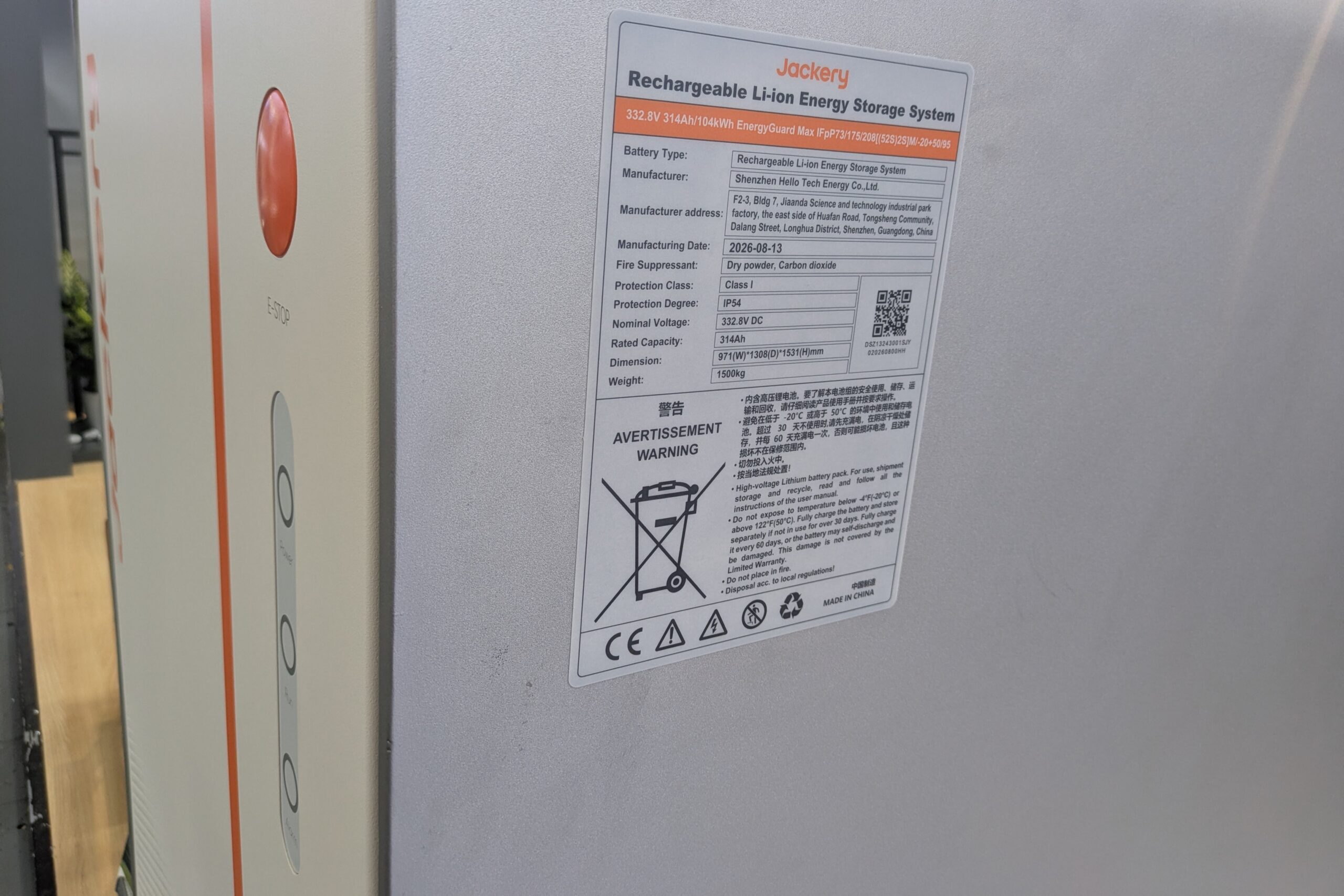
That distinction matters particularly for large systems. Jackery’s Energycore 100 kWh battery and EnergyGuard Max system are substantially different from a portable power station. The larger system reported at IFA 2026 uses liquid cooling, an integrated inverter and an energy management system, and weighs approximately 1.5 tons. ESS News reported on the system’s specifications and development status.
The seven FortiShield layers explained
1. Battery cell-level protection
Safety starts inside the battery. A battery pack contains many individual cells, and differences in voltage, temperature, age or manufacturing quality can create stress within the system.
Cell-level protection means the manufacturer considers the safety and quality of the individual cells: not only the finished cabinet. It may include controlled sourcing, cell screening, manufacturing inspections and pack-level design intended to limit the impact of a defective cell.
For homeowners, the practical question is simple: What cell chemistry is used, how are cells monitored, and what testing is performed before the battery leaves the factory?
Lithium iron phosphate, or LFP, chemistry is increasingly common in stationary storage because of its thermal characteristics and cycle life. However, chemistry alone does not make a battery safe. Cell quality, pack construction, operating limits and installation all matter.
2. Smart BMS monitoring
The battery management system, or BMS, is the battery’s control layer. It monitors cell voltage, current, temperature, state of charge and state of health. It can also limit charging or discharging when operating conditions become unsafe.
A capable BMS should be able to identify conditions such as:
- Over-voltage and under-voltage
- Excessive current
- Abnormal temperature
- Short circuits
- Cell imbalance
- Loss of communication
- Cooling-system faults
A BMS should not be treated as a replacement for physical safety systems. It is one layer in a layered design. If a sensor fails, software malfunctions or a component overheats, the system should have independent electrical and structural safeguards.
3. Thermal and structural protection
Thermal management is central to lithium-ion battery safety. Excessive heat can shorten battery life, reduce performance and, in severe cases, contribute to thermal runaway.
Jackery has described liquid cooling for its 100 kWh Energycore system, with a target of keeping cell temperature variation within approximately ±3°C. More consistent cell temperatures can reduce hot spots and support predictable operation during high-current charging and discharging.
The system has also been described with compartmentalized construction, heat-resistant materials and structural measures intended to reduce the spread of a thermal event. These design features are particularly important for larger battery cabinets, where the amount of stored energy is significantly greater than in a portable power station.
4. Fault and emergency intervention
Detection is only useful if the system can respond. The fourth FortiShield layer addresses what happens after the system identifies an abnormal condition.
Depending on the product, emergency responses may include:
- Disconnecting the battery
- Stopping charge or discharge
- Shutting down the inverter
- Triggering an alarm or app notification
- Isolating a faulty module
- Activating fire suppression or other mitigation equipment
Homeowners should ask whether alerts reach both the user and the installer or service provider. A battery that reports a fault only through an app may not provide enough protection if the homeowner is away, the internet connection is unavailable or the event occurs overnight.
5. Electrical-load protection
A home battery is connected to high-energy DC circuits, an inverter, the home’s AC wiring and potentially the utility grid. Electrical protection must cover the complete path.
Public technical descriptions of Jackery’s larger systems identify protections such as:
- DC and AC surge protection
- Insulation-resistance detection
- PV string reverse-polarity protection
- Battery reverse-polarity protection
- Ground-fault monitoring
- Residual-current monitoring
- AC short-circuit protection
- Anti-islanding protection
Anti-islanding is particularly important for grid-connected systems. During a utility outage, the inverter must stop exporting power to the grid unless the system is specifically designed and approved to operate in an isolated mode. This protects utility workers and helps prevent unsafe back-feeding.
6. Environmental and enclosure protection
A battery installed in a garage, utility room or exterior location must withstand the environment around it. Temperature, humidity, dust, rain, pests and physical impact can all affect reliability.
Enclosure ratings provide one useful reference point. Jackery’s Energycore system has been reported with an IP66 rating in some coverage, while other EnergyGuard Max descriptions cite IP54. These are not interchangeable claims, so buyers should verify the rating for the exact model and configuration.
An IP rating does not answer every installation question. It does not automatically approve placement near doors, windows, living areas or combustible materials. The installer must still follow the manufacturer’s instructions, local electrical code and fire-code requirements.

7. Data and living-environment safety
Connected batteries are also networked devices. They may communicate with mobile apps, cloud services, inverters, solar equipment and energy-management platforms.
Data and living-environment safety should therefore include:
- Secure user authentication
- Software-update controls
- Protection of energy and household data
- Access permissions for installers and service providers
- Safe operation around occupants and pets
- Clear maintenance and emergency procedures
This layer is easy to overlook. A battery can be electrically sound but still create operational risk if firmware updates are poorly controlled, alerts are missed or users do not understand how to respond to a fault.
What should every home battery buyer demand?
FortiShield raises the standard for how manufacturers describe battery safety, but consumers should go further than brand-level claims. Before purchasing, request documentation for the exact model, not a general corporate brochure.
In the United States, ask whether the complete energy storage system is listed to UL 9540, whether applicable battery testing includes UL 9540A, and whether the inverter or power conversion system is certified to UL 1741. The installation should also follow NFPA 855, local electrical codes and the requirements of the authority having jurisdiction.
These standards serve different purposes:
- UL 9540 evaluates the complete energy storage system, including the battery, inverter, controls and enclosure.
- UL 9540A is a test method used to characterize thermal runaway and fire propagation behavior.
- UL 1741 addresses inverter and power-conversion equipment.
- NFPA 855 addresses how stationary energy storage systems are installed, including location, clearances and fire protection.
A product page that says “certified” without naming the certification body, standard, model number or listing documentation deserves further scrutiny. Also verify whether the certification applies to the complete system or only to an individual component.
Is FortiShield enough?
FortiShield is a useful example of a more complete safety conversation. It recognizes that safe energy storage depends on multiple controls working together: reliable cells, a responsive BMS, thermal management, electrical protection, a robust enclosure, emergency intervention and secure software.
It is not, however, a substitute for independent certification, code-compliant installation or professional commissioning. Product availability and certification status can also vary by country and model. Public coverage of Jackery’s newest large-format systems has described important safety features, but homeowners should wait for official technical documentation and local approvals before treating a pre-production system as ready for installation.
For a smaller portable power station, the evaluation may focus on battery chemistry, BMS functions, overload protection, charger quality and recognized product certifications. For a stationary whole-home battery, the evaluation must also include permits, transfer equipment, inverter behavior, fire separation, service access and installer qualifications.
The Real-Time Solutions standard for home power protection
Home battery safety is finally receiving the attention it deserves because the systems themselves are becoming more powerful and more deeply integrated into the home.
Whether you are evaluating a portable power station, a UPS for a home office or a stationary solar-plus-storage system, the right decision combines performance with documented protection. Ace Real Time Solutions helps homeowners and businesses evaluate batteries, UPS systems, voltage regulation and backup power requirements based on actual loads and outage objectives.
Visit Ace Real Time Solutions to review available battery solutions, request a power protection service, or contact our team for a power audit and solution design.
Frequently asked questions
What is Jackery’s FortiShield Safety System?
FortiShield is Jackery’s seven-layer safety framework for its power products. It covers cell-level protection, BMS monitoring, thermal and structural safeguards, fault response, electrical protection, environmental durability, and data and living-environment safety. It is a manufacturer-defined framework, not a replacement for third-party product certification.
How does thermal monitoring improve home battery safety?
Thermal monitoring measures temperature at relevant points within the battery and surrounding equipment. If temperatures rise beyond safe limits, the BMS or control system can reduce power, stop charging or discharging, issue an alert or shut down the system. Liquid cooling can also help limit temperature differences between cells in larger battery systems.
What certifications should I look for in a home battery?
For a stationary US home battery, ask about a complete-system listing to UL 9540, applicable UL 9540A thermal-runaway testing, UL 1741 certification for the inverter and an installation designed around NFPA 855 and local codes. Always verify the exact model number and request the manufacturer’s certification documentation.