

Jackery Explorer 1000 Plus v2 and 2000 Plus v2: What's New in Portable Power for Fall 2026
Portable power stations have moved beyond emergency phone charging. The latest models are increasingly expected to run home-office equipment, refrigerators, tools, kitchen appliances, RV systems, and off-grid workstations. Jackery’s fall 2026 Explorer Plus v2 lineup addresses that demand with higher output, faster charging, modular battery expansion, and a smaller physical footprint.
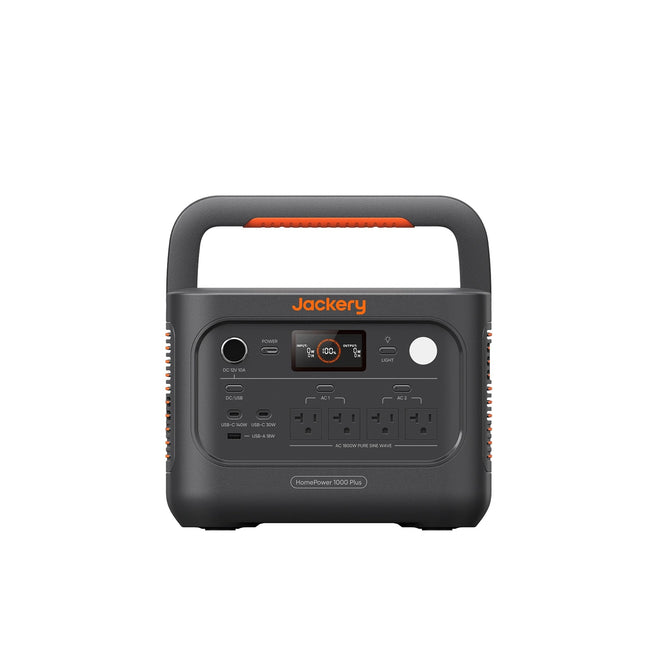
The two models are the Explorer 1000 Plus v2 and Explorer 2000 Plus v2. Both were unveiled at IFA 2026, with October availability announced for the UK and Europe. Regional release schedules can vary, so buyers should confirm U.S. inventory and final specifications before ordering. Jackery’s launch announcement provides the clearest published comparison of the new Plus v2 platform.
Important naming note: The Explorer Plus v2 models are different from the standard Explorer 1000 v2 and Explorer 2000 v2. The standard models have different specifications and are not the same expandable platform. Jackery also presents related Plus v2 configurations under HomePower branding on some product pages.
Jackery Explorer Plus v2: Side-by-Side Specifications
| Specification | Explorer 1000 Plus v2 | Explorer 2000 Plus v2 |
|---|---|---|
| Base capacity | 1,024Wh | 2,048Wh |
| Maximum expanded capacity | Up to 11kWh | Up to 12kWh |
| Continuous AC output | 1,800W | 2,400W |
| Surge output | 3,600W | 4,800W |
| AC recharge | Approximately 1.25 hours | Approximately 1.5 hours |
| Emergency Charge mode | Approximately 50 minutes | Approximately 80 minutes |
| Maximum solar input | 400W | 800W |
| UPS switchover | Approximately 10ms | Approximately 10ms |
| Battery architecture | CTB 2.0, LFP cells | CTB 2.0, LFP cells |
| Approximate weight | 10.8kg / 23.8lb | 18.8kg / 41.4lb |
Specifications are based on Jackery’s IFA 2026 launch materials. Actual runtime depends on load, temperature, inverter losses, battery condition, and operating mode.
What Is New in the Plus v2 Generation?
1. More capacity without the same physical bulk
The most visible change is the redesigned enclosure. Jackery says its Cell-to-Body 2.0 architecture integrates the battery cells more directly into the structural chassis. This reduces unused internal space and allows more energy to fit into a smaller enclosure.
The Explorer 1000 Plus v2 is rated at 1,024Wh and weighs approximately 10.8kg. The Explorer 2000 Plus v2 doubles the base capacity to 2,048Wh while remaining portable enough for a vehicle, garage, RV storage compartment, or job site.
This matters because portability is not just a convenience. A power station that can be moved by one person is easier to position near a refrigerator during an outage, relocate to a shaded campsite, or carry between a vehicle and a remote workstation.
2. Expandability for longer outages
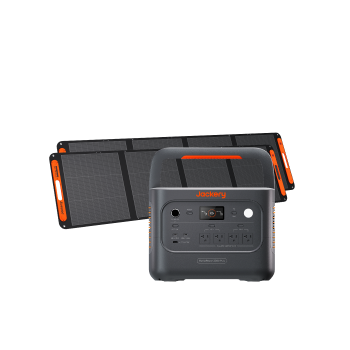
The Explorer 1000 Plus v2 can scale from 1,024Wh to approximately 11kWh with compatible expansion batteries. The Explorer 2000 Plus v2 can expand to approximately 12kWh.
This creates a meaningful distinction between the models:
- The 1000 Plus v2 is a compact starting point that can grow with your needs.
- The 2000 Plus v2 provides twice the base capacity and more output immediately.
- Both can become multi-day backup systems rather than single-night emergency devices.
The expansion batteries are especially useful for homeowners who want to begin with essential loads and add capacity later. A basic configuration may support a router, lights, laptops, and small appliances. An expanded system can support essential refrigeration, communications, and selected household circuits for much longer.
Expansion does not increase the inverter’s maximum output. Adding batteries increases runtime, not the amount of power the inverter can deliver at once. A 1,800W unit remains an 1,800W unit even after additional battery modules are connected.
Output: Which Model Handles More Equipment?
The Explorer 1000 Plus v2 provides 1,800W of continuous AC output and up to 3,600W of surge capacity. That is enough for many home-office setups, compact power tools, monitors, lighting systems, chargers, and selected kitchen appliances.
The Explorer 2000 Plus v2 raises continuous output to 2,400W, with up to 4,800W of surge capacity. That additional headroom is useful when several devices operate simultaneously or when equipment has a high startup demand.
Typical examples include:
- Refrigerator compressor startup
- Microwave ovens
- Coffee makers
- Compact power tools
- Multiple monitors and a workstation
- RV appliances
- Lighting and communications equipment
Do not select a unit based only on the wattage printed on the device. Add the running wattage of every device that may operate at the same time, then account for startup or surge demand. Refrigerators, pumps, compressors, and motor-driven tools can briefly draw much more than their normal operating wattage.
For an RV, the 2000 Plus v2 is the safer choice when you expect to run a refrigerator, microwave, cooking device, or several electronics at once. It may still not be suitable for every RV air conditioner or high-draw heating appliance. Check the appliance’s startup specifications before purchase.
Recharge Speed and Solar Input
Fast recharge is one of the strongest upgrades in the Plus v2 platform.
Jackery lists the Explorer 1000 Plus v2 at approximately 1.25 hours for a full AC recharge, with an Emergency Charge mode that can restore the unit in approximately 50 minutes. It supports up to 400W of solar input.
The Explorer 2000 Plus v2 takes approximately 1.5 hours for a full AC recharge and approximately 80 minutes in Emergency Charge mode. Its maximum solar input is 800W, making it the better option for extended off-grid use and faster recovery during daylight hours.
Solar ratings are maximum input values under favorable conditions. Actual production varies with cloud cover, panel angle, temperature, shading, cable losses, and the battery’s state of charge. A 400W solar array will not necessarily deliver 400W continuously.
For emergency preparation, recharge speed has practical value. If a power outage ends briefly, a faster-charging station can be restored before the next interruption. For camping and RV travel, higher solar input can reduce the time needed to recover after a day of heavy use.
Which Model Fits Your Use Case?
Home-office backup: Explorer 1000 Plus v2
Choose the 1000 Plus v2 if your priority is keeping a laptop, monitor, Wi-Fi router, phone chargers, and lighting operational. A 1,024Wh battery can provide several hours of practical home-office runtime, depending on the combined load.
As a simple illustration, a 150W office load could theoretically run for nearly seven hours before accounting for conversion losses and reserve capacity. Actual runtime will be lower, so use the Jackery runtime calculator and test your real equipment before relying on it.
For a home office where even a brief interruption could corrupt data or disconnect a video meeting, consider pairing the station with a dedicated UPS. Ace Real Time Solutions’ UPS systems and power protection services can help determine whether a portable station, UPS, or layered solution is appropriate.
Emergency preparation: Explorer 2000 Plus v2
The 2000 Plus v2 is the stronger emergency-preparedness choice. Its 2,048Wh base capacity and 2,400W output provide more operating margin for refrigerators, communications equipment, lighting, and selected kitchen appliances.
It is also better suited to households that expect outages to last through the night or into the following day. Expansion batteries can extend the system substantially, although buyers should budget for the additional modules and plan where they will be stored.
Camping: Explorer 1000 Plus v2
For weekend camping, the 1000 Plus v2 offers a useful balance of capacity, output, and portability. It can run lights, camera batteries, laptops, portable refrigeration, speakers, and small cooking devices without the weight of a larger system.
The model is especially practical for remote workers and content creators who need to charge equipment away from the grid.
RV and extended off-grid use: Explorer 2000 Plus v2
The 2000 Plus v2 is the better fit for RV owners who need higher output and longer runtime. Its 800W solar-input rating also gives it a stronger recovery profile when paired with a sufficiently sized solar array.
Before connecting it to an RV electrical system, verify compatibility, grounding requirements, transfer arrangements, and the electrical rating of the RV inlet. A portable power station should not be connected to a home or RV circuit in a way that can backfeed utility power.
What Buyers Should Check Before Ordering
- Confirm the exact model name. Explorer 1000 v2, Explorer 1000 Plus v2, and HomePower 1000 Plus v2 are not interchangeable names.
- Calculate simultaneous load. Include both running wattage and startup surge.
- Plan for realistic runtime. Battery capacity is measured in watt-hours, but AC output includes inverter losses.
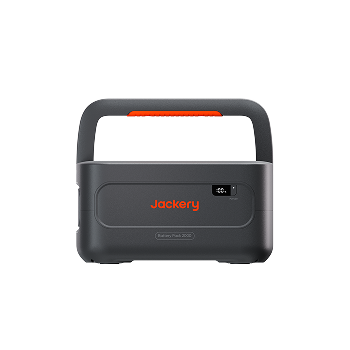
- Verify expansion compatibility. Do not assume older Jackery expansion batteries will work with a Plus v2 unit.
- Check the warranty and regional availability. Launch dates, included accessories, and warranty terms may differ by country.
- Understand application limits. Jackery states that its portable power stations are not recommended for life-support equipment, data servers, or other mission-critical systems.
For larger homes, businesses, network equipment, or systems that require professionally managed continuity, portable power is only one part of the solution. Review Ace Real Time Solutions’ battery solutions, solar kits, and power protection resources before selecting equipment.
Final Verdict
The Explorer 1000 Plus v2 is the more portable and cost-conscious choice for home offices, weekend camping, remote work, and basic emergency loads. Its 1,800W inverter and expansion path make it more capable than a conventional small power station without becoming difficult to transport.
The Explorer 2000 Plus v2 is the better choice for RV use, longer outages, higher-demand appliances, and buyers who want more capacity from day one. Its 2,400W output, 800W solar input, and 12kWh expansion ceiling provide a larger operating envelope.
Before the October 2026 launch, visit acerts.com to review power-protection options or request guidance on selecting a portable station, UPS, battery system, or layered backup design for your specific load.
Frequently Asked Questions
What is the difference between the Jackery Explorer 1000 Plus v2 and 2000 Plus v2?
The Explorer 1000 Plus v2 has 1,024Wh of base capacity, 1,800W of continuous output, 400W of solar input, and expansion up to approximately 11kWh. The Explorer 2000 Plus v2 has 2,048Wh, 2,400W of continuous output, 800W of solar input, and expansion up to approximately 12kWh.
How does the Jackery Explorer Plus v2 UPS function work?
The Plus v2 models are designed to switch to battery power in approximately 10 milliseconds when utility power fails. This can help keep computers, routers, monitors, and other compatible electronics operating, but users should confirm equipment requirements and should not treat a portable station as a substitute for a professionally specified mission-critical UPS.
Can the Jackery Explorer Plus v2 models run a refrigerator or RV appliances?
They can run many refrigerators and selected RV appliances if the combined running and startup loads remain within the station’s output and surge ratings. The Explorer 2000 Plus v2 provides more margin, but high-draw air conditioners, heaters, pumps, and motors must be checked individually before purchase.