

Edge Computing: Keeping the 'Edge' Powered and Protected
The landscape of data processing is undergoing a seismic shift. As we move into 2026, the traditional model of backhauling all data to a centralized "mothership" data center is becoming obsolete for mission-critical applications. From autonomous delivery systems in urban centers to AI-driven industrial sensors in remote oil fields, the demand for low-latency processing has pushed infrastructure to the very edge of the network. However, this decentralization brings a harrowing challenge: the "edge" is often a hostile environment for sensitive IT equipment. Grid instability, lack of on-site technical staff, and diverse thermal conditions mean that the power protection strategies used in a Tier IV data center must be radically adapted for the remote rack.
Currently, facility managers and CTOs are grappling with the reality that "the edge" is frequently a closet, a basement, or a ruggedized enclosure in the middle of nowhere. In these locations, power quality is often secondary to basic availability. We are seeing a surge in demand for decentralized power architectures that can handle the "dirty power" of rural grids while providing the same 99.999% uptime expected in a centralized hub. At Ace Real Time Solutions, we recognize that the edge isn't just a place: it's a requirement for resilience. Without a robust power protection layer, the promise of edge computing collapses under the weight of localized outages and hardware failures.
The "Why Now": Why the Status Quo is Failing the Edge
For years, the industry relied on "good enough" power strips and basic standby UPS units for remote offices. That status quo is failing because the stakes have changed. In an edge environment, Latency is the primary driver for deployment. When a factory floor relies on edge nodes to make split-second safety decisions, a power flicker that causes a 30-second reboot is more than an inconvenience: it’s a catastrophic failure. Centralized cloud models cannot bridge this gap, and traditional power protection is often too bulky or too "dumb" to survive at the edge.
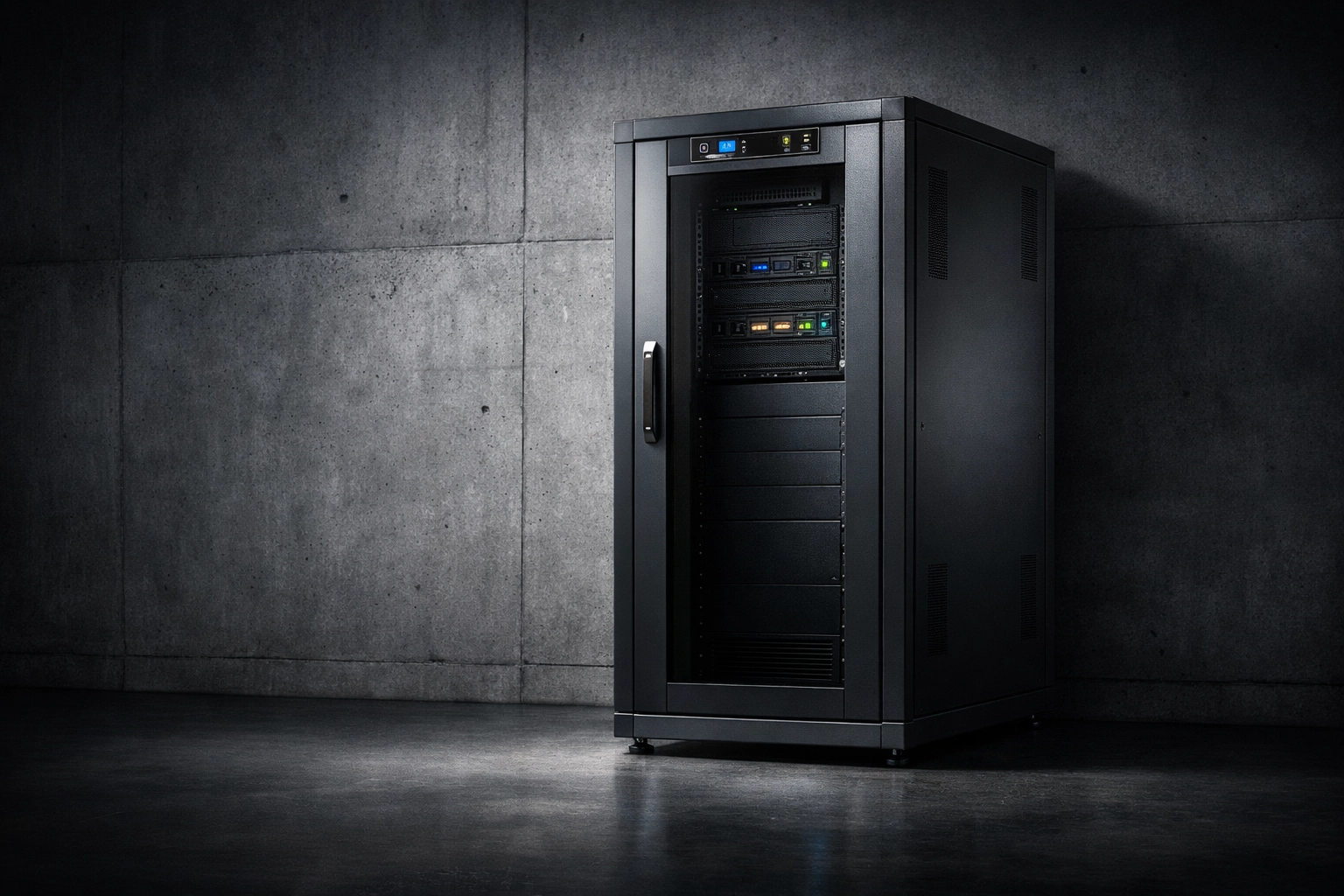
Furthermore, Thermal Management at remote sites is a constant battle. Most standard IT racks are designed for climate-controlled environments. Edge sites, however, often lack dedicated HVAC, leading to high ambient temperatures that degrade Lead-Acid (VRLA) batteries at an accelerated rate. If your UPS fails because the batteries cooked in a 100-degree utility closet, your low-latency advantage disappears instantly. This is why we are seeing a massive pivot toward Lithium-Ion (LiFePO4) solutions and remote-monitored, environmentally hardened enclosures that can communicate their health back to a central dashboard in real-time.
The Edge Power Roadmap: 5 Steps to Resilience
Navigating the complexities of remote power requires a move away from reactive maintenance toward a proactive, software-defined approach. Here is the roadmap for securing your remote infrastructure today.
1. Prioritize Double-Conversion Topology
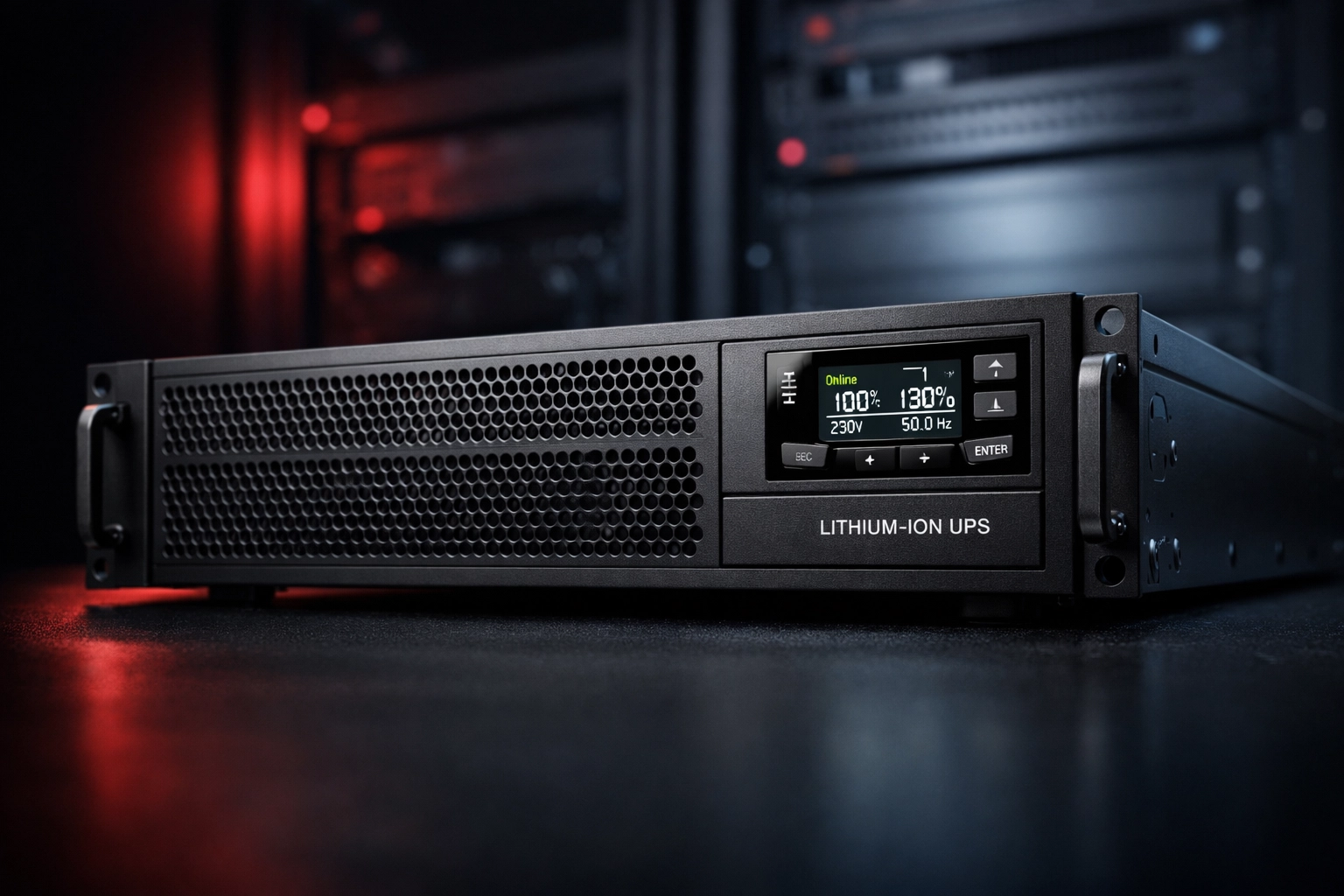
At the edge, you cannot trust the utility provider. Unlike line-interactive UPS systems that switch to battery during a sag, Double-Conversion (Online) UPS systems: like those offered by APC by Schneider Electric and Vertiv: constantly regenerate power. This ensures that your sensitive edge servers are always receiving a "Pure Sine Wave," isolated from frequency variations and harmonic distortion common in industrial or remote areas.
2. Standardize on Lithium-Ion (Li-ion)
The edge demands "set it and forget it" reliability. Lithium-ion batteries offer a 10-year lifespan compared to the 3-5 years of VRLA. They also handle higher temperatures without the same level of capacity loss. For a facility manager overseeing 50 remote sites, reducing battery replacement cycles by half is a massive operational win.
3. Implement Remote Monitoring and Control
You cannot manage what you cannot see. Every UPS and PDU at an edge site must be equipped with a Network Management Card (NMC). This allows for remote rebooting of hung servers and real-time alerts on power quality. At Ace Real Time Solutions, we advocate for Real-Time Solutions that integrate with cloud-based platforms, allowing you to push firmware updates and monitor battery health across a global footprint from a single pane of glass.
4. Optimize Rack-Level Density and Cooling
With edge sites often restricted by small footprints, power density is increasing. We are seeing racks pushing 10kW to 15kW in spaces that previously only handled 2kW. This requires intelligent Power Distribution Units (PDUs) and rack-mount cooling solutions that can manage the heat load within a confined space. Brands like CyberPower and Minuteman Technologies offer specialized, short-depth units specifically designed for these constrained environments.
5. Establish N+1 Redundancy at the Source
Even at the edge, a single point of failure is a liability. Implementing N+1 redundancy: where you have more power modules than required to handle the load: ensures that if one module fails, the system remains online. This is the hallmark of a "Real-Time" resilient architecture.
Technical Depth: The Metrics That Matter
When evaluating edge power solutions, the "spec sheet" is your best friend. Facility managers should look beyond the KVA rating and focus on Efficiency Ratings and Power Factor. A UPS with a unity power factor (1.0) provides more "real power" (Watts) for the same apparent power (VA), allowing you to support more equipment in a smaller rack footprint.
| Feature | Standard Edge Requirement | High-Performance Edge |
|---|---|---|
| UPS Topology | Line-Interactive | Double-Conversion Online |
| Battery Type | VRLA (Lead-Acid) | LiFePO4 (Lithium-Ion) |
| Monitoring | SNMP / Local Alert | Cloud-Integrated / AI Analytics |
| Efficiency | 90-94% | 96%+ (High-Efficiency Mode) |
| Form Factor | 2U/3U Rackmount | Modular / Scalable |
We also have to consider the physical environment. Edge computing often requires IP-rated enclosures to protect against dust and moisture in industrial settings. When you combine an APC UPS with a NEMA-rated enclosure and remote sensors, you aren't just buying hardware; you are buying an insurance policy for your data.
Remote Monitoring: The Heart of the "Real-Time" Strategy
The most significant advancement in power protection isn't the battery: it’s the data. Modern remote monitoring systems use AI to predict when a component is likely to fail before it actually does. For a remote server site in a different time zone, receiving a "Predictive Failure" alert for a cooling fan or a capacitor allows for scheduled maintenance rather than an emergency truck roll.
By utilizing Real-Time Solutions for monitoring, businesses can leverage "outlet-level" switching. If a remote edge gateway freezes, you can log in and power-cycle that specific outlet rather than dropping the entire rack. This granular control is what separates a professional edge deployment from a hobbyist setup.
Partnering for Resilience
At Ace Real Time Solutions, we don't just sell boxes; we design ecosystems. Our partnerships with industry leaders like APC, CyberPower, Vertiv, and Minuteman Technologies allow us to provide a brand-agnostic approach tailored to your specific geographical and technical needs. Whether you are managing a fleet of smart kiosks or a decentralized telecommunications network, the goal is the same: absolute continuity.
The "Edge" is the future of the digital economy, but it is a fragile one without the right foundation. By focusing on high-efficiency UPS systems, remote management, and environmental protection, you can ensure that your edge stays sharp.
Ready to secure your remote infrastructure? Don't leave your uptime to chance. Contact our team today to request a comprehensive power audit or to download a technical spec sheet for our latest edge-ready batteries and UPS solutions. Let us help you build a power strategy that is as fast and flexible as your data.

Edge Power Protection FAQ
What is the best UPS topology for edge computing?
For edge computing, Double-Conversion (Online) UPS is the gold standard. It provides the highest level of protection by isolating equipment from the utility power, ensuring a consistent, clean sine wave. This is critical for sites where power quality is unpredictable or where the connected IT equipment is highly sensitive to voltage fluctuations.
How does remote monitoring improve reliability at remote server sites?
Remote monitoring allows facility managers to track real-time health metrics (load, battery runtime, temperature) without being physically present. Through tools like Network Management Cards, you can receive instant alerts, perform remote reboots of connected devices, and conduct proactive maintenance based on actual usage data, significantly reducing the "Mean Time to Repair" (MTTR).
Why should I choose Lithium-Ion batteries over Lead-Acid (VRLA) for the edge?
Lithium-Ion batteries are superior for edge applications because they last 2-3 times longer, are roughly 30% lighter, and can operate in much higher ambient temperatures without degrading. This makes them ideal for unstaffed, remote locations where frequent battery replacements are logistically difficult and expensive.
For more information on our services and how we can support your infrastructure, visit our Services page or learn more About Us.