
Eco-Mode vs. Double Conversion: Which Is Better for Your Hardware?
The global data center landscape is currently caught in a pincer maneuver. On one side, the explosive growth of AI and high-performance computing (HPC) is pushing power densities from a comfortable 10kW per rack to an eye-watering 50kW or even 100kW per rack. On the other side, rising energy costs and aggressive ESG (Environmental, Social, and Governance) mandates are forcing facility managers to squeeze every possible drop of efficiency out of their infrastructure. The mission is no longer just about staying online; it is about staying online while maintaining a Power Usage Effectiveness (PUE) that doesn’t bankrupt the operation or the environment.
As we navigate through 2026, the debate between Eco-Mode and Double Conversion UPS topologies has moved from the backrooms of engineering departments to the forefront of CTO strategy. For years, the gold standard for mission-critical reliability has been Online Double Conversion. However, as the industry chases "three nines" of efficiency, the allure of Eco-Mode, boasting up to 99% efficiency, is becoming harder to ignore. Choosing the wrong path doesn't just result in a higher utility bill; it can lead to catastrophic hardware failure, shortened equipment lifespans, and the very downtime we are paid to prevent.
Why Now: The Efficiency vs. Resilience Paradox
The status quo of "always-on" Double Conversion is failing under the weight of modern economic and environmental pressures. In a facility drawing 10MW, the difference between 93% efficiency (Double Conversion) and 99% efficiency (Eco-Mode) represents hundreds of thousands of dollars in annual savings. But this isn't just about the bottom line. High-density racks create significant Thermal Management challenges. Every percentage point of efficiency lost in a UPS is converted directly into heat, requiring more energy-intensive cooling to remove it. It is a vicious cycle: inefficient power protection leads to higher heat loads, which leads to higher cooling costs, which further degrades your PUE.
However, the "Why Now" also involves the nature of modern hardware. Today’s servers are more resilient than their predecessors, but they are also more sensitive to Latency in power delivery. While many modern Switch Mode Power Supplies (SMPS) can bridge a brief gap in power, the delicate electronics in AI chips and high-speed networking gear require absolute signal purity. Relying on the grid in Eco-Mode introduces a layer of vulnerability that didn't exist when we were running less sensitive, legacy equipment. We are at a crossroads where we must balance the need for extreme efficiency with the absolute requirement for Redundancy and protection.
Understanding the Topologies: The Technical Deep Dive
To make an informed decision, one must look under the hood of these two distinct operating modes.
Online Double Conversion (VFI)
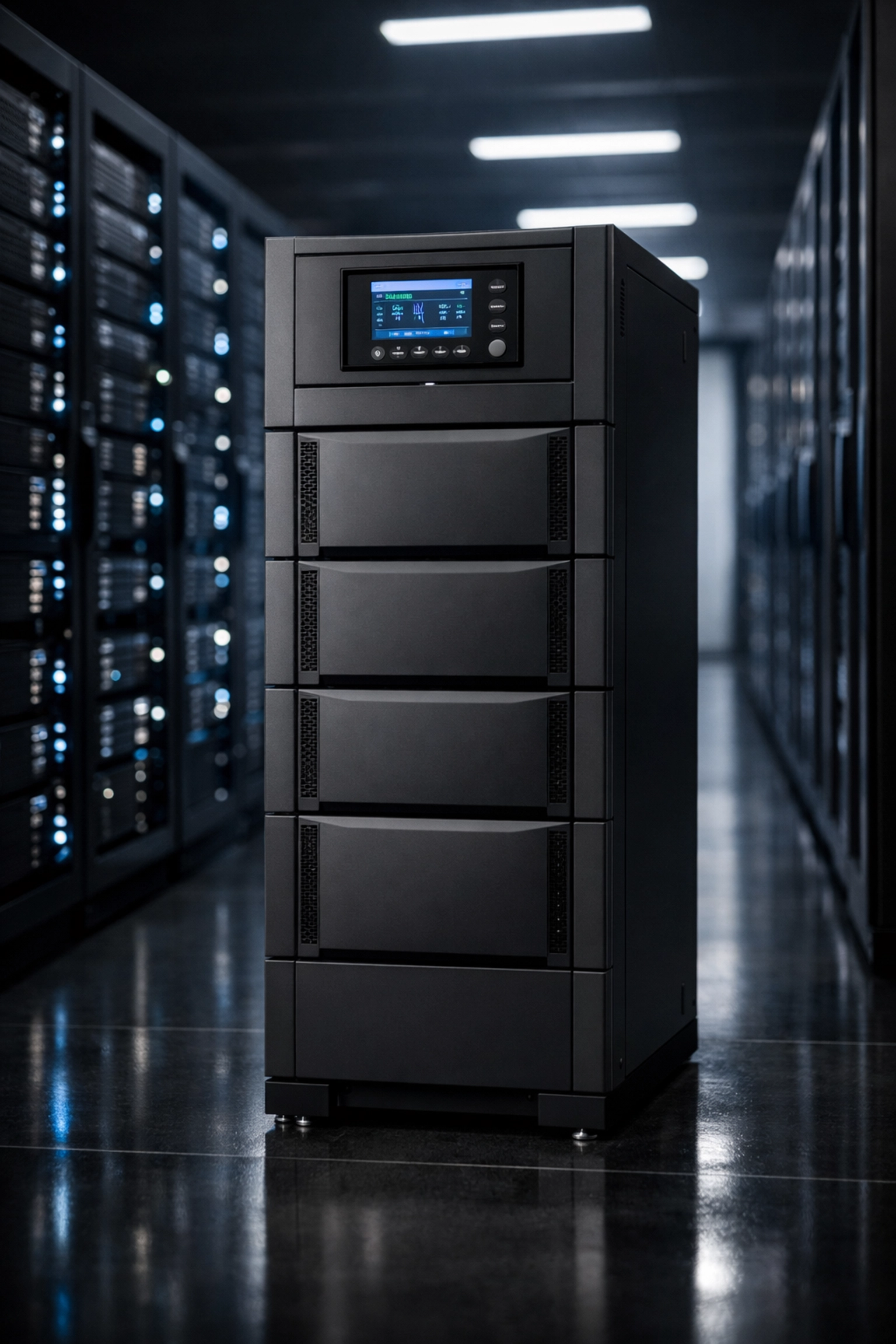
In an Online Double Conversion system, technically classified as Voltage and Frequency Independent (VFI), the incoming AC power from the utility is first converted to DC by the rectifier and then converted back to a clean, regulated AC signal by the inverter. This process ensures that the load is completely isolated from the utility grid. Whether the grid is experiencing sags, swells, transients, or total harmonic distortion, the equipment sees only a perfect sine wave.
The primary advantage here is zero transfer time. Because the inverter is always providing power to the load, there is no "switch-over" when the utility fails. This is the ultimate "Reliable" standard for Tier III and Tier IV data centers. The downside? Continuous double conversion typically yields efficiencies between 90% and 94%. In a world of 50MW hyperscale sites, that 6% loss is massive.
Eco-Mode (VFD/VI)
Eco-Mode, often referred to as High-Efficiency Mode or bypass-led operation, operates as a Voltage and Frequency Dependent (VFD) or Voltage Independent (VI) system. In this mode, the UPS essentially runs on a static bypass path, feeding utility power directly to the load while the internal inverter remains in a "standby" state.
Efficiency jumps to 98% or 99% because the energy-intensive conversion process is bypassed. However, the trade-off is the transfer time. If the utility power drifts outside of pre-set parameters, the UPS must detect the fault and engage the inverter. This switch usually takes between 2 to 10 milliseconds. While this is within the tolerances of most IT equipment (per the ITIC/CBEMA curves), it is not "zero," and it does expose the hardware to "raw" utility power until the switch is completed.
The Power Protection Roadmap: Transitioning Safely
If you are a facility manager or CTO looking to optimize your power chain, you cannot simply flip a switch and hope for the best. Implementation requires a structured approach to ensure "Real-Time Solutions" are actually being applied.
- Conduct a Comprehensive Power Audit: Before deciding on a topology, you must understand the quality of your incoming utility power. If your site is in an industrial zone with high harmonic distortion or an area prone to frequent voltage sags, Eco-Mode is a recipe for disaster.
- Audit the Load Sensitivity: Categorize your hardware. Modern servers with high-quality power supplies may handle Eco-Mode easily, but medical imaging equipment, industrial PLCs, and certain high-speed storage arrays may crash during the millisecond transfer window.
- Implement a Hybrid/Split-Mode Strategy: Modern high-density data centers rarely use an all-or-nothing approach. By utilizing a 2N Redundancy architecture, you can run one path in Double Conversion (to ensure signal purity) and the other in Eco-Mode (to capture efficiency gains). This balances the risk profile while lowering the PUE.
- Set Tight Tolerance Thresholds: If you opt for Eco-Mode, your monitoring software must be configured with surgical precision. If the thresholds are too loose, you damage hardware; if they are too tight, the UPS will "chatter" back and forth between modes, causing premature wear on the static switch and batteries.
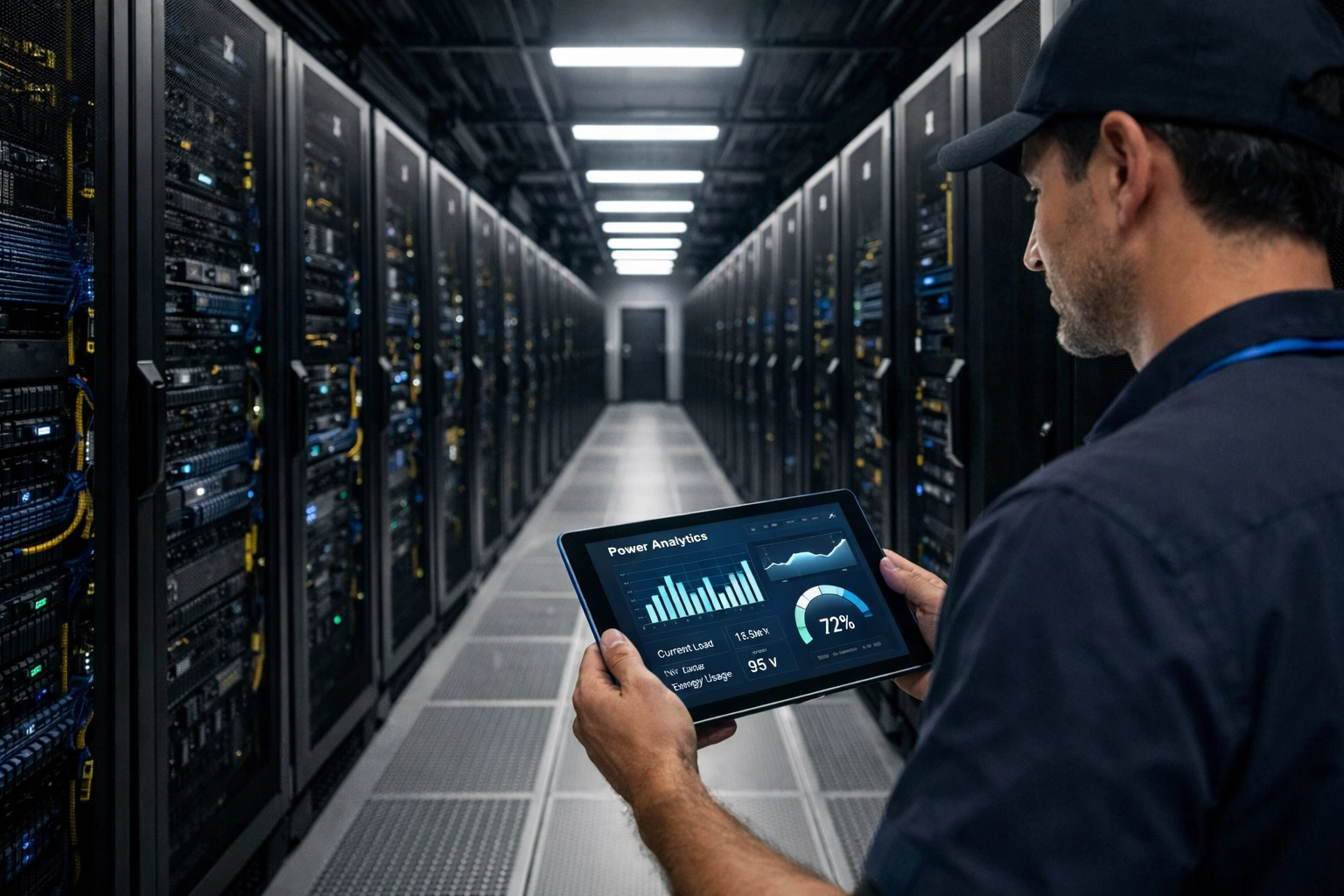
- Utilize Remote Monitoring and AI Analytics: Deploying solutions from industry leaders like APC by Schneider Electric or CyberPower allows for real-time tracking of mode transfers. If you see frequent transfers, your grid is too unstable for Eco-Mode.
The Brands Defining the Standard
When reliability is the anchor, the hardware matters. At Ace Real Time Solutions, we partner with the heavyweights of the industry to provide tailored power protection.
- Vertiv and APC: These brands are the leaders in high-efficiency Double Conversion. Their latest modular UPS systems offer "Active Eco-Mode," which tracks the grid frequency and keeps the inverter synchronized to reduce transfer time even further.
- CyberPower and Minuteman Technologies: For edge deployments and localized IT racks, these brands offer cost-effective, high-reliability systems that excel in both topologies, often providing the granular control needed for customized sensitivity settings.
You can explore our full range of hardware at acerts.com/sitemap_products_1.xml to find the specific model that fits your density requirements.
Technical Specs to Watch: The Data Doesn't Lie
For the technical leads managing MW-scale environments, the decision often comes down to the numbers. A Tier III data center cannot afford a single point of failure. If you are running high-density AI clusters, you are likely looking at 30-50kW per rack. In this environment, Thermal Management becomes the limiting factor.
Running a 500kVA UPS in Double Conversion at 93% efficiency produces approximately 35kW of waste heat continuously. Moving to a 99% Eco-Mode reduces that waste heat to just 5kW. That is 30kW of cooling capacity that can be redirected back to the server floor, effectively increasing your available power density without upgrading your HVAC infrastructure.
However, consider the "Strong Red" (#b3151a) warning: If your transfer time exceeds 10ms, you risk a "server reboot storm," where hundreds of machines attempt to restart simultaneously, creating a massive inrush current that can trip breakers and lead to a total facility blackout. This is why "Real-Time Solutions" are non-negotiable.
Final Verdict: Which Is Better?
The answer is rarely binary. Double Conversion remains the undisputed king for high-risk environments, unstable grids, and ultra-sensitive hardware where any risk of power "latency" is unacceptable. It is the "Very Dark Blue" (#072a3e) of the power world, steady, reliable, and unshakeable.
However, for modern, well-managed data centers in regions with stable grids, Eco-Mode is no longer a "risk", it is a strategic advantage. It is the key to hitting PUE targets and managing the thermal loads of the AI era.
At Ace Real Time Solutions, we don't believe in one-size-fits-all. We specialize in solution design that fits your specific uptime and efficiency goals. Whether you need a full site audit or a technical spec sheet for the latest CyberPower products, our team is ready to assist.
Ready to optimize your power chain? Contact our team today to request a comprehensive power audit or to download a technical spec sheet for our latest high-efficiency UPS solutions.
FAQ: Power Topology Basics
What is the difference between VFI and VFD UPS systems? VFI (Voltage and Frequency Independent) refers to Double Conversion UPS systems where the output is entirely independent of the input utility. VFD (Voltage and Frequency Dependent) refers to Eco-Mode or Standby systems where the output voltage and frequency depend on the utility source during normal operation.
How does Eco-Mode affect UPS battery life? Generally, Eco-Mode can extend battery life slightly because the system generates less internal heat. However, if the utility power is unstable, frequent switching between bypass and battery can lead to increased battery cycling, which may shorten the overall lifespan.
Can I use Eco-Mode in a Tier IV data center? Yes, but typically only as part of a redundant strategy. Many Tier IV facilities use "Advanced Eco-Mode" or run a hybrid configuration where one power path remains in Double Conversion to ensure 100% conditioning, while the redundant path runs in Eco-Mode to save energy.
For more information on our services, visit our Services Page or browse our full collection of power protection hardware.