

Does Your Home Office Really Need Surge Protection? (The Surprising Truth)
Here's the surprising truth that most home office workers discover too late: your expensive equipment is under constant attack from power surges, and it's happening right now as you read this. While you're worried about cybersecurity and data backups, invisible electrical enemies are slowly degrading your computers, monitors, and office devices every single day.
The reality is that power surges occur multiple times daily in most homes - not just during thunderstorms, but from everyday activities like your air conditioner kicking on or your neighbor's electric car charging. Your home office equipment is far more vulnerable than you think, and the cost of inadequate protection goes way beyond replacing damaged hardware.
The Hidden Surge Reality Most People Miss
Most people think power surges only happen during dramatic weather events, but that's completely wrong. Internal surges from your own appliances are actually the biggest threat to your home office equipment. Every time your HVAC system cycles, your refrigerator starts up, or someone plugs in a hair dryer, electrical spikes ripple through your home's wiring.
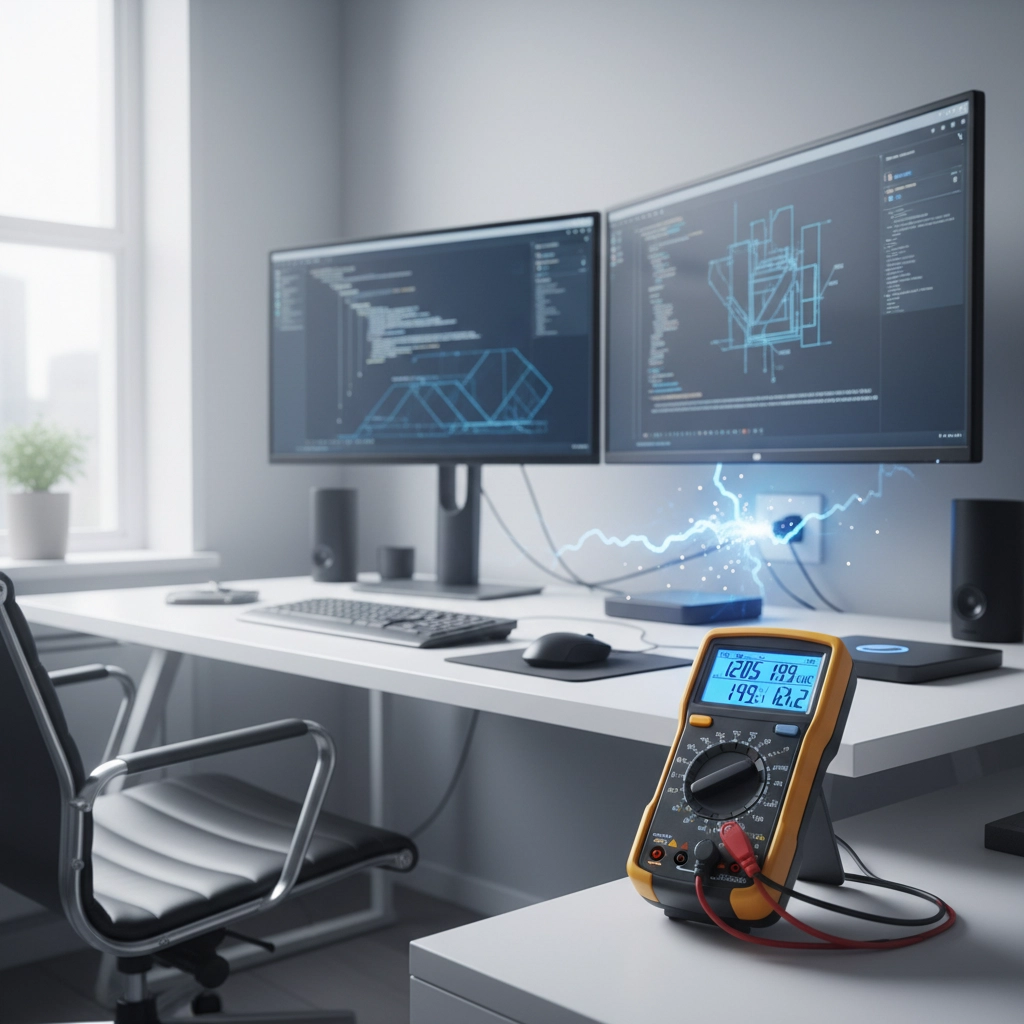
These "micro-surges" might not fry your computer instantly, but they're causing cumulative damage that shortens equipment lifespan significantly. Think of it like repeated small hits to your car's engine - individually harmless, but collectively destructive over time. Your computer's sensitive components are designed for steady voltage, not the constant fluctuations most homes experience.
The most shocking part? Computers and electronic devices are exponentially more sensitive to voltage variations than traditional appliances. Your refrigerator might handle electrical fluctuations for decades, but your laptop's delicate circuits will fail much sooner under the same conditions.
What's Really at Risk in Your Home Office
Your home office contains thousands of dollars worth of interconnected equipment, and a single significant surge can cascade through multiple devices. Here's what's actually vulnerable:
• Computers and laptops - Most sensitive to voltage fluctuations
• Monitors and displays - Expensive to replace and often damaged alongside computers
• Network equipment - Routers, modems, and switches that keep you connected
• Printers and scanners - Especially laser printers with high power requirements
• External storage devices - Where your irreplaceable data lives
• Specialized equipment - Drawing tablets, audio interfaces, or industry-specific tools
But here's the part that really hurts: it's not just about replacing hardware. A power surge can instantly destroy years of work, including documents, passwords, financial records, and client files. Data recovery services cost thousands and often can't recover everything.
Why That Power Strip Isn't Protecting You
This might be the most dangerous misconception in home offices today: assuming any power strip provides surge protection. Standard power strips are just outlet extenders - they offer zero protection against electrical spikes. You could have every device plugged into power strips and still be completely vulnerable.
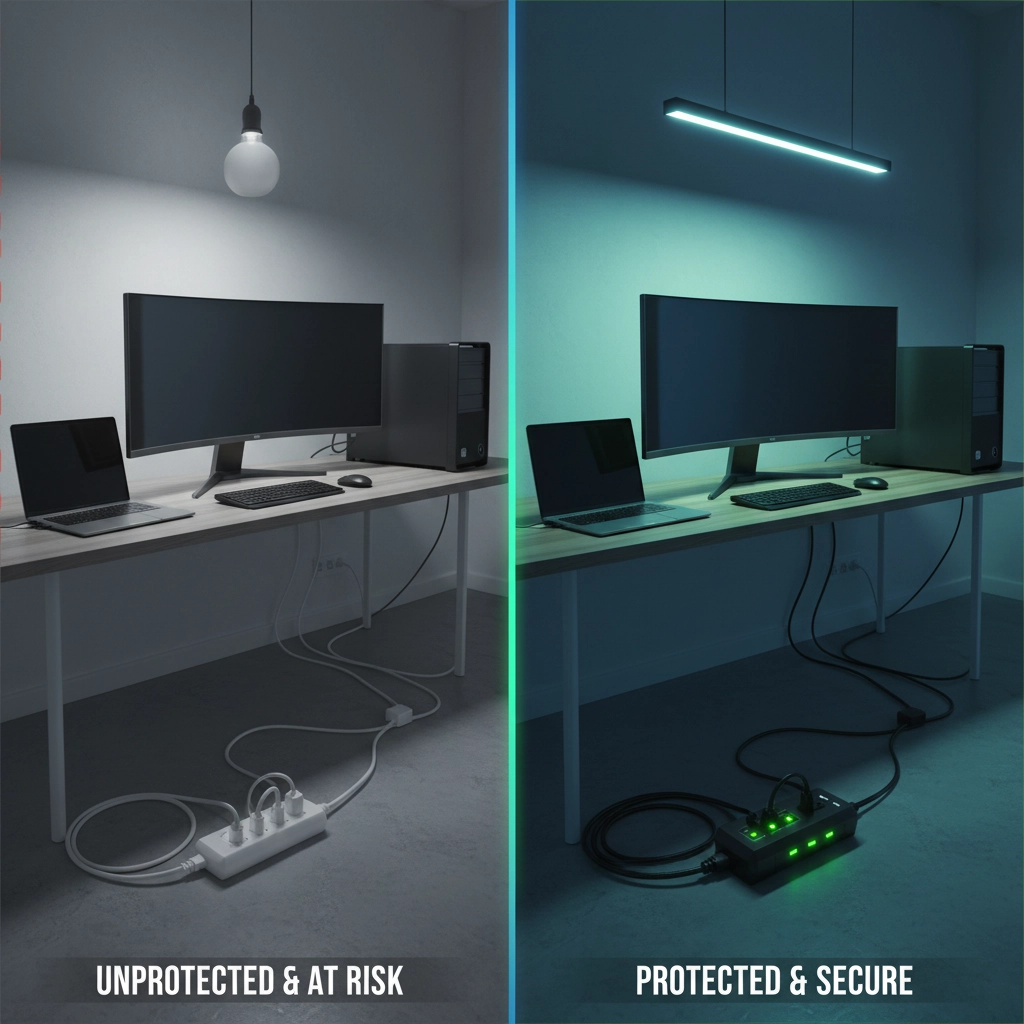
Real surge protectors contain specialized components called Metal Oxide Varistors (MOVs) that actually divert excess voltage away from your equipment. But here's what manufacturers don't advertise prominently: surge protectors wear out with use.
Every time your surge protector absorbs an electrical spike, it becomes less effective. A surge protector rated for 1,000 joules might become completely useless after six months in a home with frequent power fluctuations. That surge protector you bought three years ago? It could be providing zero protection right now, and you'd never know until something fails.
The True Cost of Being Unprotected
Let's talk real numbers. The average home office contains:
- Desktop computer: $800-$2,500
- Monitor(s): $300-$1,200
- Printer: $200-$800
- Network equipment: $150-$500
- External storage: $100-$600
- Specialized devices: $200-$1,500
A single major surge could damage multiple devices simultaneously, creating repair bills exceeding $5,000. But the hidden costs are often worse than hardware replacement:
Lost Productivity: How many days of work would you lose recovering from equipment failure? For many professionals, even a few days of downtime costs more than quality surge protection.
Data Recovery: Professional data recovery services charge $500-$3,000 per device, and success isn't guaranteed. Some data is simply gone forever.
Rush Replacement Costs: When your primary work computer dies, you often pay premium prices for expedited shipping and emergency purchases.
Choosing Protection That Actually Works
Not all surge protection is created equal. Here's what actually matters when protecting your home office:
Joule Rating: This indicates how much electrical energy the device can absorb before failing. For home offices, look for at least 1,000 joules, but 2,000+ joules provides longer-lasting protection. Brands like CyberPower offer surge protectors with ratings up to 4,320 joules for comprehensive protection.
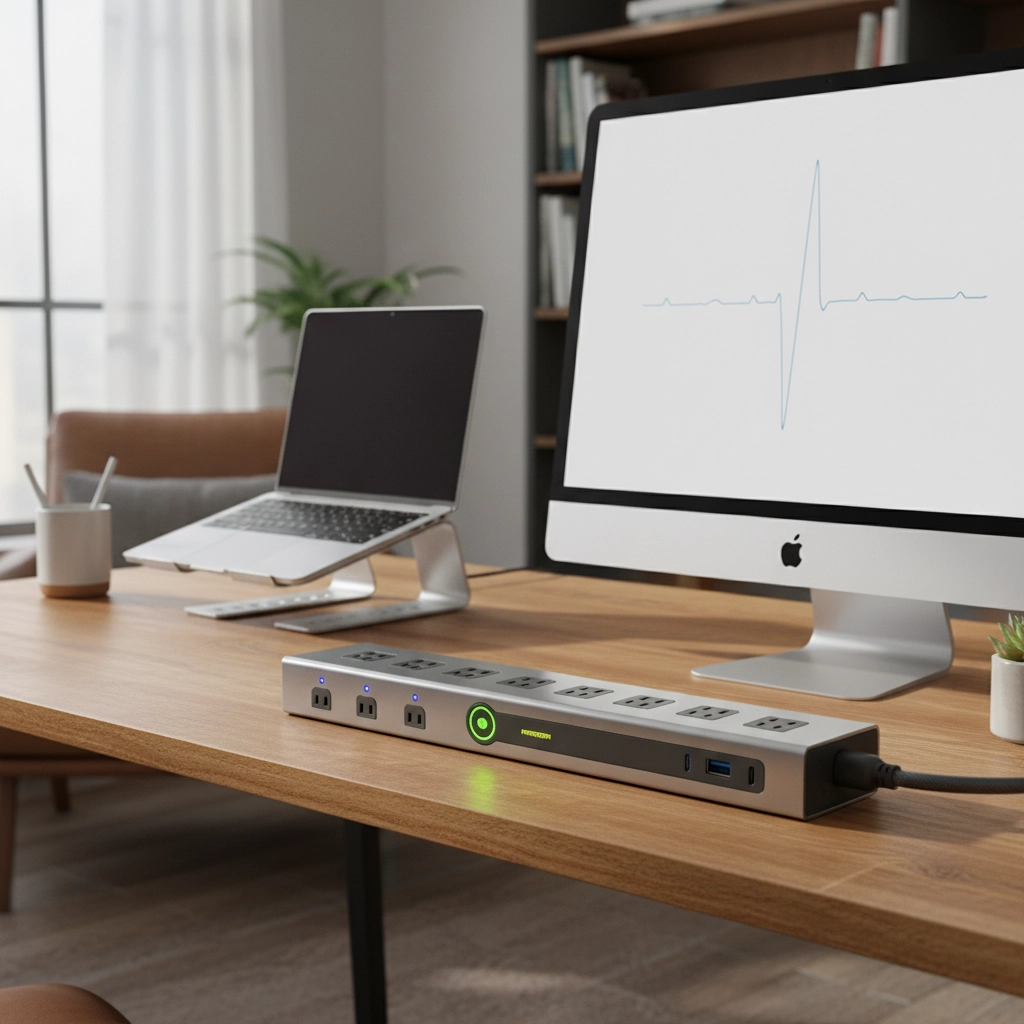
Response Time: Measured in nanoseconds, this determines how quickly the surge protector reacts to voltage spikes. Look for response times under 1 nanosecond for sensitive electronics.
Warranty Coverage: Quality surge protectors often include connected equipment warranties up to $500,000. This isn't just marketing - it demonstrates the manufacturer's confidence in their product and provides real financial protection.
UL Certification: Always choose surge protectors with UL 1449 certification, which ensures they meet safety and performance standards.
Advanced Protection Strategies
For comprehensive home office protection, consider implementing layered defense:
Whole-Home Surge Protection: Installed at your electrical panel, this handles large external surges from utility issues or lightning strikes. It's your first line of defense but won't protect against internal surges.
Point-of-Use Protection: Individual surge protectors for your specific equipment handle smaller internal surges and provide backup protection if whole-home protection is overwhelmed.
Uninterruptible Power Supply (UPS): For critical equipment, a UPS provides both surge protection and battery backup during power outages. This is especially important for desktop computers that could lose work during sudden power loss.
Don't Make These Common Mistakes
Daisy-Chaining Protection: Never plug one surge protector into another - this can create dangerous conditions and often voids warranties.
Ignoring High-Wattage Devices: Laser printers, space heaters, and other power-hungry equipment should have dedicated surge protectors, not share protection with sensitive electronics.
Forgetting Replacement: Set calendar reminders to evaluate surge protector effectiveness every 2-3 years, or immediately after any major electrical event.
Skipping Network Protection: Don't forget ethernet and coaxial connections - surges can travel through data lines too.
The Bottom Line
The surprising truth is that surge protection isn't optional for serious home office operations - it's essential infrastructure. The question isn't whether you need surge protection, but whether you can afford to be without it.
Quality surge protection costs a fraction of what you'll spend replacing damaged equipment or recovering from data loss. A $100-200 investment in proper surge protection can save thousands in equipment replacement and lost productivity.
Your home office equipment is under constant electrical stress, whether you realize it or not. The only question is whether you'll protect your investment proactively or learn this lesson the expensive way.
Ready to protect your home office investment? Contact our team to discuss surge protection solutions that fit your specific setup and budget. Don't wait until it's too late - your equipment and data depend on the protection decisions you make today.