

CPAPs and Power Outages: How to Stay Safe When the Lights Go Out
If you rely on a CPAP machine to sleep safely at night, you already know the drill. You strap on your mask, flip the switch, and drift off knowing that continuous positive airway pressure is keeping your airway open. But what happens when the power suddenly goes out at 2 AM?
For the estimated 8 million Americans who use CPAP machines daily, power outages aren't just an inconvenience: they're a genuine health concern. Whether it's a summer storm, a winter ice event, or just America's aging grid doing its thing, losing power means losing therapy. And depending on the severity of your sleep apnea, that can range from "I'm tired tomorrow" to something much more serious.
The good news? With the right preparation and backup power solutions, you can sleep soundly even when the lights go out. Let's break down everything you need to know.
What Actually Happens When Your CPAP Loses Power?
First, let's address the elephant in the room: you won't suffocate if your CPAP loses power mid-sleep. Modern CPAP masks include anti-asphyxia valves that allow room air to flow freely when the machine stops. So take a breath (pun intended) and relax on that front.
However, the interruption of therapy does come with real consequences:
- Mild to moderate sleep apnea: You'll likely wake up feeling tired, groggy, and possibly with a headache. Not ideal, but manageable for a night or two.
- Severe sleep apnea: This is where things get more concerning. Repeated apnea episodes during an outage can increase your risk of heart problems, high blood pressure, and dangerous oxygen desaturation levels.
While it's extraordinarily rare for someone to die from a single night of interrupted CPAP therapy, prolonged outages lasting days or weeks can accumulate serious health risks through sleep deprivation and repeated breathing interruptions.
The bottom line? Having a backup power plan isn't optional: it's essential.
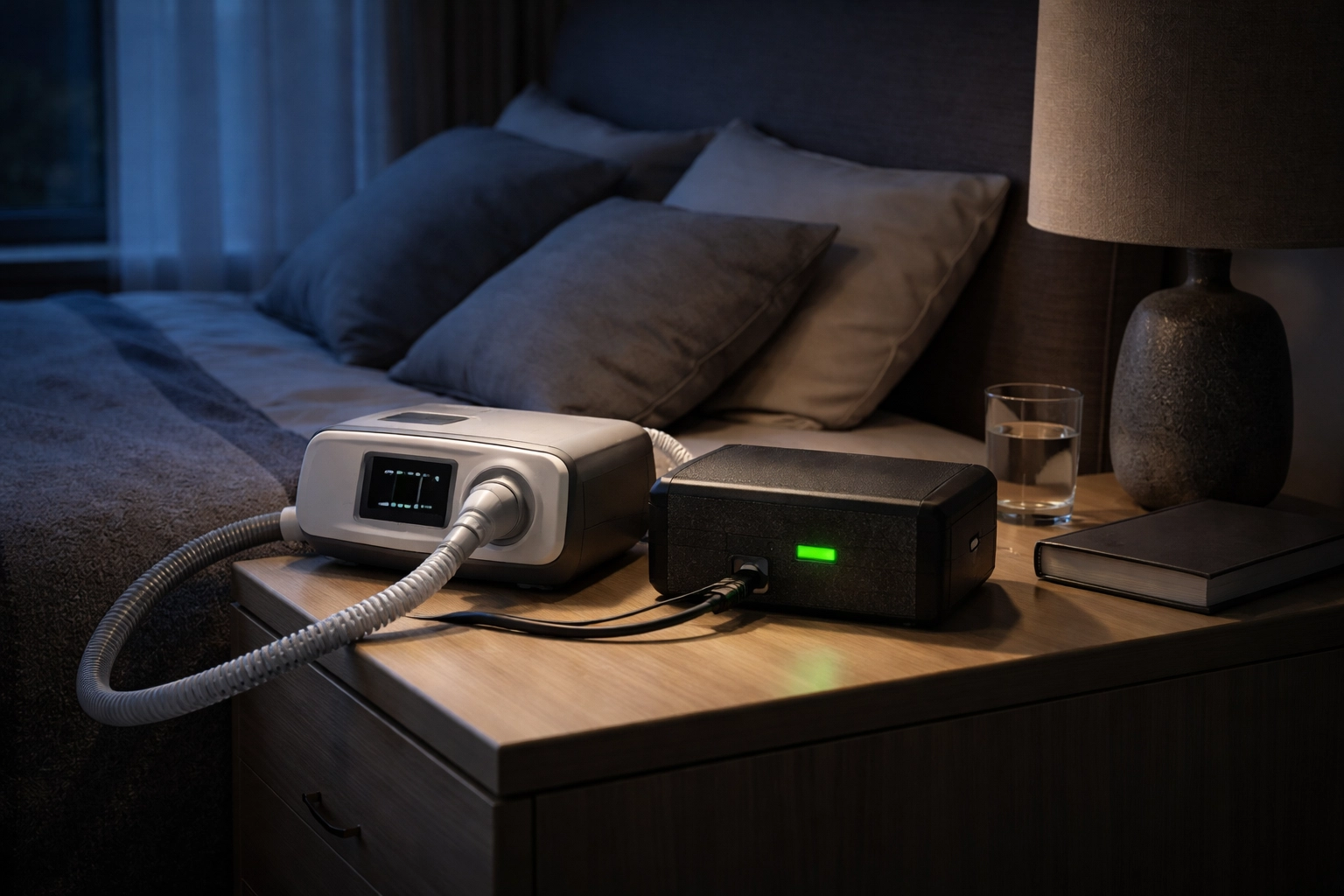
Understanding Your Power Needs
Before you rush out and buy the biggest battery you can find, let's talk about what your CPAP actually requires. Not all CPAP machines are created equal when it comes to power consumption.
Key Factors That Affect Battery Life:
| Factor | Impact on Power Draw |
|---|---|
| Pressure settings | Higher pressure = more power |
| Heated humidifier | Can double or triple power consumption |
| Heated tubing | Adds 20-30% more draw |
| WiFi/Bluetooth features | Small but constant drain |
| Machine age/efficiency | Older machines typically draw more |
A standard CPAP without heated features might draw 30-60 watts, while a machine running full humidity and heated tubing could pull 80-100+ watts. This matters a lot when you're sizing a backup power solution.
Pro tip: Check your machine's specifications or the label on the power adapter. You're looking for the wattage or amp draw rating. This number will help you calculate how many hours of runtime you'll get from any backup power source.
Backup Power Solutions for CPAP Users
Now for the good stuff: let's talk about your options for keeping that therapy running when the grid goes down.
1. Dedicated CPAP Battery Packs
These purpose-built batteries are designed specifically for CPAP machines. They're compact, portable, and typically offer 8+ hours of runtime on a single charge.
Pros:
- Plug-and-play compatibility with major CPAP brands
- Lightweight and travel-friendly
- FAA-approved options for air travel
Cons:
- Limited to CPAP use only
- Can be pricey for the capacity you get
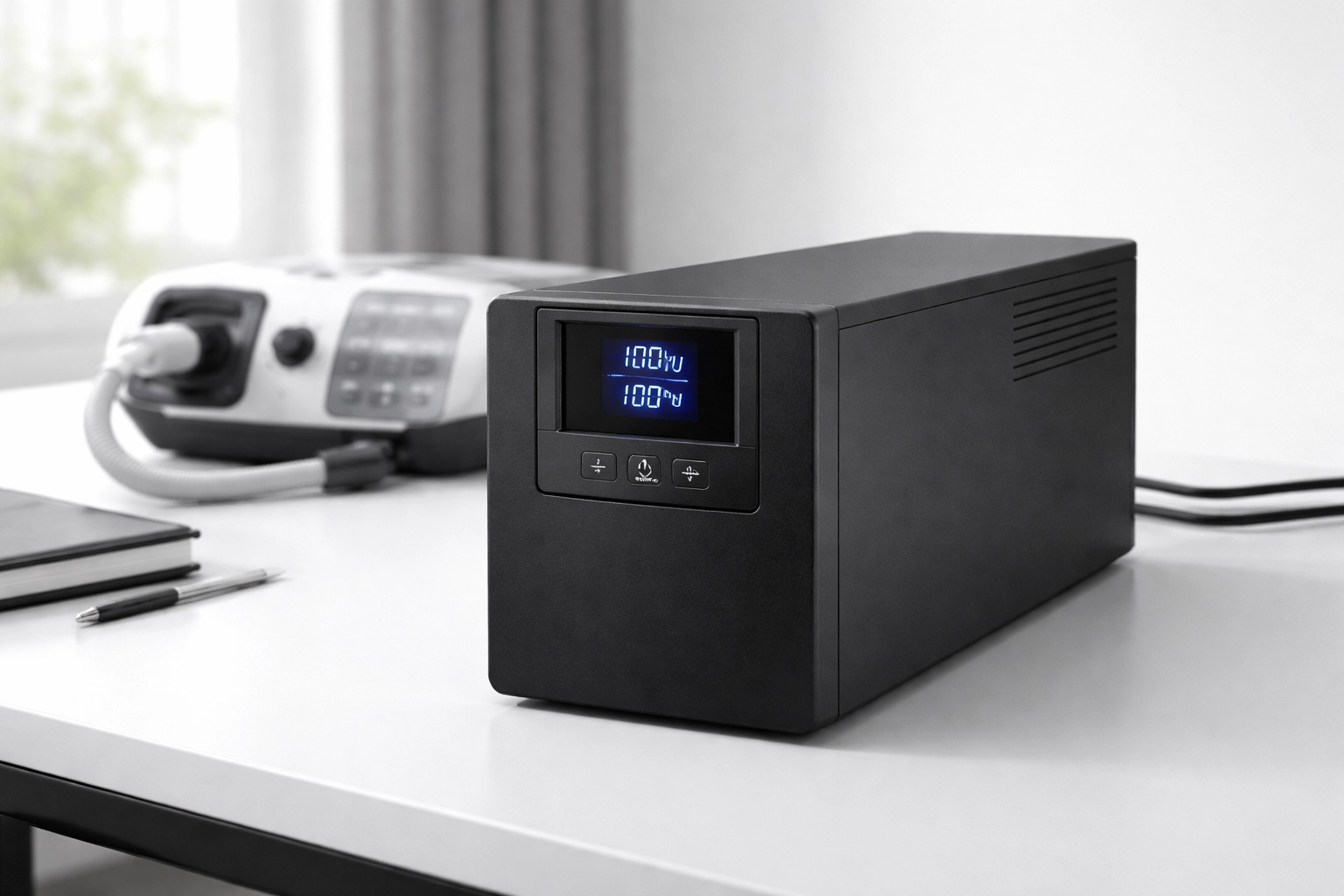
2. Uninterruptible Power Supplies (UPS)
A UPS is the gold standard for seamless power protection. These devices sit between your wall outlet and your CPAP, constantly monitoring power quality. When an outage hits, they switch to battery power instantly: often so fast you won't even notice.
Pros:
- Automatic, instantaneous switchover
- Also protects against surges and voltage fluctuations
- Can power other small devices simultaneously
Cons:
- Heavier and less portable than dedicated CPAP batteries
- Runtime depends on battery capacity and your machine's draw
For most home CPAP users, a quality UPS with 1000VA or higher capacity provides excellent protection for short to medium outages.
3. Portable Power Stations
Think of these as giant rechargeable batteries with multiple outlet types. They've exploded in popularity over the past few years, and for good reason: they're incredibly versatile.
Pros:
- Can power your CPAP plus phones, lights, and small appliances
- Many models support solar charging
- Great for camping, travel, and emergency prep
Cons:
- Larger and heavier than dedicated CPAP batteries
- Quality varies widely by brand
When shopping for a portable power station, look for models with pure sine wave output. Some CPAP machines can be finicky with modified sine wave power, leading to buzzing, overheating, or refusal to start.
4. Solar Generators and Panels
For those in areas with frequent outages or off-grid enthusiasts, pairing a portable power station with solar panels creates a renewable, long-term backup solution.
Pros:
- Indefinite runtime with sufficient sun
- No fuel costs or noise
- Environmentally friendly
Cons:
- Higher upfront investment
- Dependent on weather conditions
- Requires more planning and setup
A quality solar kit can recharge your power station during the day while you use it at night: creating a sustainable cycle that can outlast even extended grid failures.
5. Direct DC Power Cords
Here's a power user tip: if your CPAP supports it, using a direct DC power cord can extend your battery runtime by 20-30%.
Why? Your CPAP actually runs on DC power internally. The standard power brick converts AC (from your wall) to DC. When running from a battery, you're often converting DC to AC and then back to DC again: wasting energy in the process. A direct DC cord eliminates that inefficiency.
Check with your CPAP manufacturer to see if a compatible DC cord is available for your model.
Preparation Checklist: Before the Lights Go Out
Having backup power equipment is only half the battle. You need a plan to use it effectively when an outage strikes at 3 AM and you're half asleep.
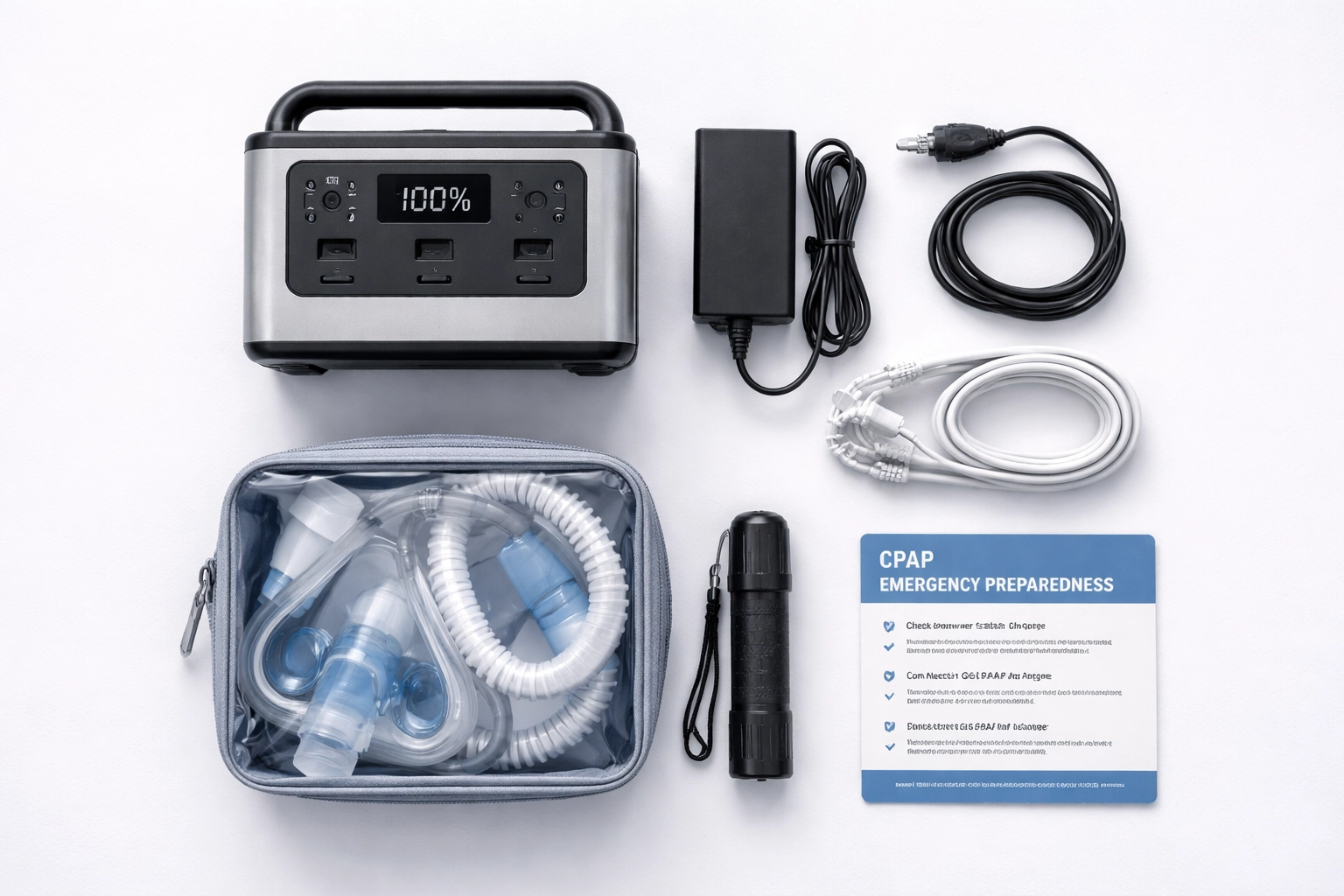
Your CPAP Power Outage Prep List:
- Keep batteries charged: Make it a habit to check charge levels weekly
- Create a CPAP emergency kit: Store your machine, backup battery, cords, mask, and a flashlight together in an accessible spot
- Use surge protection: When power returns, it often comes back with voltage spikes that can damage electronics
- Optimize your settings: Consider disabling WiFi/Bluetooth during outages to conserve power
- Practice the switch: Do a dry run switching from wall power to battery so you're not fumbling in the dark
- Inform your household: Make sure family members know about your CPAP needs and where your emergency supplies are located
- Talk to your doctor: Ask about temporary pressure adjustments for extended emergency situations
Choosing the Right Solution for Your Situation
So which backup power option is right for you? It depends on your specific circumstances:
| Situation | Recommended Solution |
|---|---|
| Occasional short outages (1-4 hours) | Quality UPS system |
| Frequent or longer outages | Portable power station + solar |
| Frequent travel | Dedicated CPAP battery pack |
| Severe sleep apnea + unreliable grid | Multiple backup options |
| Off-grid living | Solar generator system |
For most CPAP users, we recommend starting with a reliable UPS for home use and adding a portable power station or dedicated battery for travel and extended outages. This layered approach ensures you're covered in virtually any scenario.
Don't Wait for the Next Outage
Here's the reality: power outages are becoming more frequent across the country. Between extreme weather events and infrastructure challenges, the question isn't if you'll lose power: it's when.
For CPAP users, preparation isn't just about convenience. It's about protecting your health, your sleep quality, and your peace of mind. The cost of a good backup power solution is nothing compared to the cumulative health effects of interrupted therapy.
Ready to find the right power protection solution for your CPAP needs? Browse our selection of batteries, inverter chargers, and solar kits to build a backup system that keeps you breathing easy: no matter what the grid throws at you.
Have questions about sizing a backup power solution for your specific CPAP setup? Contact our team: we're happy to help you find the perfect fit.
Meta description: Learn how to protect your CPAP therapy during power outages with backup batteries, UPS systems, and solar solutions. Essential safety tips for sleep apnea patients.
Related posts: "Gas Generators vs Battery Backup: Which Is Better For Your Home During Outages?" and "Is Your Smart Home Actually 'Dumb' During a Blackout? Let's Fix That"