
Are Traditional UPS Systems Dead? Why Smart Grid-Ready Backup Is Taking Over
The data center industry is experiencing a seismic shift. While traditional uninterruptible power supplies (UPS) have been the backbone of power protection for decades, smart grid-ready backup systems are rapidly gaining ground. But are traditional UPS systems really dead? The answer is more nuanced than you might think.
According to recent industry reports, the global smart UPS market is projected to grow at a CAGR of 6.5% through 2028, driven by increasing demand for intelligent power management. Meanwhile, traditional UPS systems still represent over 60% of current installations. This apparent contradiction reveals an industry in transition rather than one technology completely replacing another.
The Current Reality: Traditional UPS Systems Hold Their Ground
Traditional UPS systems aren't disappearing overnight, and for good reason. These proven workhorses continue to deliver reliable power protection for millions of installations worldwide. They excel in straightforward applications where basic battery backup, surge protection, and automatic voltage regulation meet the organization's needs.
For small to medium-sized businesses, traditional UPS systems offer several compelling advantages:
- Lower upfront costs - Often 30-50% less expensive than smart alternatives
- Simplified installation and maintenance - Well-established procedures and widespread technician expertise
- Proven reliability - Decades of field-tested performance in standard applications
- Adequate protection - Sufficient for non-critical loads and basic infrastructure
A manufacturing company we recently worked with chose traditional UPS systems for their office workstations while implementing smart grid-ready solutions for their production floor. This hybrid approach optimized both cost and protection levels based on actual business needs.

The Smart Grid Revolution: Why Intelligence Matters
Smart grid-ready backup systems represent a fundamental evolution in power protection philosophy. These systems don't just react to power problems: they anticipate, analyze, and optimize power delivery in real-time.
The key differentiator lies in data and connectivity. While traditional UPS systems operate in isolation, smart systems integrate with building management systems, cloud platforms, and grid infrastructure. This connectivity enables capabilities that were impossible just a few years ago.
Real-Time Monitoring and Analytics
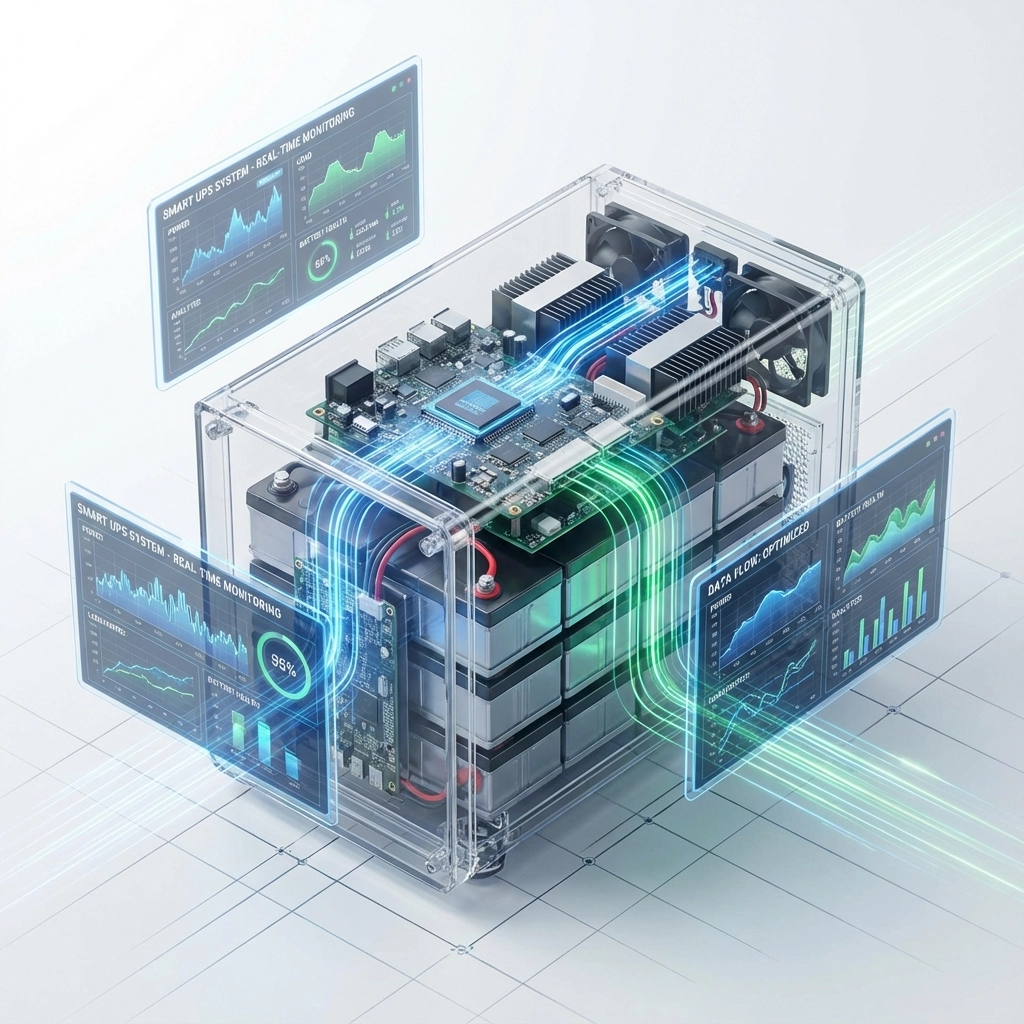
Smart UPS systems continuously monitor dozens of parameters: input/output voltage, current, frequency, temperature, humidity, and battery health. This data streams to centralized dashboards, providing unprecedented visibility into power infrastructure health.
Consider a recent case where predictive analytics identified battery degradation in a financial services company's UPS system three months before failure. Traditional monitoring would have caught this issue only during the next scheduled maintenance: potentially too late to prevent downtime during a power event.
Remote Management Capabilities
Modern data centers often span multiple locations, making physical monitoring impractical. Smart grid-ready systems enable remote configuration changes, firmware updates, and diagnostic testing. IT teams can manage power infrastructure from anywhere, reducing operational costs while improving response times.
Key Advantages Driving the Smart System Adoption
Enhanced Reliability Through Predictive Maintenance
Traditional UPS systems rely on scheduled maintenance intervals, often leading to premature component replacement or unexpected failures. Smart systems use machine learning algorithms to predict when components actually need attention, reducing maintenance costs by up to 25% while improving reliability.
Battery monitoring exemplifies this advantage. Smart systems track individual battery cell performance, identifying weak cells before they compromise the entire string. This granular monitoring can extend battery life by 15-20% while preventing costly emergency replacements.
Grid Integration and Energy Optimization
Smart grid-ready systems can participate in demand response programs, automatically adjusting power consumption during peak pricing periods. Some organizations report energy cost reductions of 10-15% through intelligent load management and grid interaction capabilities.
These systems can also integrate with renewable energy sources, automatically switching between grid power, battery backup, and solar/wind generation based on availability and cost optimization algorithms.
Scalability and Future-Proofing
As businesses grow and technology evolves, power protection needs change. Smart systems offer modular architectures that scale more efficiently than traditional solutions. Their software-defined capabilities can adapt to new requirements through updates rather than hardware replacement.
When Traditional Systems Still Make Sense
Despite the advantages of smart technology, traditional UPS systems remain the optimal choice for many applications:
Budget-Constrained Projects: When initial cost is the primary concern and advanced features aren't required, traditional systems deliver excellent value.
Simple Applications: Workstation protection, small office environments, and non-critical loads often don't justify the complexity of smart systems.
Isolated Environments: Locations without reliable internet connectivity can't fully utilize smart system capabilities, making traditional options more practical.
Legacy Integration: Older facilities with established maintenance procedures and technician training may benefit from continuing with familiar technology.
Making the Transition Decision: A Strategic Framework
The choice between traditional and smart grid-ready systems shouldn't be based solely on technology trends. Consider these key factors:
Critical Load Assessment
Evaluate the true cost of downtime for each protected load. A server room supporting customer-facing applications justifies smart system investment, while office computers may not.
Operational Complexity
Organizations with dedicated IT staff and multiple locations benefit most from smart system capabilities. Smaller businesses might find traditional systems easier to manage.
Total Cost of Ownership
While smart systems cost more initially, consider long-term savings from reduced maintenance, energy optimization, and improved reliability. Our analysis shows smart systems typically achieve payback within 3-4 years for critical applications.

Future Growth Plans
Rapidly growing organizations should invest in scalable smart systems rather than repeatedly upgrading traditional equipment.
The Coexistence Model: Best of Both Worlds
Rather than viewing this as an either/or decision, many successful organizations implement a tiered approach. Critical infrastructure receives smart grid-ready protection, while less critical loads use cost-effective traditional systems.
This hybrid strategy optimizes both protection levels and budgets. A healthcare facility might deploy smart systems for life-safety equipment and patient care areas while using traditional UPS systems for administrative offices.
Implementation Best Practices
When transitioning to smart grid-ready systems, follow these proven strategies:
Phase the Migration: Start with the most critical loads and gradually expand smart system deployment based on experience and budget availability.
Invest in Training: Ensure your team understands the new capabilities and management interfaces. The additional complexity requires proper preparation.
Plan for Connectivity: Smart systems require reliable network connections. Include network infrastructure planning in your deployment strategy.
Establish Monitoring Procedures: Define who will monitor the dashboards, respond to alerts, and manage the predictive maintenance schedules.
The Verdict: Evolution, Not Extinction
Traditional UPS systems aren't dead: they're evolving into a complementary technology within a broader power protection ecosystem. Smart grid-ready systems are becoming the standard for critical applications, while traditional systems maintain their role in cost-sensitive and simple applications.
The organizations succeeding in this transition take a strategic approach, matching technology capabilities to actual business requirements rather than following trends blindly.
As power protection needs become increasingly complex and grid infrastructure continues evolving, the intelligent capabilities of smart systems will become even more valuable. However, the fundamental reliability and cost-effectiveness of traditional systems ensures their continued relevance.
The question isn't whether traditional UPS systems are dead, but rather how to optimally combine both technologies to create a comprehensive power protection strategy that serves your organization's current needs while positioning for future growth.
Ready to evaluate your power protection strategy? Contact our team for a comprehensive assessment of your current systems and recommendations for optimizing your power protection infrastructure. Our experts can help you determine the right mix of traditional and smart technologies for your specific requirements.