
Are Traditional UPS Systems Dead? Why AI-Powered Monitoring Is Taking Over Power Protection
Walk into any data center today, and you'll hear the same question echoing through the halls: "Should we stick with our traditional UPS systems or make the jump to AI-powered monitoring?" It's a fair question, especially when downtime costs can hit $7,900 per minute according to Gartner research.
The short answer? Traditional UPS systems aren't dead, but they're definitely getting a serious wake-up call from their AI-enhanced cousins. Let's dive into what's really happening in the power protection world and why smart monitoring is becoming the new standard for businesses that can't afford to go dark.
The Current State of Traditional UPS Systems
Traditional UPS systems have been the backbone of power protection for decades, and for good reason. These workhorses have kept countless businesses running when the grid fails, operating on a simple but effective principle: detect power loss, switch to battery backup, keep the lights on.
But here's where things get interesting. Traditional systems are essentially reactive – they wait for something bad to happen, then respond. Think of them as the emergency room of power protection. They're great at handling crises, but they're not so great at preventing them.
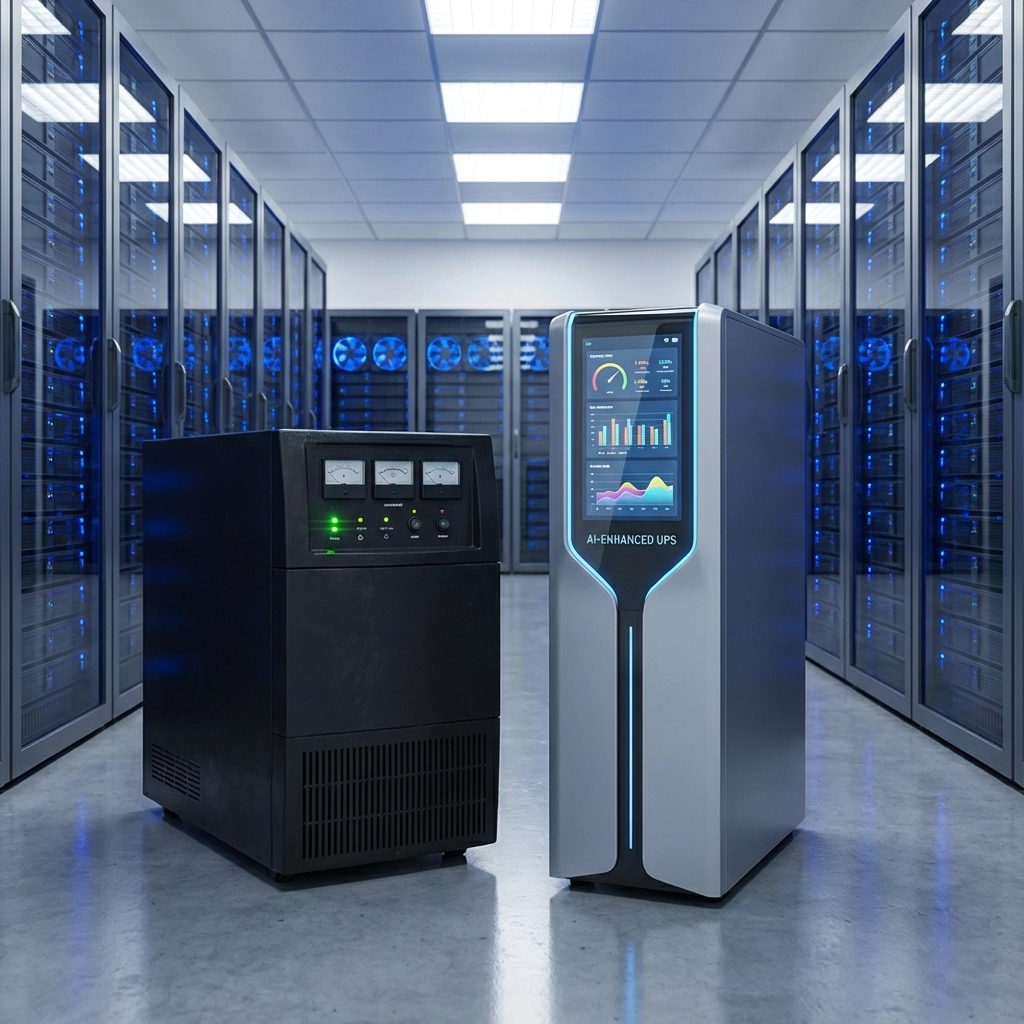
For many businesses with steady, predictable power needs, this reactive approach still works perfectly fine. A small office running basic computer equipment doesn't need the same level of sophistication as a facility training AI models. The problem is, more and more businesses are moving beyond "basic" power requirements.
Why AI-Powered Monitoring Is Rising Fast
The demand for AI-enhanced UPS systems isn't just a tech trend – it's a response to fundamental changes in how we use power. Modern AI workloads are absolute power monsters, requiring 120 kW or more per rack compared to the average 15 kW for traditional server applications.
But it's not just about the quantity of power – it's about quality and consistency. AI applications are incredibly sensitive to power fluctuations. A single millisecond of power inconsistency can corrupt data or completely derail a machine learning process that's been running for hours or days.
This is where AI-powered monitoring shines. Instead of waiting for problems to occur, these systems continuously analyze power patterns, predict potential issues, and make real-time adjustments to prevent problems before they impact your operations.
The Numbers Don't Lie
Consider this scenario: A traditional UPS system might give you 99.9% uptime, which sounds great until you realize that translates to over 8 hours of downtime per year. For a business running AI workloads where every minute of downtime costs thousands in lost productivity and corrupted processes, those 8 hours are absolutely catastrophic.
AI-powered systems are pushing uptime percentages to 99.999% or higher by catching and preventing failures before they happen.
Key Advantages of AI-Enhanced UPS Systems
Predictive Maintenance That Actually Works
Traditional UPS systems typically follow scheduled maintenance routines – check the batteries every six months, test the transfer switches annually, hope nothing breaks in between. AI-powered systems flip this approach on its head.
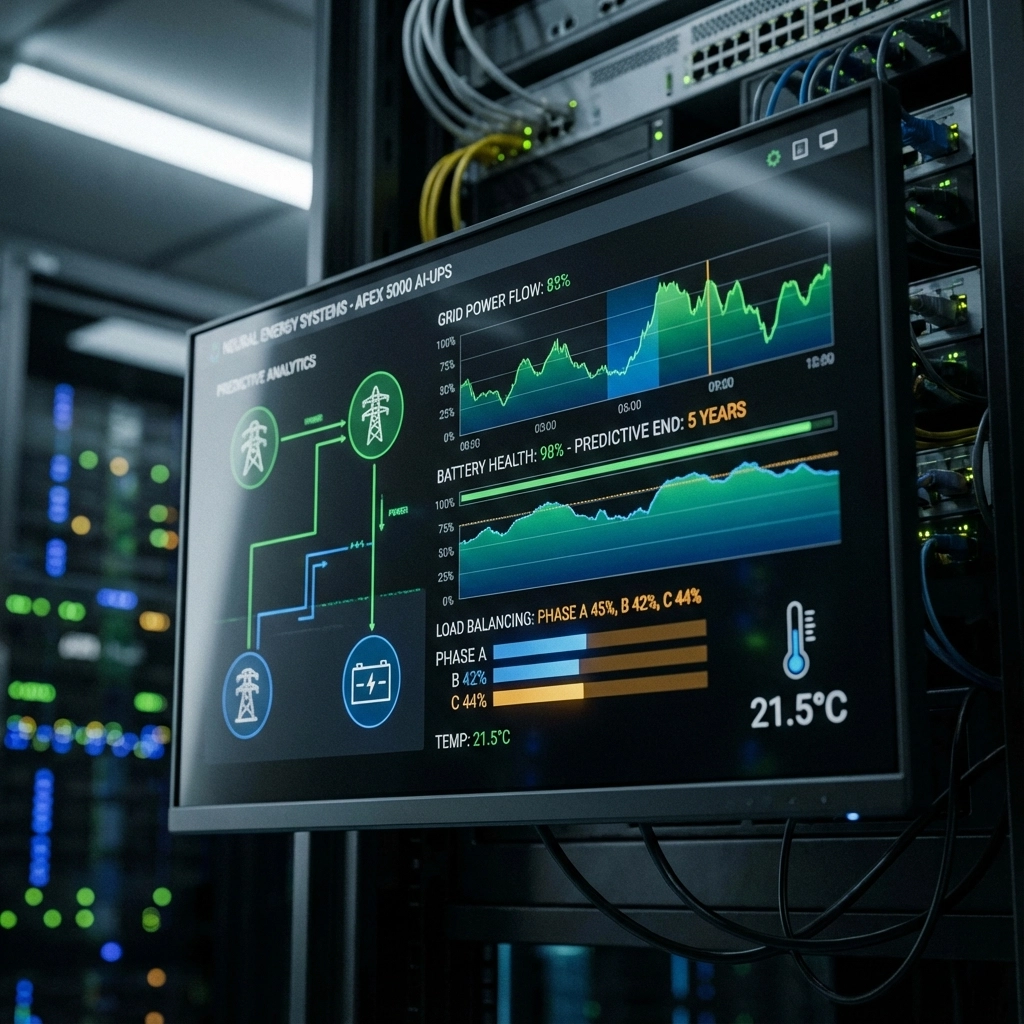
These smart systems continuously monitor hundreds of data points: battery temperature, charging cycles, voltage fluctuations, load patterns, and even environmental conditions. Machine learning algorithms analyze this data to predict when components are likely to fail, often weeks or months in advance.
One of our clients recently avoided a $50,000 emergency repair when their AI-powered monitoring system detected subtle changes in battery impedance that indicated impending failure. Instead of facing an unexpected shutdown, they scheduled a planned maintenance window during low-activity hours.
Energy Efficiency and Load Optimization
Here's something that surprises a lot of people: AI-powered UPS systems can actually reduce your energy costs while improving protection. These systems learn your facility's power usage patterns and optimize energy distribution accordingly.
For example, if your AI workloads typically spike every morning at 9 AM, the system learns this pattern and pre-conditions itself to handle the load more efficiently. It can also balance loads across multiple UPS units, ensure optimal power factor correction, and reduce energy waste through intelligent power routing.
Real-Time Power Regulation
Traditional UPS systems are binary – they're either providing utility power or battery power. AI-enhanced systems operate in a continuous spectrum, actively filtering and smoothing power delivery in real-time.
This capability is crucial for AI workloads that can't tolerate even minor power quality issues. The system acts like a sophisticated shock absorber, smoothing out voltage spikes, frequency variations, and other power quality problems that could disrupt sensitive computing processes.
When Traditional Systems Still Make Sense
Before you start planning to rip out all your existing UPS infrastructure, let's be realistic about when traditional systems still make perfect sense.

Steady, Predictable Loads
If your business has consistent power requirements without major fluctuations, traditional UPS systems can be highly cost-effective. A small office, retail store, or manufacturing facility with steady electrical loads might not see enough benefit from AI-powered monitoring to justify the additional investment.
Budget Constraints
AI-enhanced UPS systems typically cost 20-40% more than traditional equivalents. For businesses where power protection is important but not mission-critical, this price difference can be hard to justify.
Simple Infrastructure
Sometimes simpler is better. If your IT infrastructure is straightforward and your staff prefers equipment they can easily understand and maintain, traditional systems might be the right choice.
Making the Right Choice for Your Business
The decision between traditional and AI-powered UPS systems ultimately comes down to understanding your specific power protection needs and risk tolerance.
Consider AI-Enhanced Systems If:
- Your facility runs AI workloads, high-performance computing, or other power-sensitive applications
- Downtime costs exceed $1,000 per minute
- You're experiencing frequent power quality issues
- Your electrical loads are highly variable or unpredictable
- You want to optimize energy costs and efficiency
- Your facility operates 24/7 with minimal maintenance windows
Stick With Traditional Systems If:
- Your power requirements are steady and predictable
- Downtime costs are manageable (under $500 per minute)
- Your existing infrastructure is reliable and well-maintained
- Budget constraints make AI-enhanced systems impractical
- Your staff prefers simpler, more familiar technology
The Hybrid Approach
Many businesses are finding success with a hybrid approach – using AI-enhanced UPS systems for critical loads while maintaining traditional systems for less sensitive applications. This strategy maximizes protection where it's needed most while controlling costs.
Future-Proofing Your Power Protection Strategy
Whether you choose traditional or AI-enhanced systems today, it's worth considering how your power protection needs might evolve. Many businesses that start with traditional systems find themselves needing to upgrade within 3-5 years as their operations become more digitized and power-sensitive.
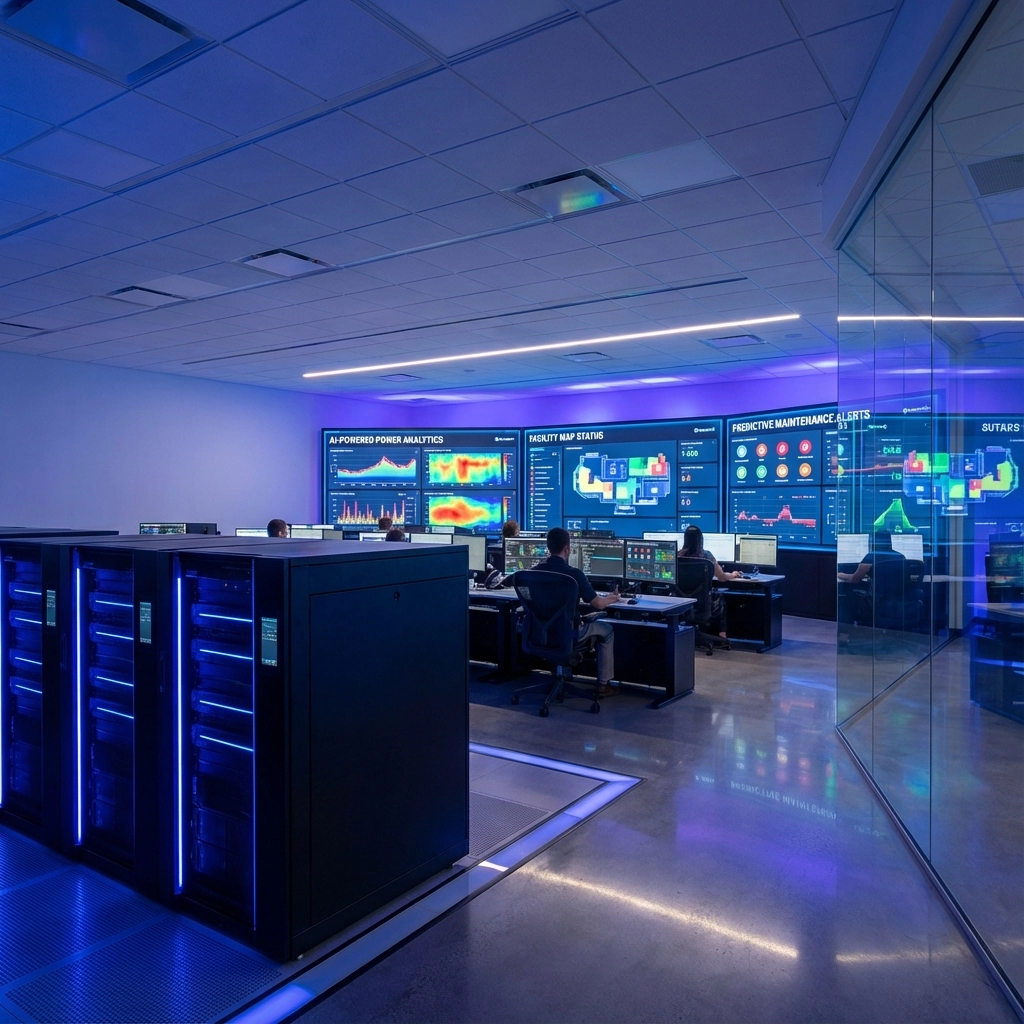
The good news is that many AI-enhanced features can be retrofitted to existing UPS systems through monitoring modules and software upgrades. This means you don't necessarily need to replace your entire infrastructure to gain some benefits of AI-powered monitoring.
The Bottom Line
Traditional UPS systems aren't dead – they're just finding their appropriate place in the power protection ecosystem. For businesses with basic power protection needs, traditional systems remain viable and cost-effective. But for organizations running power-sensitive applications, handling variable loads, or operating in environments where downtime is extremely costly, AI-powered monitoring isn't just an advantage – it's becoming essential.
The power protection industry is evolving rapidly, and the businesses that thrive will be those that choose the right technology for their specific needs while keeping an eye on future requirements.
Ready to evaluate your power protection strategy? Contact our team for a comprehensive assessment of your current infrastructure and recommendations tailored to your specific business needs. We'll help you determine whether traditional or AI-enhanced UPS systems make the most sense for your operations, budget, and future growth plans.