

Are Traditional Backup Systems Dead? Why Solar-Ready UPS Is Taking Over Home Offices
The power protection landscape is experiencing a seismic shift. While traditional UPS systems have been the gold standard for decades, a new player is disrupting the game: solar-ready UPS solutions. For IT procurement professionals and data center operators extending their reach into distributed work environments, this trend represents both an opportunity and a challenge. Are we witnessing the death of traditional backup systems, or simply their evolution?
Recent market data suggests that solar-integrated backup solutions have grown by 156% in residential and small office applications over the past two years. But before we declare traditional UPS systems obsolete, let's examine what's really driving this shift and what it means for your power protection strategy.
The Growing Limitations of Traditional Backup Systems
Traditional UPS systems aren't failing because they're bad technology: they're being challenged because user needs have evolved. For home offices and distributed IT infrastructure, several critical limitations have become apparent:
Grid Dependency Creates Vulnerabilities
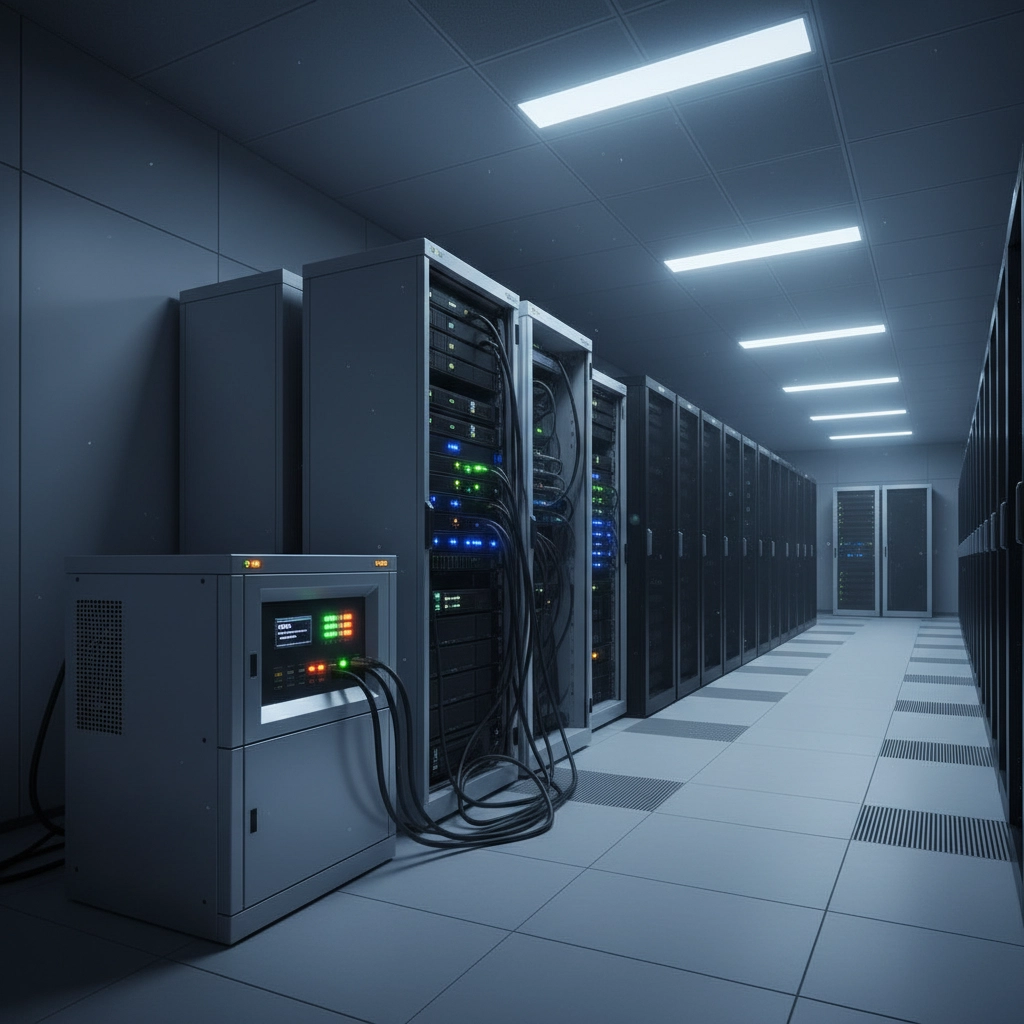
Traditional UPS systems are entirely dependent on grid power for recharging. During extended outages: which have increased by 73% since 2019 according to the U.S. Energy Information Administration: these systems become expensive paperweights once their batteries deplete. For remote workers managing critical systems or data center operators with distributed edge infrastructure, this dependency represents a single point of failure.
Rising Operational Costs
The hidden costs of traditional UPS systems compound over time:
• Battery replacement cycles: Traditional UPS batteries typically need replacement every 3-5 years, costing $200-$800 per cycle • Energy consumption: Continuous charging and inefficient power conversion add $300-$600 annually to electricity bills • Maintenance requirements: Regular testing and professional servicing average $500-$1,200 yearly for enterprise-grade systems
Limited Scalability for Distributed Infrastructure
As organizations embrace hybrid work models and edge computing, traditional UPS systems struggle with scalability. Each remote location requires separate infrastructure investment, creating a fragmented and expensive power protection ecosystem.
Why Solar-Ready UPS Is Gaining Ground
Solar-integrated backup solutions aren't just riding the green energy wave: they're solving real business problems that traditional systems can't address effectively.
Energy Independence Drives Business Continuity
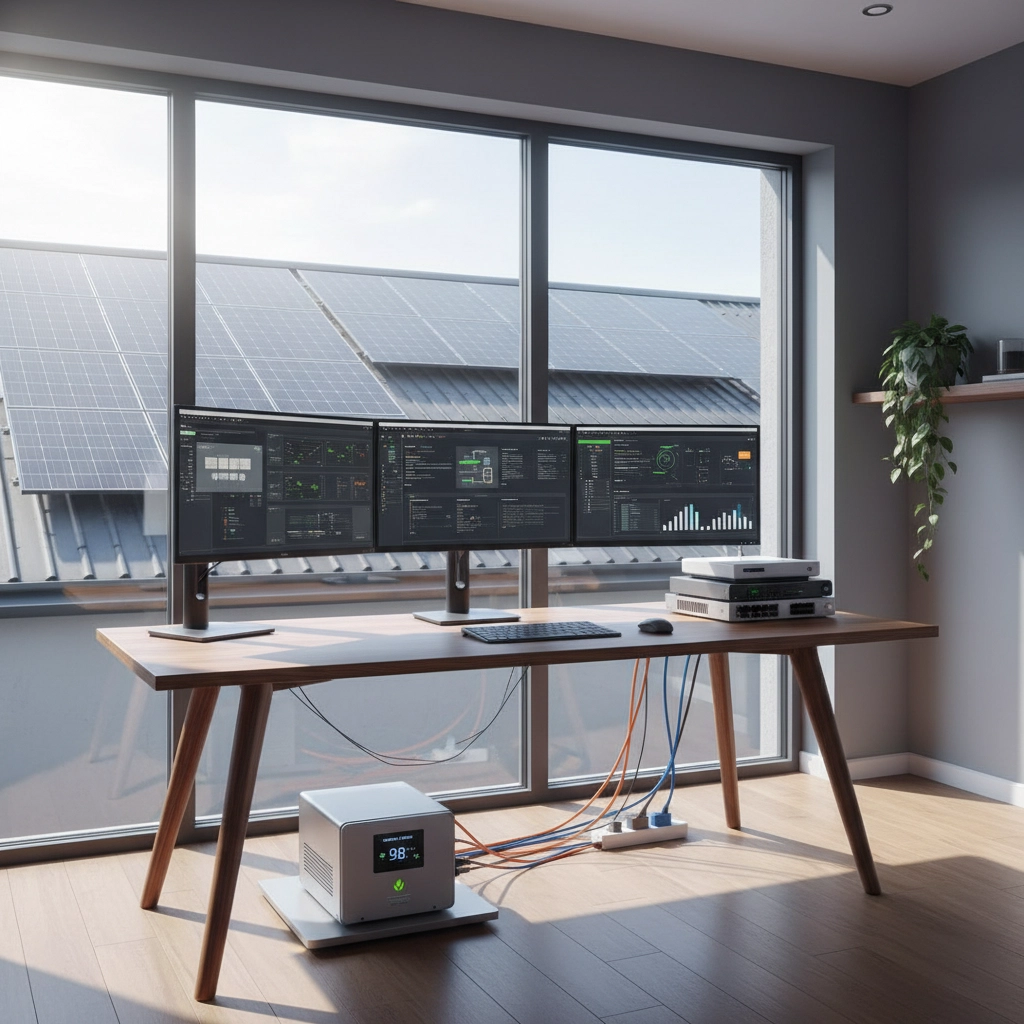
Solar-ready UPS systems provide genuine energy independence. During grid failures, they continue generating and storing power, enabling indefinite operation as long as solar generation exceeds consumption. For data center operators managing distributed infrastructure, this translates to:
• 99.95% uptime versus 98.7% for traditional UPS systems in areas with frequent outages • Zero operational energy costs for backup power generation • Scalable independence that grows with infrastructure needs
Total Cost of Ownership Advantages
While solar-ready systems require higher upfront investment ($8,000-$25,000 versus $500-$5,000 for traditional UPS), the total cost of ownership tells a different story:
10-Year Cost Comparison:
- Traditional UPS: $12,000-$18,000 (including replacements and energy)
- Solar-ready UPS: $8,000-$15,000 (after federal tax credits, minimal ongoing costs)
The crossover point typically occurs in year 4-6, after which solar solutions provide net savings while delivering superior performance.
Advanced Monitoring and Intelligence
Modern solar-ready UPS systems integrate sophisticated monitoring capabilities that traditional systems lack:
• Predictive analytics for battery health and performance optimization • Remote management through cloud-based platforms • Grid-tie capabilities that can sell excess power back to utilities, creating revenue streams • Integration with smart building systems for holistic energy management
Strategic Procurement Considerations for IT Buyers
For IT procurement professionals evaluating power protection strategies, the decision between traditional and solar-ready UPS requires careful analysis of several factors.
Infrastructure Assessment Framework
Before making procurement decisions, evaluate your distributed infrastructure using this framework:
Critical Load Analysis: • Identify essential systems requiring uninterrupted power • Calculate actual power consumption versus UPS capacity • Map backup power duration requirements for each location
Site Suitability Evaluation: • Solar exposure assessment (minimum 4 hours daily direct sunlight) • Structural capacity for panel installation • Local regulations and utility interconnection requirements
Financial Impact Modeling: • Total cost of ownership over 10-year lifecycle • Available incentives (federal tax credits, local rebates) • Opportunity costs of downtime ($7,900 per minute for enterprise systems per Gartner)
Vendor Selection Criteria
When evaluating solar-ready UPS solutions, prioritize vendors offering:
• Integrated solutions rather than cobbled-together components • Professional installation and commissioning services • 24/7 monitoring and support capabilities • Scalable architectures that grow with your infrastructure • Proven track record in commercial power protection applications
Real-World Implementation Strategies
Successful deployment of solar-ready UPS systems requires strategic planning and phased implementation approaches.
Hybrid Deployment Models
Rather than wholesale replacement, many organizations adopt hybrid strategies:
Tier-Based Implementation:
- Tier 1 sites (critical operations): Immediate solar-ready UPS deployment
- Tier 2 sites (important but not critical): Traditional UPS with solar upgrade planning
- Tier 3 sites (basic backup needs): Continue with traditional UPS until replacement cycles
Geographic Prioritization:
- Deploy solar solutions first in regions with frequent outages or high energy costs
- Leverage local incentive programs to maximize ROI
- Create reference implementations for organization-wide expansion

Change Management Considerations
Transitioning to solar-ready UPS requires organizational change management:
• Training programs for facilities and IT staff on new monitoring and maintenance procedures • Documentation updates for emergency procedures and system operations • Vendor coordination between solar installers, electrical contractors, and IT teams
Performance Monitoring and Optimization
Implement comprehensive monitoring to maximize solar UPS performance:
Key Performance Indicators:
- Power generation efficiency (target: >85% of rated capacity)
- Battery cycle depth and frequency
- Grid-tie revenue generation (where applicable)
- Backup power duration during actual outages
Future-Proofing Your Power Protection Strategy
The convergence of renewable energy, energy storage, and power protection technologies is accelerating. Organizations making power protection investments today should consider long-term trends:
Emerging Technologies Integration
Next-generation solar-ready UPS systems will integrate: • Vehicle-to-grid capabilities leveraging electric fleet vehicles for additional backup capacity • AI-driven load management optimizing power distribution based on predictive analytics • Microgrid orchestration enabling peer-to-peer power sharing between facilities
Regulatory and Incentive Landscape
Federal and state policies increasingly favor renewable energy integration. The current 30% federal Investment Tax Credit for solar installations extends through 2032, creating a limited-time opportunity for cost-effective deployments.
The Verdict: Evolution, Not Extinction
Traditional backup systems aren't dead: they're being challenged by more sophisticated, cost-effective alternatives. For distributed infrastructure and home office environments, solar-ready UPS systems offer compelling advantages in reliability, cost-effectiveness, and sustainability.
However, the optimal choice depends on specific requirements, site conditions, and organizational priorities. Traditional UPS systems still excel in applications requiring immediate deployment, minimal infrastructure modification, or short-duration backup requirements.
Key Takeaways for IT Procurement: • Evaluate total cost of ownership over 10-year lifecycles, not just initial costs • Prioritize energy independence for critical distributed infrastructure • Consider hybrid deployment strategies to optimize investment timing • Partner with vendors offering integrated solutions and comprehensive support
The future of power protection lies in intelligent, renewable-energy-integrated solutions. Organizations that embrace this transition today will benefit from improved reliability, reduced costs, and enhanced sustainability: while positioning themselves for the distributed infrastructure demands of tomorrow.
Ready to explore solar-ready UPS solutions for your organization? Contact our power protection specialists for a comprehensive site assessment and customized recommendations based on your specific infrastructure requirements.
Suggested Meta Description: "Discover why solar-ready UPS systems are transforming home office and distributed infrastructure power protection. Compare costs, benefits, and implementation strategies for IT procurement decisions."
Related Post Topics:
- "Calculating True UPS Total Cost of Ownership: Hidden Costs IT Buyers Miss"
- "Edge Computing Power Protection: Strategies for Distributed Infrastructure"
- "Emergency Power Planning: Building Resilience in Hybrid Work Environments"
What's your experience with traditional versus solar-ready backup systems? Share your insights and challenges in the comments below.