
AI, IoT & Smarter Backup: The Future of Keeping Your Business Running When the Power's Out
The Power Problem No One's Talking About
Remember when a power outage meant lighting some candles and playing board games? Those days are long gone for businesses. Today, when the lights go out, so does your entire operation—cloud services, IoT devices, AI applications, security systems, and everything that keeps your business competitive.
Here's the kicker: as our reliance on AI and IoT grows, so does our vulnerability to power disruptions. According to recent studies, AI infrastructure demands are already straining power grids nationwide, leading to more frequent outages just as we're becoming more dependent on uninterrupted power.
But there's good news. The same technologies making us vulnerable are also creating revolutionary solutions for power protection. Let's dive into how AI and IoT are transforming backup power systems from simple battery backups to intelligent, predictive guardians of your business continuity.
Why Traditional Backup Isn't Enough Anymore
Traditional UPS (Uninterruptible Power Supply) systems have served businesses well for decades. But in 2025, they're the equivalent of bringing a knife to a gunfight. Here's why:
- Scale problems: Today's data centers and AI operations consume massive amounts of power that traditional backups weren't designed to handle
- Reaction vs. prediction: Old systems only react to outages after they occur—too late for preventing data loss
- Manual monitoring: Requires human oversight when businesses need automated solutions
- Limited intelligence: Cannot prioritize critical systems during partial outages
As one IT director recently told me, "Our old backup system was like having flood insurance but no way to predict the flood or move valuable items to higher ground."

The AI-Powered Backup Revolution
Today's smartest backup systems are fundamentally different because they leverage artificial intelligence in three critical ways:
1. Predictive Power Management
Modern AI-based systems don't just wait for outages—they predict them. By analyzing:
- Weather patterns and historical outage data
- Grid performance metrics in real-time
- Power consumption trends across your facility
- Micro-fluctuations in power quality
These systems can identify potential problems before they happen. For example, Vertiv's intelligent power management solutions can detect grid instability patterns that typically precede outages, giving you precious minutes to initiate controlled shutdowns or transition to alternative power sources.
2. IoT-Enabled Distributed Monitoring
IoT sensors throughout your power infrastructure create a nervous system that monitors every aspect of your power environment:
- Temperature and humidity conditions around equipment
- Battery health and degradation patterns
- Power load distribution across circuits
- Equipment-specific power consumption
This distributed awareness means the system understands exactly what's happening everywhere, all the time. Rather than a single point of monitoring, you have hundreds or thousands of data points creating a comprehensive power picture.
The APC Smart-UPS systems we offer use this approach, with network cards that communicate constantly with cloud monitoring services to maintain vigilance over your power infrastructure.
3. Automated Response Orchestration
When problems arise, AI doesn't just alert you—it takes action based on sophisticated decision trees:
- Automatically shifting loads to reduce strain during partial outages
- Prioritizing critical systems based on business impact
- Initiating controlled shutdowns in sequence to protect data
- Seamlessly transitioning between power sources
One client using CyberPower's intelligent PDUs reported that during a recent brownout, their system automatically reduced power to non-critical cooling systems while maintaining full power to their customer database servers—a decision that would have taken human operators precious minutes to implement.
Real-World Applications That Are Changing The Game
These aren't futuristic concepts—they're being implemented right now across industries:
Healthcare: Beyond Life Support
A regional hospital recently implemented an AI-powered backup system that doesn't just keep the lights on—it makes intelligent decisions about power allocation during outages. The system automatically prioritizes operating rooms and critical care units while reducing power to administrative areas. More impressively, it interfaces with the hospital's scheduling system to know when surgeries are in progress and ensures those areas receive uninterrupted power.
Data Centers: Predictive Protection
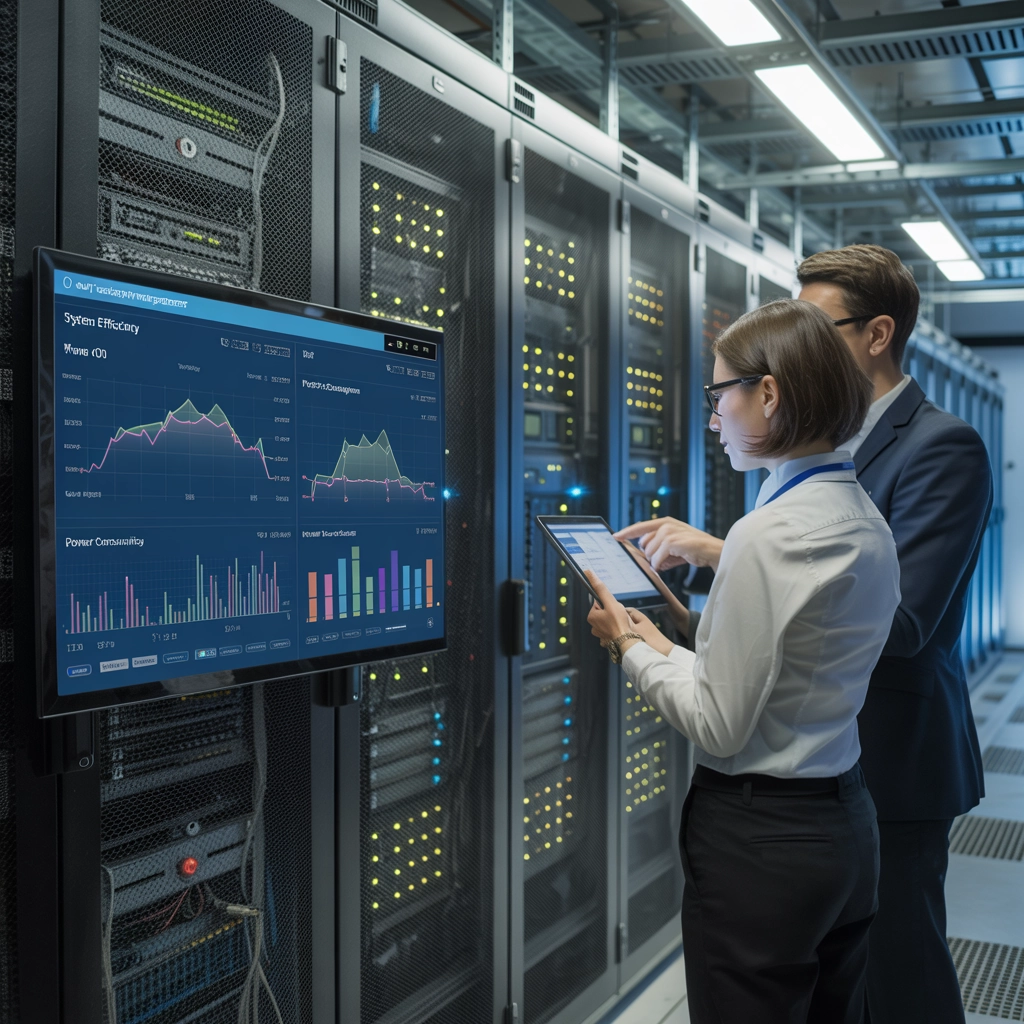
Modern data centers are using machine learning algorithms that analyze thousands of variables to predict potential power issues up to 30 minutes before they occur. This allows for graceful system transitions and data protection protocols to activate before any disruption occurs. One major cloud provider reported reducing data loss incidents by 94% after implementing AI-driven predictive power management.
Manufacturing: Intelligent Production Protection
Smart factories now utilize IoT-connected power systems that can detect anomalies in power quality that might damage sensitive equipment. These systems can automatically initiate protective measures for expensive manufacturing equipment seconds before power fluctuations would otherwise cause damage.
The Power Protection Stack of 2025
The modern business power protection approach is now a sophisticated stack of technologies working in concert:
-
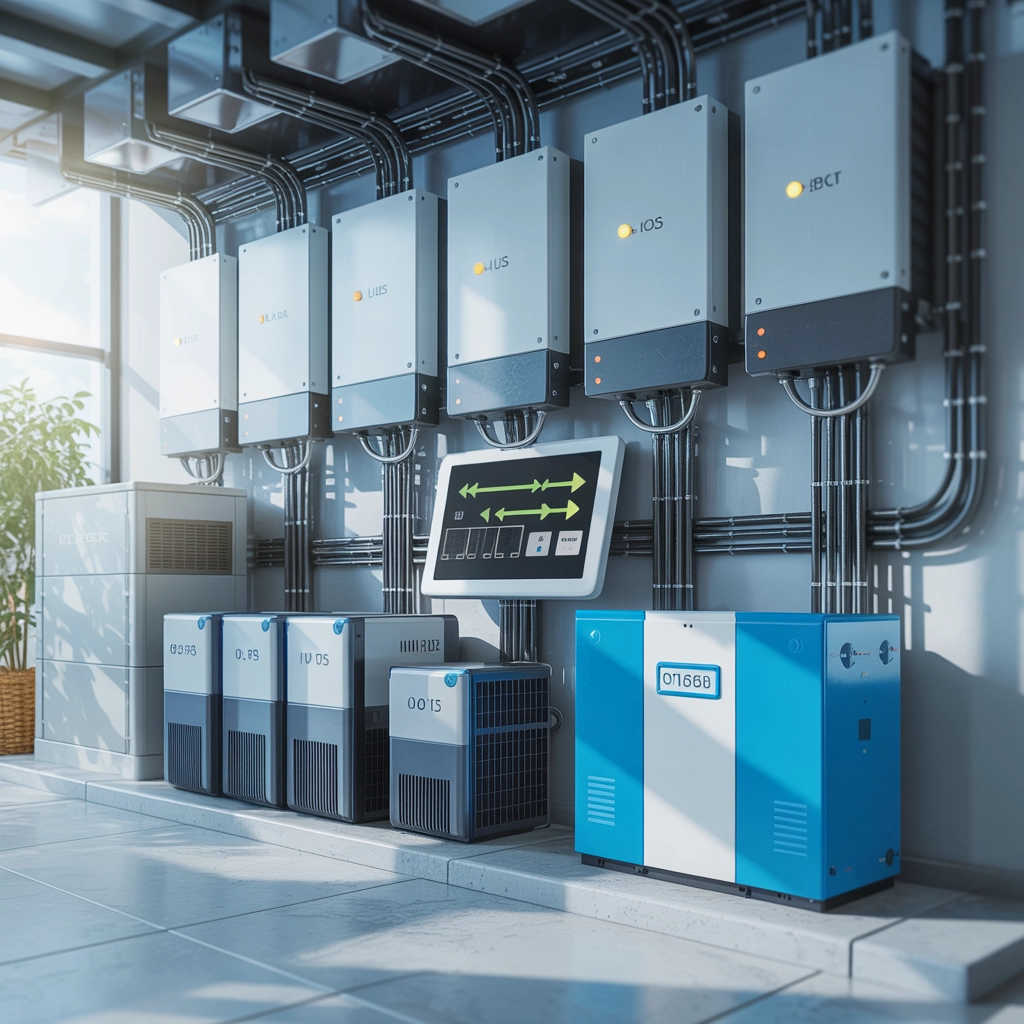
Foundation: Modern UPS Systems - The latest Lithium-Ion UPS solutions from providers like Schneider Electric offer longer life, reduced maintenance, and greater power density
-
Intelligence Layer: AI Management Systems - Software that continually monitors and optimizes power usage and backup systems
-
Sensing Network: IoT Power Monitors - Distributed sensors throughout your facility creating a complete power picture
-
Alternative Power: Solar + Battery Storage - Solutions from companies like Renogy and Bluetti that provide clean backup power and daily cost savings
-
Protection Layer: Surge & EMP Protection - Advanced systems like EMP Shield that protect against electromagnetic threats
-
Integration Hub: Centralized Management - Dashboards that provide complete visibility and control across all systems
Challenges in Implementation (And How to Overcome Them)
Despite the benefits, implementing these advanced systems comes with challenges:
Cost Considerations
Smart backup systems require upfront investment, but the ROI calculation needs to include:
- Avoided downtime costs (averaging $5,600 per minute for mid-sized businesses)
- Extended equipment life from better power quality
- Energy savings from optimized consumption
- Reduced IT staff time spent on power management
Many businesses find that financing options or progressive implementation strategies make these systems accessible despite budget constraints.
Integration Complexity
Connecting legacy systems with new smart power infrastructure can be challenging. This is where working with experienced integrators makes all the difference. Our team at Ace Real Time Solutions specializes in creating seamless connections between existing infrastructure and new smart power systems.
Security Concerns
As with any connected system, security is paramount. Look for solutions with:
- End-to-end encryption for all communications
- Regular security updates and patches
- Separate network segments for power management
- Strong authentication requirements
Planning Your Smart Backup Strategy
Ready to bring your power backup into the AI age? Here's a straightforward approach:
-
Assessment: Evaluate your current power infrastructure and identify critical systems that need protection
-
Risk Analysis: Calculate the business impact of various outage scenarios
-
Solution Design: Create a multi-layered approach combining UPS, alternative power, and smart management
-
Implementation: Roll out the solution in phases, starting with critical systems
-
Testing: Regularly simulate outages to ensure systems respond as expected
-
Optimization: Use the data gathered to continuously improve your power resilience
The Bottom Line: Business Continuity in the AI Era
The businesses that thrive in this increasingly connected and power-dependent era will be those that transform power from a utility into a strategic asset. Smart backup isn't just about keeping the lights on—it's about ensuring your business operates without interruption regardless of what happens to the power grid.
With the right combination of modern UPS systems like those from Minuteman Power Technologies, intelligent power distribution, alternative energy sources, and AI-driven management, your business can achieve a level of power resilience that was impossible just a few years ago.
Ready to Power Up Your Protection?
Don't wait for the next outage to expose vulnerabilities in your power infrastructure. At Ace Real Time Solutions, we specialize in designing and implementing AI and IoT-enhanced power protection systems tailored to your specific business needs.
Contact us today at Ace Real Time Solutions for a comprehensive power protection assessment and discover how the latest in smart backup technology can keep your business running, no matter what happens to the grid.
Remember: In today's digital business environment, power isn't just a utility—it's the foundation everything else depends on. Make sure yours is as intelligent as the rest of your operation.